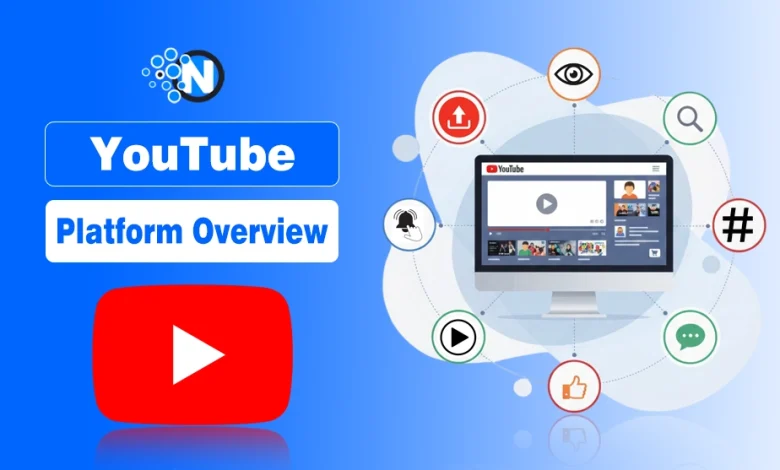
Every minute, creators upload over 500 hours of video to YouTube. Yet the platform still shows each of its 2.7 billion monthly users the content they most want to watch. That is not luck; it is a system.
Most beginner creators treat YouTube like a social feed. They post often and hope the algorithm notices.
The creators who grow fastest think differently. They understand YouTube as a recommendation engine, an ad marketplace, and a long-term content business all in one.
Now, as you will read next in this guide, I will break down how YouTube works as a platform: how the algorithm recommends videos, how money flows from advertisers to creators, and what every new creator needs to know in 2026.
What Makes YouTube a Multi-Sided Digital Platform?
YouTube is a multi-sided digital platform. It connects creators, viewers, and advertisers through one shared technical system. It builds the infrastructure that lets all three groups find each other at scale.
Traditional media companies control both production and distribution. YouTube controls neither. It simply provides the rails everyone else runs on.
| Layer | What YouTube Provides |
| Publishing | Upload tools, Studio dashboard, analytics |
| Discovery | Search engine, recommendations, trending tabs |
| Advertising | Ad auction system, targeting, fraud detection |
| Monetization | Revenue sharing, memberships, Super Chat |
Source: YouTube Creator Academy; Google partner documentation.
A video hosting service stores files. YouTube routes attention to deciding which video reaches which person, at which moment, on which device.
👉 Pro Tip: Your job as a creator is not just to make videos. Your job is to make videos that the system wants to recommend.
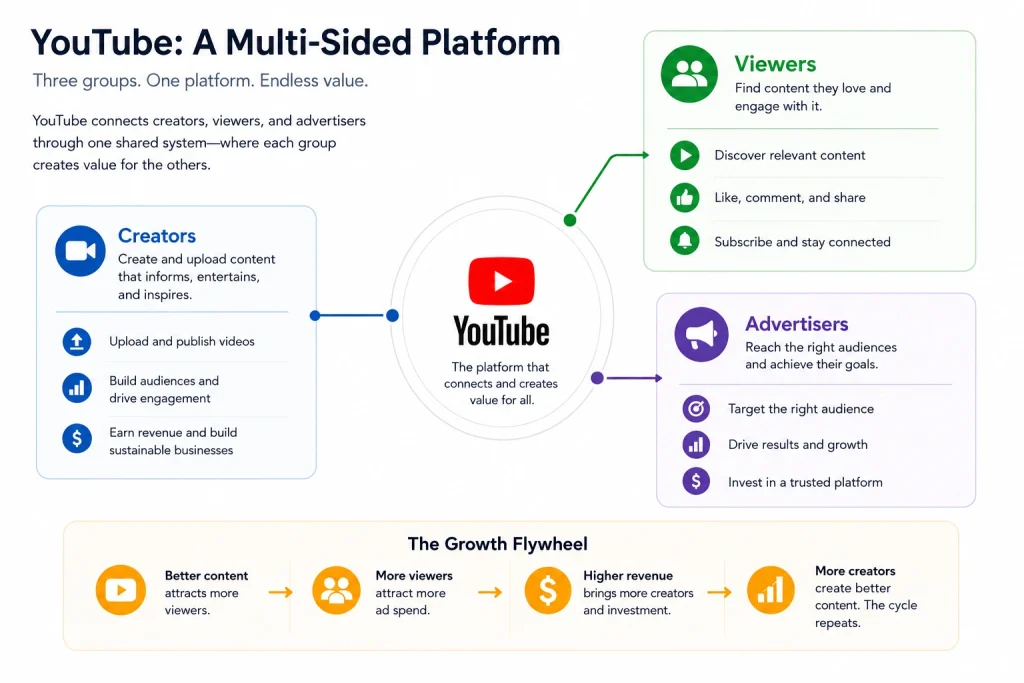
How YouTube Connects Creators, Viewers, and Advertisers
YouTube’s framework succeeds because three core groups each provide value that the others depend on.
- Creators produce and upload video content. Their work attracts viewers and gives advertisers inventory to buy.
- Viewers watch, search, like, comment, and share. Their attention is what YouTube sells. Their behavior also trains the recommendation algorithm over time.
- Advertisers pay YouTube to reach targeted audiences. YouTube earned $60.15 billion in ad revenue in 2025, a 66.35% year-over-year increase. Those payments fund creator earnings and keep the platform free for viewers.
Better content draws more viewers. More viewers attract more ad spend. Higher ad revenue brings more creators. More creators produce better content. This cycle repeats endlessly.
📌 Key Takeaway: Every view carries a dollar value. Engagement quality matters more than raw view counts.
How Does the YouTube Algorithm Work for the Platform?
YouTube uses machine-learning systems to match viewers with videos they are most likely to watch and enjoy.
All of the recommendations available across your Home feed, Suggested videos, Search, and Shorts rely on signals such as your personal behavior with it, liked or subscribed channels, engagement, and satisfaction.
For creators, understanding these recommendation systems is important because they influence how content is discovered and distributed.
For a detailed explanation of how the YouTube algorithm works, its ranking signals, Shorts recommendations, and updates, check out NogenTech’s YouTube algorithm guide.
👉 Pro Tip: Build early traction around Suggested Videos. Being a YouTuber, you must study the thumbnails and titles of popular videos in your niche, then make content that continues that same conversation.
How YouTube Supports Different Types of Content
YouTube supports multiple content formats, allowing creators to reach audiences through different viewing experiences.
- Long-form videos: Tutorials, reviews, explainers, educational content, and entertainment can provide detailed information and continue attracting viewers through Search, Suggested videos, and external traffic.
- YouTube Shorts: Short-form vertical videos help creators reach new audiences through quick, swipe-based content discovery.
- Live streaming: Creators can interact with viewers in real time through gaming, events, discussions, product launches, and other live content.
- Podcasts: YouTube supports long-form podcast content, including interviews, conversations, and discussions.
- Community posts: Posts, polls, images, and updates allow creators to engage with subscribers between video uploads.
These formats make YouTube a full content ecosystem rather than simply a video-sharing platform, giving creators different ways to publish content, reach audiences, and maintain engagement.
Why Does YouTube Content Stay Discoverable for Years?
YouTube treats videos as long-term assets. A video published three years ago can generate as many views today as it did on launch day. No other major social platform works this way.
Three systems keep older content alive:
- Search: Viewers searching for a topic find your video regardless of publish date, as long as it stays the most relevant answer.
- Suggested videos: YouTube continues recommending older content alongside newer videos on the same subject.
- External traffic: Blog posts, Reddit threads, and social shares have kept sending viewers to YouTube videos for years.
Evergreen formats perform best over time:
- Tutorial and how-to videos that teach a transferable skill
- Explainer videos that answer a recurring niche question
- Product and tool comparison videos with long purchase cycles
📌 Key Takeaway: Every video is either a short-term spike or a long-term asset. Build around the questions people keep asking, not around events that pass.
How Does YouTube Make Money?
YouTube continues to earn money primarily through advertising and subscriptions. All around the globe, advertisers pay to reach YouTube’s massive global audience, and YouTube shares a portion of ad revenue with creators.
Last year, YouTube’s total revenue surpassed $60 billion, with a significant increase from prior years. The majority of this came from advertising income, while paid services such as YouTube Premium, YouTube Music, YouTube TV, and other subscription offerings contributed a growing share of revenue as well.
YouTube’s revenue comes from four sources:
- Ad revenue: The dominant source. Ads run before, during, and after videos.
- YouTube Premium: The service already reached 125 million subscribers last year.
- In-app purchases: Channel memberships, Super Chats, and merchandise transactions.
- YouTube TV: A paid cable-replacement service separate from the core platform.
How Google AdSense Powers AD Delivery?
AdSense matches viewer behavior data against advertiser targeting criteria. Every ad impression runs through a real-time auction; the highest relevant bid wins. AdSense also manages ad format selection:
- Skippable pre-rolls
- Non-skippable ads
- Mid-rolls Bumper ads
- Overlays
How Creator Earnings Work?
Creator earnings depend on far more than view counts. Niche, audience location, and engagement depth drive the real numbers.
| Metric | What It Means | Why It Matters |
| CPM | What advertisers pay per 1,000 impressions | Ranges from ~$1 in low-value markets to $50+ in premium niches |
| RPM | What creators receive per 1,000 views after YouTube’s cut | Typically, 45–55% of CPM |
| Viewer location | Geographic origin of the audience | US, UK, and AU audiences generate significantly higher CPM |
| Content niche | Finance and SaaS vs. gaming and entertainment | Category directly affects advertiser demand |
Creators earn roughly $18 per 1,000 ad views on average, but this swings widely by niche. To join YouTube’s Partner Program (YPP) and earn ad revenue, as a new user you need 1,000 subscribers and 8,000 valid watch hours in the past 12 months.
Once inside YPP, creators keep 55% of ad revenue. YouTube takes 45%. This revenue model also applies to many YouTube automation channels that focus on scaling content production without being on camera.
Sponsorships, affiliate marketing, digital products, influencer marketing, and memberships can generate far more per subscriber than AdSense. A channel with 50,000 loyal subscribers in the right niche can estimate to earn $3,000–$10,000 monthly.
📌 Key Takeaway: Optimize for the right viewers, not the most viewers. An engaged audience in a high-CPM niche earns far more per 1,000 views than a larger, disengaged audience.
How Does YouTube Support Business Growth?
YouTube functions as a search engine, social network, streaming service, and direct-response ad channel- all at once. Businesses use it at every stage of the customer journey.
Four high-impact use cases stand out:
- Product education: Tutorials and demos reduce purchase hesitation before customers buy.
- Trust building: Long-form video builds credibility faster than blog posts. Real people explaining real results compress the trust timeline significantly.
- Search amplification: YouTube videos rank in Google Search. One well-optimized video can capture search traffic that would otherwise need a separate blog strategy.
- Retargeting: Google Ads lets you retarget viewers who watched a portion of your YouTube video, reaching them again across YouTube and the Display Network.
Research shows 86% of viewers have made a purchase after discovering a brand’s ads on YouTube. Video converts, and YouTube is where most of that conversion starts.
No doubt all of this generated enough revenue for businesses, but this is also a reality that if this platform has so many benefits, there can also be some difficulties. To learn about them in detail, you can check out NogenTech’s detailed guide on Pros and Cons of YouTube for business.
How YouTube Network Effects Work
YouTube benefits from cross-side network effects. Ultimately, adding participants on one side increases value for all sides. So, more creators mean more content for viewers.
As viewers continue to increase, the platform becomes more attractive to advertisers. Higher ad revenue enables more creator earnings, which draws more creators.
This loop makes YouTube hard to displace. TikTok, Instagram Reels, and Twitch have each captured specific content verticals. None has replicated YouTube’s full ecosystem: search discoverability, long-form hosting, monetization infrastructure, and global reach in one place.
YouTube operates in over 100 countries and supports 80 languages. That distribution moat took nearly two decades to build.
The data flywheel compounds this advantage. Every watch, click, and skip makes YouTube’s recommendation models sharper. Greater accuracy improves viewer satisfaction.
Better satisfaction increases watch time. More watch time generates more ad revenue. The users train the platform, and the platform gets better for them.
For a deeper look at how this shapes strategy, explore this guide on YouTube channel growth for beginners.
📌 Key Takeaway: YouTube’s dominance is structural, not just scale-based. The platform becomes more valuable as it grows. Build on it now before competition increases further.
What People Want to Know About YouTube in Terms of Social Media and Earning
Is YouTube a social media platform or a search engine?
YouTube functions as both. It processes over three billion searches monthly, making it the world’s second-largest search engine. It also has social features like subscriptions, comments, and community posts. Most content discovery happens through a mix of search and algorithm-driven recommendations.
How does YouTube decide which videos to recommend?
YouTube’s algorithm matches content to individual viewer preferences using watch history, engagement patterns, device type, time of day, and post-watch satisfaction surveys. It does not push your video to audiences; it pulls your video for viewers most likely to enjoy it.
What is the YouTube Partner Program, and how do creators join?
The YouTube Partner Program (YPP) unlocks ad revenue sharing. Creators qualify with 1,000 subscribers and either 4,000 public watch hours in 12 months or 10 million Shorts views in 90 days. Accepted creators keep 55% of ad revenue from their content.
How much can a beginner YouTuber realistically earn?
Early-stage creators typically earn $1-$5 per 1,000 views from ads, depending on niche. Ad revenue is just one option. Affiliate marketing, sponsorships, and digital products often outperform AdSense at smaller audience sizes. Niche selection and audience engagement matter far more than total subscriber count.
What is the difference between CPM and RPM on YouTube?
CPM is what advertisers pay per 1,000 ad impressions. RPM is what the creator receives per 1,000 video views after YouTube’s 45% share. RPM always runs lower than CPM. Creators should track RPM, not CPM, to understand actual earnings.
Closing Thoughts on This Whole Discussion About YouTube Platform
YouTube is a recommendation engine, an advertising marketplace, and a compounding content business, not just a place to post videos. Creators who understand this architecture grow faster and earn more consistently.
If you ask me, the most important insight from this guide is to treat every video as a long-term asset, not a one-time event. Each optimized upload becomes a discovery entry point that generates views, subscribers, and revenue for years.
Ready to apply this? Read NogenTech’s complete guide on how to start a YouTube channel from scratch that covers niche selection, setup, and the first-video strategy that gives your channel the strongest algorithmic start.
Related NogenTech guides if you want to learn more about other YouTube aspects:
- Learn how to fix it if a YouTube video is not playing
- Discover how to access YouTube unblocked
- Find out how to delete a YouTube account step by step if you ever need to
- Explore how to access and use the YouTube Audio Library for your videos
- Learn how to download copyright-free YouTube videos as MP3s
- Discover how to convert license-free YouTube videos to M4A format
- Explore the best YouTube video downloader apps
- Understand whether using a YouTube converter is legal
- Explore different styles of the black YouTube logo
- Discover trending aesthetic YouTube icons for branding