10 AI Marketing Tools That Save Time & Drive Growth in 2026
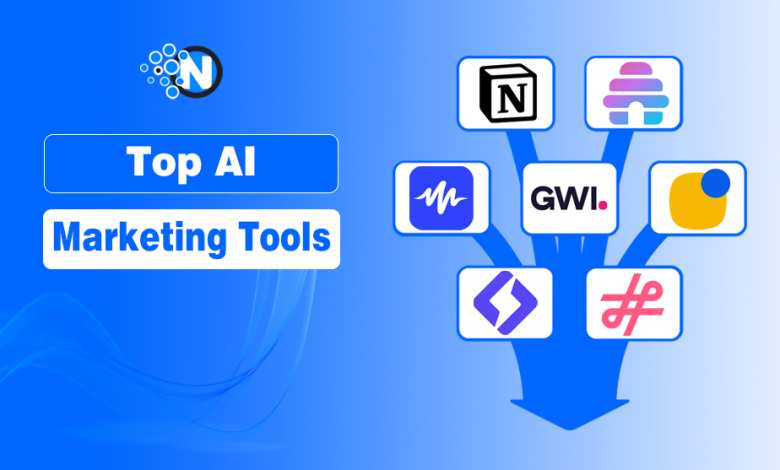
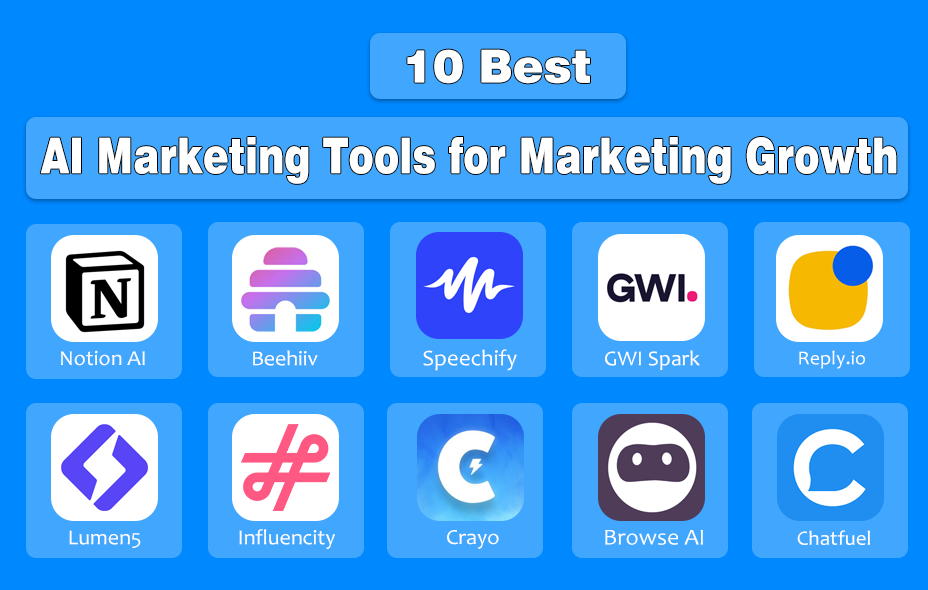
The best AI marketing tools are Notion AI, beehiiv, Speechify, GWI Spark, Reply.io, Lumen5, Influencity, Crayo, Browse AI, and Chatfuel.

AI marketing tools are everywhere, but choosing the right one is harder than ever. According to Salesforce, 75% of marketers are turning to AI, yet 84% still run generic campaigns, showing that AI alone doesn’t guarantee better results.
As today’s Artificial Intelligence continues to reshape B2B marketing trends, the real challenge is finding a tool that fits your goals.
To make that easier, I’ve compared the popular AI marketing tools based on their features, practical uses, and value, so you can quickly find the right option for your marketing needs.
10 Best AI Marketing Tools for Better Growth
With so many AI marketing tools available, I’ve picked these 10 AI marketing tools based on their use cases, automation, ease of use, and overall value to help you find the right fit faster.
1. Notion AI – Best for Content Planning and Automation
Notion AI gives marketing teams one place to plan campaigns, create content, research ideas, and automate routine work. Its AI Agent can work across pages and databases, while Custom Agents handle recurring workflows.
For content marketing teams already managing projects in Notion, it reduces tool switching and keeps AI assistance directly inside their everyday workspace.
2. beehiiv – Best for AI Newsletter Marketing
beehiiv combines newsletter publishing, audience growth, monetization, and AI tools in one platform. Marketers can use its AI capabilities to draft and refine newsletter content without moving between separate writing tools.
Its built-in analytics and growth features make it especially useful for creators, publishers, and brands that treat email as a major marketing and revenue channel.

3. Speechify – Best for Audio Content
Speechify turns written marketing content into natural-sounding AI audio, giving marketers another way to reach audiences without creating content from scratch.
It is particularly useful for repurposing content such as articles, scripts, and other written assets into audio. Its multilingual voices and dubbing capabilities also help brands create content for broader audiences.

4. GWI Spark – Best for Audience Insights
GWI Spark helps marketers turn consumer data into useful audience insights without spending hours digging through research.
Marketers can ask questions about behaviors, preferences, and AI marketing trends and use the findings to guide targeting, positioning, and campaign planning. It is especially valuable when marketing decisions need stronger consumer data behind them.

5. Reply.io Jason – Best for AI Sales Outreach
Reply.io has evolved beyond AI-assisted email writing with Jason, its AI SDR for automating more of the outbound sales process.
Jason can help identify prospects, research them, create personalized outreach, follow up, handle responses, and move qualified prospects toward meetings. This makes it useful for B2B teams looking to scale outreach without manually managing every interaction.

6. Lumen5 – Best for AI Marketing Videos
Lumen5 helps marketers convert written ideas and existing content into branded videos without needing advanced editing experience.
Its AI-assisted workflow can transform text into video scenes that marketers can refine using templates, stock media, and editing tools. This makes it practical for teams that want to produce more social, promotional, or educational videos with fewer production resources.

7. Influencity – Best for Influencer Marketing
Influencity helps brands make influencer marketing decisions using creator and audience data instead of relying only on follower counts.
Marketers can discover relevant creators, analyze their audiences, organize relationships, manage campaigns, and track results from one platform.
It is particularly useful for brands running multiple influencer partnerships that need a more structured way to evaluate creators and campaign performance.

8. Crayo – Best for Short-Form Videos
Crayo is designed to speed up short-form video production for platforms where frequent content matters. Marketers can use its AI tools for creating clips, adding voiceovers, generating captions, and handling other repetitive editing tasks.
For teams focused on social media marketing, it can shorten the process of turning ideas into platform-ready video content.
9. Browse AI – Best for Competitor Research
Browse AI helps marketers collect and monitor website data without writing scraping code. It can automate repetitive research such as tracking competitors, monitoring prices, collecting leads, or watching websites for changes.
Instead of checking the same sources manually, marketing teams can create automated workflows that keep useful market and competitor data updated as their research needs grow.

10. Chatfuel – Best for Conversational Marketing
Chatfuel helps businesses automate customer and sales conversations across messaging channels, with a strong focus on WhatsApp and Instagram. Marketers can use it to respond to inquiries, capture leads, qualify prospects, and automate parts of the sales journey.
It is particularly useful for businesses where social messages and chat conversations regularly turn into leads or customer interactions.

Where AI Marketing Tools Save You Time and Effort
AI marketing tools take repetitive work off your plate, so you can spend more time on strategy and creative decisions. Instead of manually analyzing data, creating content, or optimizing campaigns, AI can handle much of this work faster and at scale.
- Content creation: Draft copy, social posts, images, and videos faster.
- Customer insights: Analyze behavior and identify audience intent.
- Personalization: Tailor emails, ads, and recommendations to different audiences.
- Campaign automation: Automate repetitive tasks, follow-ups, and campaign workflows.
- Ad optimization: Improve targeting and adjust ad spend using performance data.
- Lead management: Score leads and identify prospects more likely to convert.
The real value is not just automation; it’s getting routine marketing work done faster while keeping your team focused on decisions that need human judgment.
People Also Ask
AI marketing tools help businesses grow by automating repetitive tasks, improving personalization, analyzing customer data, and increasing marketing efficiency, which leads to better engagement and higher conversions.
Yes, many AI marketing tools are designed for small businesses and offer affordable plans, automation features, and easy-to-use interfaces that help save time and reduce marketing costs.
No, AI cannot fully replace digital marketers. It supports tasks like automation and data analysis, but human creativity, strategy, and decision-making are still essential for successful marketing.
Choose an AI marketing tool based on your business goals, budget, required features, and how well it integrates with your existing tools and workflows.
AI tools perform individual tasks, while AI workflows connect multiple tools into a system that automates processes and improves overall marketing performance.