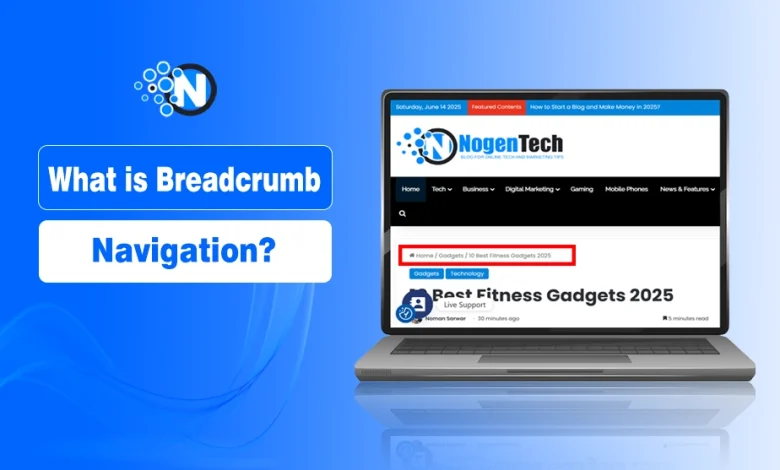
Breadcrumb navigation is a simple but powerful element of website design that improves both user experience and search engine understanding. Despite its simplicity, it plays a major role in how users move through a website and how search engines interpret site structure.
In modern SEO, where topical authority, internal linking, and user experience signals matter more than ever, breadcrumbs are no longer optional for large or structured websites; they are a foundational navigation component.
Breadcrumb navigation gives users a general idea of where they are present inside your site. In simple words, it tells them which category they are exploring. So, you should add them when starting a blog or a business website.
- Breadcrumbs show users their location within a website structure.
- It support SEO through better internal linking and site structure clarity.
- Breadcrumb schema can enhance search result appearance.
- It is best for websites with multiple categories or deep content structures.
- They don’t directly rank pages but help improve overall SEO performance.
What is Breadcrumb Navigation?
Breadcrumb navigation is a secondary navigation system that shows users their current location within a website’s hierarchy.
It is typically displayed as a horizontal trail of links, such as:
Home > Blog > SEO > Technical SEO > Current Page
A breadcrumb trail is typically present at the top of the web page under the main navigation menu. It consists of clickable links that are separated by different symbols such as “|,” “>,” or “/.”
Origin of the Breadcrumb Navigation Term
The term Breadcrumb originates from the Hansel and Gretel fairy tales, as they left a trail of breadcrumbs during their journey so they could find their way home. In a similar fashion, breadcrumb navigation helps users get back to the homepage of the website.
It is specifically useful for websites with a hierarchical structure, as it is an essential search engine optimization tactic. Whether you run an eCommerce platform, a blog, or a knowledge base, this navigation has an important place.
Why Breadcrumb Navigation Matters Today?
From my experience working on SEO and website structure projects, breadcrumb navigation is often underestimated. Many site owners focus on content and ignore structure, but structure is what connects everything together.
Breadcrumbs matter because they:
- Improve website navigation clarity
- Help users understand where they are
- Strengthen internal linking structure
- Support search engine crawling and indexing
- Improve overall user experience
Search engines use breadcrumbs to better understand relationships between pages and site hierarchy, which can influence how content is interpreted and displayed in search results.
What are the Types of Breadcrumb Navigation?
Breadcrumb navigation can be categorized into three main types that primarily depend on the structure and purpose of the website. I have mentioned them below.
1 – Location Based Breadcrumbs
This type of breadcrumb displays the location of the user within the website hierarchy. It is most commonly used in websites with a structured and multi-level architecture.
- Example: Home/Category/Subcategory/Post

2 – Attribute Based Breadcrumbs
Although they are not primarily used in blogs, attribute based breadcrumbs have a distinct place in eCommerce strategies. They highlight the features of a product or product page.
As a result, users can filter products on the basis of different aspects such as color, size, or brand.
- Example: Home/Electronics/Mobile Phones/Brand: Samsung/Price: $200-$400
3 – Path Based Breadcrumbs
This breadcrumb navigation gives an indication of the journey a user has covered to reach a specific page. One thing to note here is that the path based breadcrumbs are dynamic.
- Example: Home/Previous Page/Current Page
Why You Should Use Breadcrumb Navigation?
As I mentioned earlier, breadcrumb navigation holds primary importance in technical SEO. It delivers massive benefits by improving the user experience and making your site more trustworthy.
In the under section, I have provided an overview of the advantages you can gain with the help of proper breadcrumbing.
1 – Enhanced User Experience
Breadcrumbs improve navigation by providing users with a clear path to retrace their steps. They reduce the need to use the “back” button of the browser again and again. Thus, it becomes easier to move between related pages.
2 – Reduced Bounce Rate
When users find it simple to explore the other sections of your website, it reduces the bounce rate to a greater extent. Breadcrumb navigation offers such benefits and increases user engagement.
3 – SEO Benefits
Breadcrumb navigation is beneficial for search engine optimization (SEO). Google uses them to understand the structure of your site and also display breadcrumb trails in the search results. It can improve click-through rates (CTR) and make your website appear more organized.
4 – Mobile Friendly Navigation
Breadcrumbs are lightweight and don’t take up much screen space. In this way, they are ideal for improving the website structure on smartphones. They provide a quick way for users to navigate without scrolling excessively.
What are the Best Practices for Implementing Breadcrumb Navigation?
The following are the best practices that you can follow to make sure that the breadcrumb navigation on your website or blog is completely functional and effective. Moreover, it lets you follow the White Hat SEO guidelines.
- Ensure Logical Hierarchy: Breadcrumbs should follow the logical hierarchy of your website’s structure. Each step in the breadcrumb trail should represent a broader category. Also, it should lead up to the homepage.
- Use Clear Separators: Separate breadcrumb links with easily recognizable symbols such as “>,” “/,” or “|.” The separator should be consistent across all pages for a cohesive look.
- Make Breadcrumbs Clickable: Each level of the breadcrumb trail should be clickable. It allows users to navigate directly to any previous page. You have to ensure that these links are functional and intuitive.
- Avoid Overcrowding: Keep breadcrumb trails concise. Avoid including unnecessary levels or attributes that might confuse users. For example, you can skip filters and options that do not add value to the navigation.
- Match Website Style: Breadcrumbs should seamlessly integrate with the design of your website and color scheme. The best way to is to use fonts and styles that align with your brand identity while maintaining readability.
- Responsive Design: The breadcrumb navigation should be responsive and adapt well to all screen sizes. You can implement truncated text or collapsible breadcrumbs to avoid cluttering.
Final Thoughts
Breadcrumb navigation may seem like a small UX element, but it plays a big role in how users and search engines understand your website.
In my experience working on SEO and site structure optimization, websites that implement clean, consistent breadcrumb navigation almost always perform better in terms of usability, crawlability, and content discovery.
Whether you are running an SEO blog or website, it is essential that your site has a user friendly interface. Breadcrumbs can enable you to guide your visitors without contacting them directly. Hence, it improves the overall performance of your site.
People Also Ask
What is breadcrumb navigation in simple terms?
Breadcrumb navigation is a secondary navigation system that shows users their location on a website in a structured path like: Home > Category > Page.
Why is breadcrumb navigation important for SEO?
Breadcrumbs improve internal linking, help search engines understand site structure, and can enhance how pages appear in Google search results when structured data is used.
Does breadcrumb navigation improve user experience?
Yes. It helps users easily move between sections of a website, understand where they are, and navigate back without using the main menu.
What are the types of breadcrumb navigation?
The main types are location-based breadcrumbs, path-based breadcrumbs, and attribute-based breadcrumbs commonly used in ecommerce websites.
Should every website use breadcrumbs?
No. Breadcrumbs are most useful for websites with multiple levels like blogs, ecommerce stores, or service-based websites with structured categories.