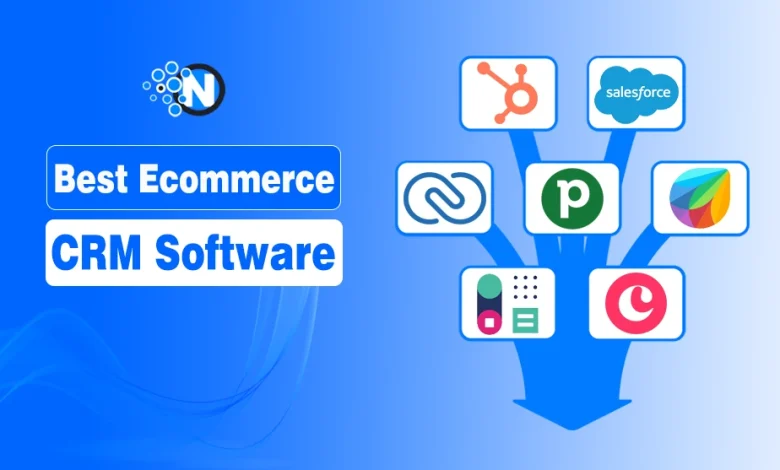
Looking for the best ecommerce CRM software for your online store?
The right platform can help you manage customer data, automate personalized marketing, track purchase behavior, and increase repeat sales from one place.
When choosing an ecommerce CRM, look for a platform that supports your store’s needs through:
- Customer data and purchase history management
- Marketing automation and segmentation
- Abandoned cart and retention workflows
- Integrations with Shopify, WooCommerce, BigCommerce, or Magento
The ecommerce CRM market has evolved in 2026. Traditional CRMs built around sales pipelines are often not enough for online stores that need deeper customer insights, lifecycle marketing, and retention tools.
Now I will show you the 10 best ecommerce CRM software tools in 2026, compare their features and pricing, and help you choose the right solution based on your store size, budget, and goals.
What is eCommerce CRM software?
Ecommerce CRM software (eCRM) is a customer relationship management platform that helps online businesses manage customer data, purchase history, marketing campaigns, and sales from one place.
Unlike a traditional CRM, it focuses on customer behavior, orders, and retention.
While reviewing different ecommerce CRM platforms, I found that managing customer relationships becomes much easier when all customer data is centralized instead of spread across multiple tools.
What Does Ecommerce CRM Software Do?
Ecommerce CRM software helps online businesses organize customer data, automate marketing, improve customer relationships, and increase sales from a single platform.
An ecommerce CRM focuses on customer purchases, retention, and marketing automation, while standard desktop or mobile CRMs and traditional CRMs are designed primarily for managing sales pipelines and account management on the go.
It typically helps you:
- Organize customer profiles and order history
- Segment customers by behavior and purchases
- Automate email and SMS campaigns
- Track customer lifetime value and retention
- Sync data with your ecommerce platform
If your store requires heavy project management alongside customer tracking, platforms like monday.com CRM offer flexible workflows for managing orders and client operations.
10 Best eCommerce CRM Software Tools on the Market
I evaluated these tools based on ecommerce-specific CRM features, depth of platform integrations, pricing transparency, and real-world usability for online stores. Here is a quick comparison before the full breakdowns.
1. HubSpot CRM — Best All-Round Ecommerce CRM Software
HubSpot CRM is the best all-round ecommerce CRM for businesses that want to manage customers, marketing, and sales from a single platform.
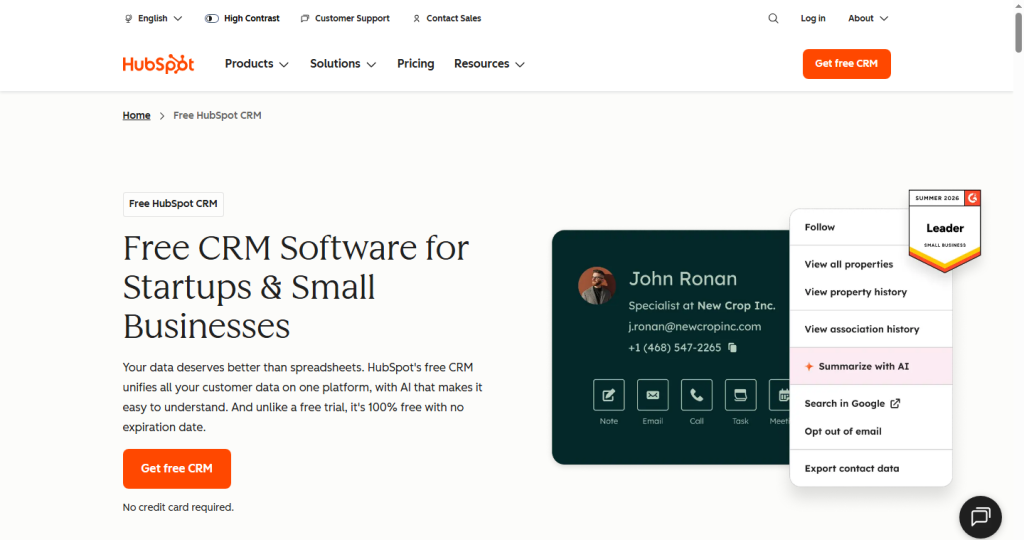
It integrates with Shopify, WooCommerce, and BigCommerce, automatically syncing customer and order data.
While reviewing HubSpot, I found its free CRM is ideal for small online stores. However, as your business grows, the pricing increases significantly, especially if you need advanced marketing automation or manage a large customer database.
Key Features
- Contact management
- Email tracking
- Live chat and chatbots
- Sales automation
- Pipeline management
- Reporting and analytics
- Shopify, WooCommerce, and BigCommerce integrations
Pricing: A free plan is available, while paid plans start at $20 per seat/month. Marketing Hub Professional starts at around $890/month, requires a one-time onboarding fee, and additional marketing contacts increase the monthly cost.
2. Klaviyo — Best for Data-Driven B2C Ecommerce Marketing
Klaviyo is the best customer data and marketing automation platform for B2C ecommerce businesses.
Rather than acting as a traditional CRM, it focuses on customer data, segmentation, and automated campaigns that drive retention and repeat purchases.
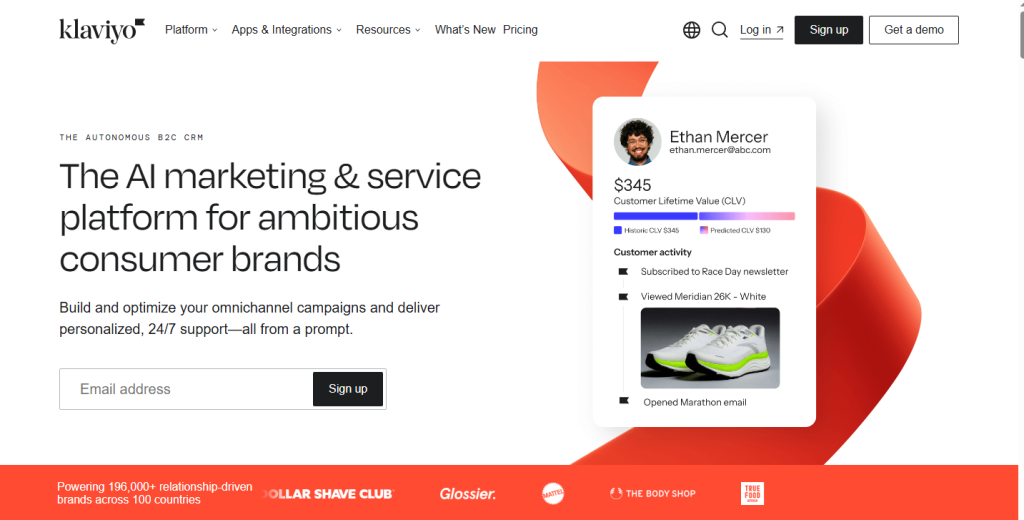
While reviewing Klaviyo, I found its biggest strength is how it turns purchase history and customer behavior into highly targeted marketing campaigns. Features like predictive analytics and pre-built automation flows make it easy to engage customers throughout their buying journey.
Key Features
- Customer profiles
- Advanced customer segmentation
- Email and SMS marketing
- Predictive analytics
- Pre-built automation flows
- A/B testing
- Reporting and personalization
- Ecommerce integrations
Pricing: Free for up to 250 contacts. Paid plans start at $20/month and scale based on the number of active customer profiles.
3. Omnisend — Best for Small Ecommerce Stores and Email Automation
Omnisend is the best ecommerce marketing automation platform for small online stores that prioritize email automation.
It integrates seamlessly with Shopify and WooCommerce, helping businesses create personalized campaigns with minimal setup.
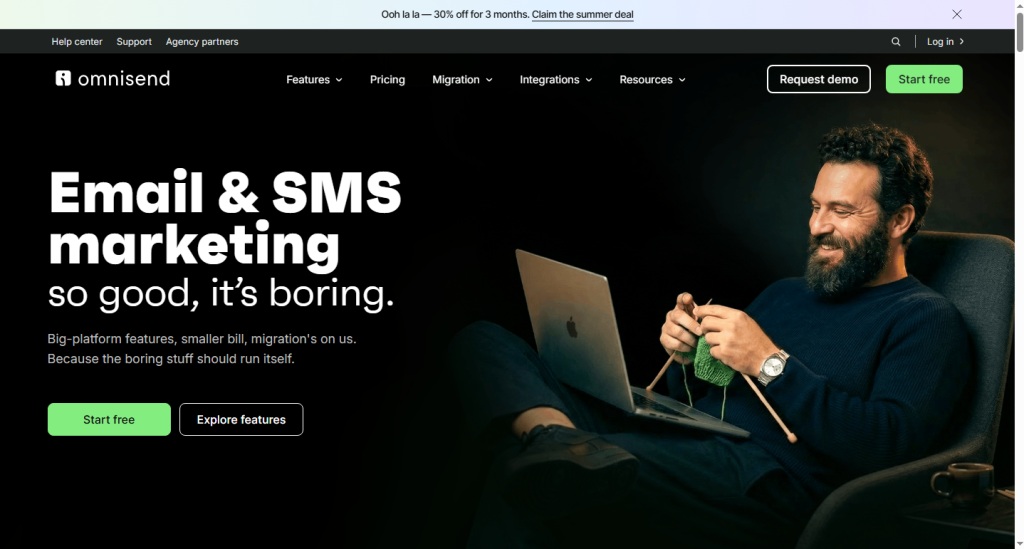
While reviewing Omnisend, I found its Product Picker feature especially useful. It pulls product images, descriptions, and prices directly from your store into emails, making campaign creation much faster.
However, if you plan to use SMS marketing, you’ll need the Pro plan, as it’s not included in the Free or Standard tiers.
Key Features
- Customer profiles
- Email marketing automation
- Customer segmentation
- Web push notifications
- Abandoned cart recovery
- A/B testing
- Shopify and WooCommerce integrations
- Magento support (requires additional setup)
Pricing: A free plan is available. Paid plans start at $16/month for email marketing, while SMS features require the Pro plan starting at $59/month, with usage-based SMS charges.
4. Salesforce Commerce Cloud — Best for Enterprise Ecommerce
Salesforce Commerce Cloud is an enterprise ecommerce platform built for large retailers and global brands. It combines ecommerce, customer data, AI, and order management to support high-volume online stores.
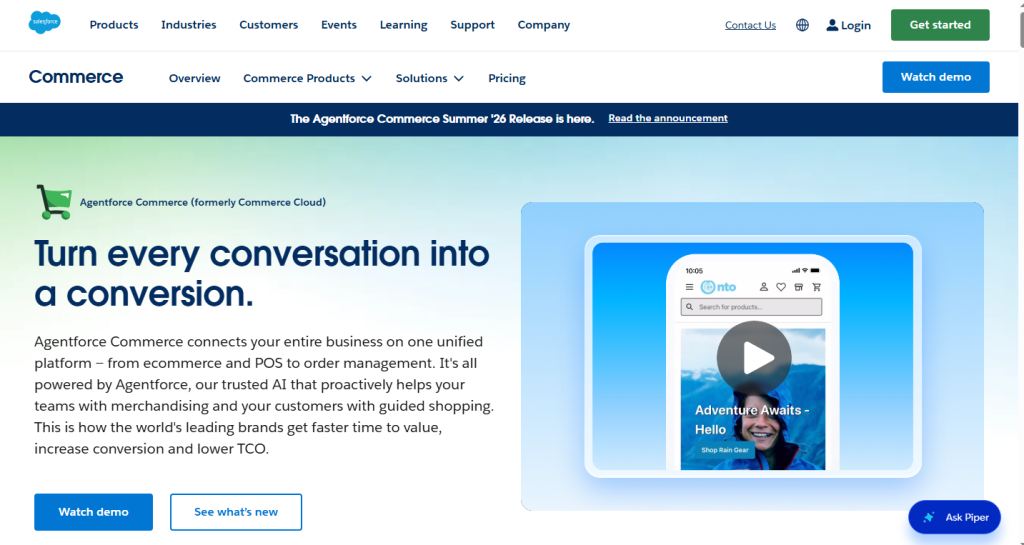
Its standout feature is Einstein AI, which delivers personalized product recommendations, customer segmentation, and predictive insights to improve conversions.
Key Features
- Unified commerce platform
- AI-driven personalization
- Order and inventory management
- Multi-channel selling
- Custom storefronts
- Advanced analytics
Pricing
Unlike most ecommerce platforms, Commerce Cloud uses a custom pricing model based largely on Gross Merchandise Value (GMV), typically around 1% to 3% of online sales, rather than a fixed monthly fee.
Businesses should also budget for implementation costs, which can exceed $150,000, and optional Premier Success support for enterprise-level assistance.
5. Zoho CRM — Best Budget-Friendly CRM for Growing Ecommerce Businesses
Zoho CRM is a cloud-based CRM that helps businesses manage leads, customer relationships, sales pipelines, and marketing automation. While it works well for ecommerce businesses, it is not a dedicated ecommerce CRM. Features like order management, inventory, and storefront integrations require additional Zoho apps, such as Zoho Commerce or Zoho Inventory, or third-party integrations.
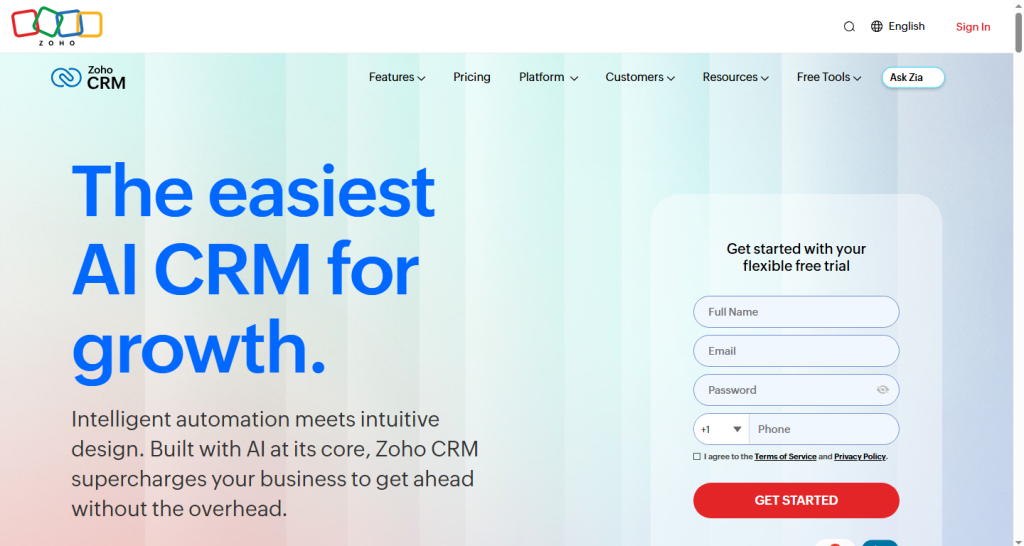
For growing businesses, Zoho CRM offers an affordable way to manage both B2C and B2B customers. However, advanced AI features powered by Zia are only available on the Enterprise ($40/user/month) and Ultimate ($52/user/month) plans.
Key Features
- Lead and contact management
- Sales and workflow automation
- Omnichannel communication
- Advanced analytics and reporting
- Custom dashboards
- Zoho ecosystem and third-party integrations
- Zia AI (Enterprise and Ultimate plans only)
Pricing
Zoho CRM offers a free plan for up to 3 users. Paid plans start at $14/user/month (Standard), followed by Professional ($23), Enterprise ($40), and Ultimate ($52) when billed annually. Businesses with high-volume ecommerce stores may also need additional Zoho apps or paid integrations to sync orders, products, and customer data.
6. Freshworks (Freshsales) — Best AI-Powered CRM for Growing Sales Teams
Freshsales is a cloud-based CRM from Freshworks that helps businesses manage leads, sales pipelines, customer relationships, and communication from one platform.
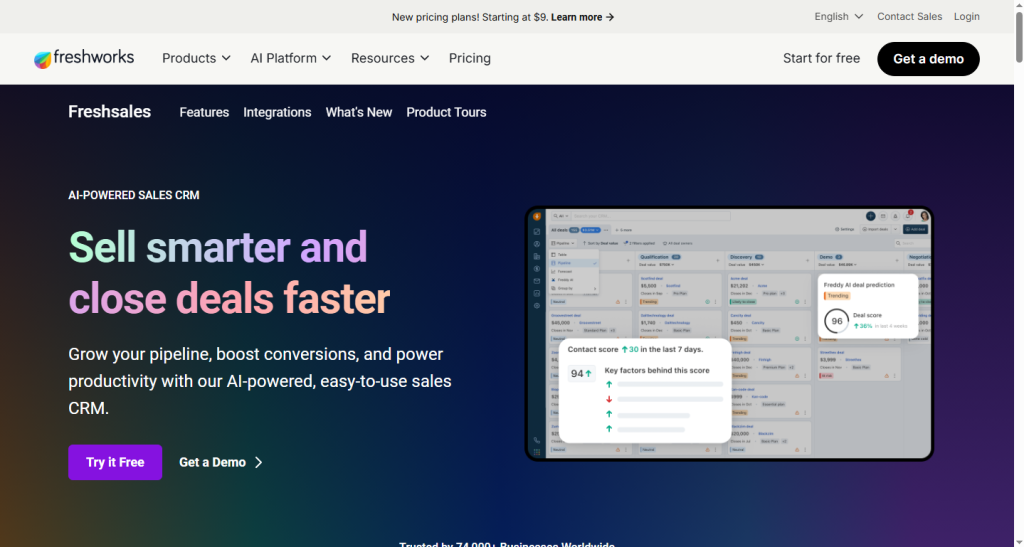
Although it can support ecommerce businesses, it is primarily a sales CRM rather than a dedicated ecommerce CRM. Features like live chat, visitor tracking, and marketing forms require Freshsales Suite or other Freshworks products.
Its biggest strength is Freddy AI, which provides lead scoring, sales forecasting, deal insights, and workflow automation to help sales teams prioritize opportunities and close deals faster.
Key Features
- Lead and contact management
- Freddy AI-powered insights and lead scoring
- Sales sequences and workflow automation
- Built-in email and phone
- Custom fields and dashboards
- Multi-currency and multi-language support
- Third-party integrations
Pricing
Freshsales offers a free plan for small teams. Paid plans start at $9/user/month (Growth), followed by Pro ($39) and Enterprise ($59) when billed annually.
Businesses that need live chat, visitor tracking, or deeper ecommerce integrations may require Freshsales Suite, additional Freshworks products, or third-party connectors. Native syncing between Freshsales and Freshdesk is also limited on the Growth plan and requires Pro or higher for full integration.
7. Pipedrive — Best for Ecommerce Sales Pipeline Management
Pipedrive is a cloud-based sales CRM built for businesses that want to manage leads, deals, and sales pipelines through a visual drag-and-drop interface. While it works well for ecommerce sales teams, it focuses on sales management rather than marketing, customer support, or ecommerce operations.
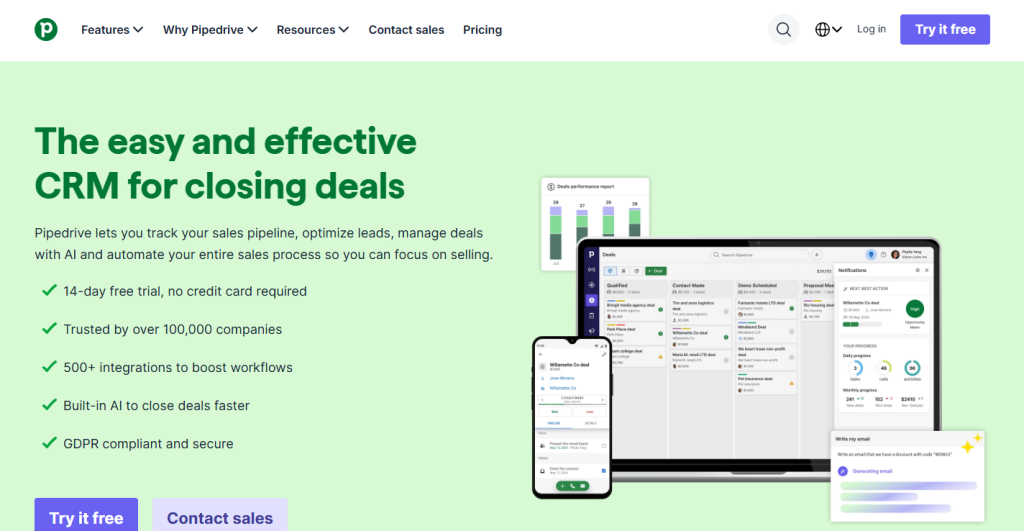
Its biggest strength is its intuitive visual pipeline, which helps teams track deals, automate sales processes, and improve pipeline visibility. However, key features like workflow automation and native email sync are only available on higher-tier plans, while marketing tools require paid add-ons.
Key Features
- Visual sales pipeline
- Customizable pipeline stages
- AI-powered Sales Assistant
- Sales automation (Growth plan and above)
- Native email integration and tracking (Growth plan and above)
- Reporting and analytics
- Integrations with 500+ apps
Pricing
Pipedrive offers no free plan, but includes a 14-day free trial. Paid plans start at $14/user/month (Lite), followed by Growth ($49), Premium ($79), and Ultimate ($99) when billed annually. Marketing features such as Pipedrive Campaigns and LeadBooster are sold separately, adding extra monthly costs.
8. Microsoft Dynamics 365 — Best for Mid Market and Enterprise Ecommerce
Microsoft Dynamics 365 is a suite of CRM and ERP applications for managing sales, customer service, finance, supply chain, and business operations. For ecommerce businesses, it works best in organizations already using Microsoft 365, Teams, Azure, and Power BI.
Its biggest strength is connecting customer and business data across Microsoft’s ecosystem. However, CRM and ERP are licensed separately. The Dynamics 365 Sales plans cover CRM features, while inventory, finance, and supply chain management require additional ERP products such as Dynamics 365 Business Central or Finance.
Key Features
- Sales CRM with customer and pipeline management
- Microsoft Copilot AI (Premium plans and add-ons)
- Customer journey tracking
- Advanced analytics and Power BI reporting
- Microsoft 365, Teams, and Azure integration
- Customizable workflows
- ERP modules for inventory, finance, and operations (sold separately)
Pricing
Dynamics 365 Sales starts at $65/user/month (Professional), followed by Enterprise ($105) and Premium ($150). ERP applications, including Business Central and Finance, require separate licenses, and advanced Copilot AI capabilities are available only on higher-tier plans or with additional licenses.
Enterprise deployments often require implementation by a certified Microsoft partner, which can significantly increase the overall cost.
9. Metrilo — Best CRM for Ecommerce Analytics and Customer Retention
Metrilo is an e-commerce CRM, analytics, and email marketing platform built specifically for online stores. Now part of the Brevo ecosystem, it helps businesses track customer behavior, analyze sales performance, and improve customer retention, while broader multichannel marketing features are available through Brevo’s platform.
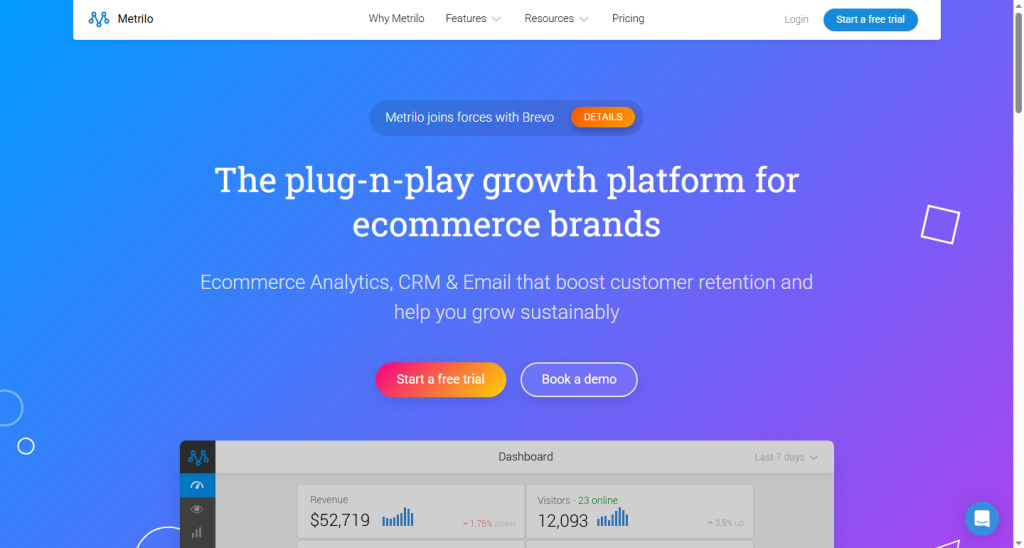
Its biggest strength is retention and cohort analysis, making it easy to identify repeat buyers, high-value customers, and products that generate recurring revenue.
Key Features
- Ecommerce CRM
- Customer profiles
- Ecommerce analytics
- Customer segmentation
- Retention and cohort analysis
- Email marketing
- Real-time reporting
Pricing
Metrilo plans start at $199/month for ecommerce analytics. Plans with CRM and retention analysis start at $379/month, while the complete suite, including email marketing, starts at $599/month.
Businesses needing advanced email automation, SMS, WhatsApp, or other omnichannel marketing features should consider Brevo’s broader platform, as Metrilo primarily focuses on ecommerce analytics, CRM, and email.
10. Drip — Best Ecommerce CRM for DTC Retention Marketing
Drip is an ecommerce CRM and marketing automation platform built for direct-to-consumer (DTC) brands. It helps online stores increase customer retention through personalized email and native SMS marketing, customer segmentation, and behavior-based automation. Drip integrates with Shopify, WooCommerce, Magento, and BigCommerce.
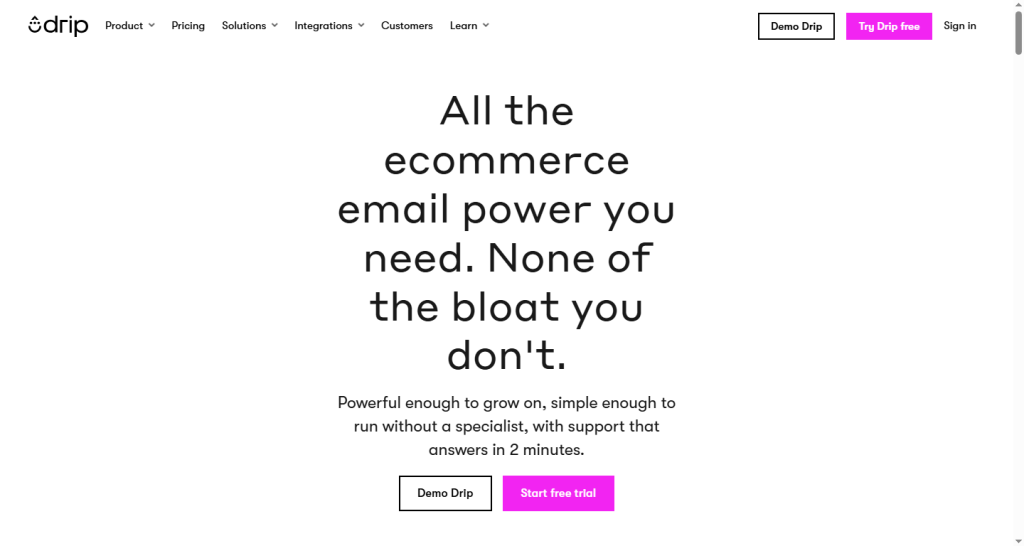
Its biggest strength is its ecommerce-focused customer data model, using purchase history and customer behavior to power automated workflows such as welcome series, abandoned cart reminders, post-purchase follow-ups, and win-back campaigns.
Key Features
- Ecommerce CRM with customer profiles
- Native email and SMS automation
- Customer segmentation
- Revenue attribution and analytics
- Pre-built ecommerce workflows
- Visual automation builder
- A/B testing
- Shopify, WooCommerce, Magento, and BigCommerce integrations
Pricing
Drip plans start at $39/month for up to 2,500 contacts, with pricing increasing as your contact list grows. SMS marketing is included natively but is billed separately on a pay-as-you-go basis, so messaging costs increase with usage.
While Drip offers strong email and SMS automation, it does not provide native WhatsApp, web push notifications, or mobile app push messaging, making it less suitable for brands that need a broader omnichannel marketing platform.
Which Ecommerce CRM Is Best for Small Online Stores?
If you’re running a small online store, as part of broader small business digital transformation trends, small online stores are adopting CRMs. These CRMs offer the best balance of affordability, ease of use, and essential ecommerce features.
- HubSpot CRM
- Omnisend
- Drip
- Zoho CRM
Which Ecommerce CRM Is Best for Mid-Size Businesses?
Growing ecommerce businesses benefit from CRMs that provide stronger automation, analytics, and customer management.
- Klaviyo
- Freshsales
- Pipedrive
- Metrilo
Which Ecommerce CRM Is Best for Enterprise Businesses?
Large organizations need scalable CRM platforms that support complex operations, integrations, and high customer volumes.
- Salesforce Commerce Cloud
- Microsoft Dynamics 365
How to Choose the Right Ecommerce CRM Software
The right ecommerce CRM should match your business goals, budget, and technology stack. Keep these factors in mind before making a decision:
- Define your primary goal, such as customer retention, email marketing, sales management, or enterprise operations.
- Choose a CRM that fits your business size, from startups and small stores to growing brands and large enterprises.
- Verify integrations with your ecommerce platform, payment gateways, and other business tools.
- Compare the total cost, including subscriptions, add-ons, implementation, and migration expenses.
- Look for scalability so the platform can support your business as it grows.
- Prioritize ease of use to ensure your team can adopt the CRM without extensive training.
- Take advantage of free trials or free plans to test features and workflows before making a long-term commitment.
Selecting a CRM that aligns with your current needs while supporting future growth will help you improve customer relationships, streamline operations, and maximize long-term value.
People Also Ask About Ecommerce CRM Software
What Is the Best CRM for Small Ecommerce Businesses?
HubSpot CRM, Omnisend, Drip, and Zoho CRM are among the best options for small ecommerce businesses because they offer affordable pricing, essential features, and easy integrations.
What Features Should an Ecommerce CRM Have?
A good ecommerce CRM should include customer profiles, email and SMS automation, customer segmentation, ecommerce analytics, abandoned cart recovery, and integrations with platforms like Shopify and WooCommerce.
How Much Does Ecommerce CRM Software Cost?
Ecommerce CRM software ranges from free to several hundred dollars per month. Most small businesses can expect to pay $15 to $100 per month, while enterprise solutions typically require custom pricing.
How Do You Integrate a CRM With an Ecommerce Platform?
Most CRM platforms offer native integrations with Shopify, WooCommerce, Magento, and BigCommerce. Simply connect your store through the CRM’s integration settings to sync customer and order data.
What Is the Difference Between an Ecommerce CRM and a Regular CRM?
An ecommerce CRM focuses on customer purchases, retention, and marketing automation, while a regular CRM is designed primarily for managing B2B sales pipelines and customer accounts.