Xfinity Home Internet vs AT&T Fiber: Which Is Better for Your Home?
Xfinity wins on widespread availability, rapid self-installation, and superior mobile bundling, which offers a highly flexible and feature-rich ecosystem for the average modern household. While AT&T Fiber leads in symmetrical speeds and low latency, making it ideal for heavy creators.

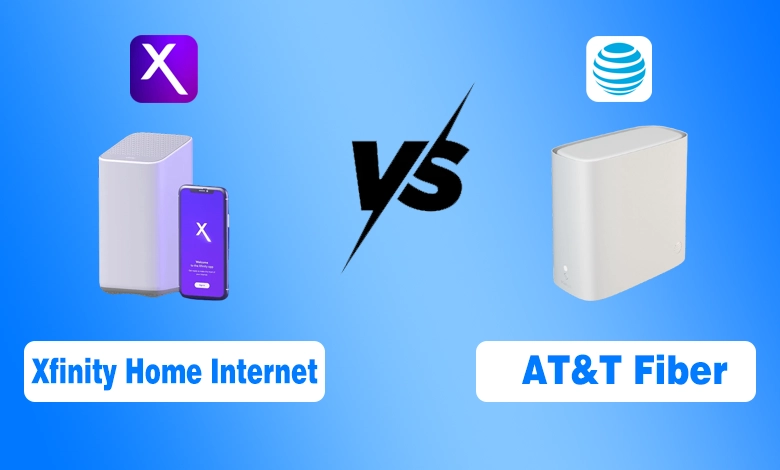
I have spent many hours in the Xfinity Home Internet vs AT&T Fiber comparison to learn how these networks function, and today I want to break down this massive battle.
Whether you are involved in online gaming, looking for seamless streaming, or working remotely and needing a stable connection for video calls, the choice you make impacts your daily productivity and entertainment.
In this guide, I have covered Xfinity Home Internet vs AT&T Fiber. Understanding the core differences between these two giants is essential because they use completely different technologies to deliver data to your doorstep.
Xfinity Home Internet vs AT&T Fiber Comparison Table
| Feature | Xfinity Home Internet | AT&T Fiber |
|---|---|---|
| Technology | Hybrid Fiber-Coaxial | 100% Fiber |
| Max Speed | Up to 2 Gbps | Up to 5 Gbps |
| Upload Speeds | Varies by market | Symmetrical |
| Data Caps | Unlimited on many new plans; legacy plans may vary | Unlimited |
| Contracts | Optional in some offers | No annual contract |
| Self Installation | Yes | Usually No |
| Gaming Performance | Very Good | Excellent |
| Availability | Much Wider Coverage | Limited Fiber Footprint |
| Mobile Bundle Savings | Xfinity Mobile | AT&T Wireless |
| Best For | Availability & Bundles | Speed & Performance |
Is AT&T Fiber Better Than Xfinity?
Yes. If available, AT&T Fiber is generally the better option because it offers symmetrical speeds, lower latency, and unlimited data.
Is Xfinity Cheaper Than AT&T Fiber?
Xfinity often has lower promotional pricing, while AT&T Fiber typically provides more consistent long-term pricing.
Does Xfinity Offer Fiber Internet?
Yes. Xfinity offers fiber internet in limited markets, but most customers use its hybrid fiber-coaxial network.
Is AT&T Fiber worth switching to from Xfinity?
If AT&T Fiber is available at your address and the pricing is comparable, switching is usually worthwhile for better upload speed, performance, and lower latency.
AT&T Fiber 1000 vs Xfinity Gigabit
AT&T Fiber 1000 is usually the better value because it provides symmetrical 1 Gbps upload and download speeds, unlimited data, and lower latency. Xfinity Gigabit remains an excellent option where fiber is unavailable.
Xfinity vs AT&T Fiber: Which Is Better For Different Users?
| User Type | Better Choice |
|---|---|
| Gamers | AT&T Fiber |
| Remote Workers | AT&T Fiber |
| Content Creators | AT&T Fiber |
| Budget Shoppers | Xfinity Home Internet |
| Rural & Suburban Users | Xfinity Home Internet |
| Mobile Bundle Seekers | Tie (Depends on Existing Mobile Service) |
Why Am I a Fan of Xfinity Home Internet?
While AT&T Fiber is a powerhouse for pure speed, I have found that Xfinity Home Internet often fits the practical reality of modern life more seamlessly.
It is not just about the raw megabits. It is about the accessibility and the comprehensive ecosystem Comcast has built around its 10G network. Whether you are traveling or just setting up a new workstation, Xfinity provides a level of convenience that few competitors can match.
Here are the primary features that make Xfinity my go-to recommendation for home connectivity:
- Unmatched Availability: The biggest hurdle with fiber is finding it. Xfinity’s hybrid fiber-coaxial infrastructure is available in nearly every major suburb and city. I am a fan because you don’t have to wait for a “planned” expansion; it’s likely already at your doorstep.
- The xFi Ecosystem: The xFi Gateway is more than just a modem. Its integration with the Xfinity app allows for instant security alerts and “Advanced Security,” which blocks cyber threats before they reach my devices. You can also easily expand your home network using xFi Pods to eliminate dead zones. Plus, the ability to pause WiFi for specific profiles during focused work hours is a game-changer for productivity.
- Seamless Self-Installation: I value my time, and Xfinity is the king of the “Getting Started Kit.” While fiber often requires a technician to drill holes and run lines, I can usually activate Xfinity in under 20 minutes by simply scanning a QR code and connecting a coaxial cable.
- Nationwide Hotspot Access: One of the most underrated perks is the network of millions of secure Xfinity WiFi hotspots. Being a fan means staying connected even when I’m away from my desk, without burning through my mobile data.
- Mobile Bundling Savings: The integration with Xfinity Mobile offers some of the best value in the industry. By combining home internet with a mobile line, the monthly discounts make it significantly more budget-friendly than maintaining separate providers.
Which Internet Provider Should You Choose?
Choose AT&T Fiber If:
- Fiber is available at your address.
- You work remotely.
- You upload large files.
- You need the lowest possible latency.
- You want unlimited data.
Choose Xfinity Home Internet If:
- Fiber is unavailable.
- You want an easier installation.
- You need wider coverage.
- You want Xfinity Mobile bundle discounts.
- You need flexible speed options.
I have created a complete guide on the Xfinity Home Internet Review, through which you can find the complete details.
Xfinity Home Internet vs AT&T Fiber: A Complete Comparison
Xfinity relies heavily on a hybrid fiber-coaxial system, which is incredibly reliable but often faces limitations in upload speeds compared to its rival.
On the other hand, AT&T Fiber offers a 100% fiber-optic connection to the home, which provides symmetrical speeds that are a game-changer for content creators.
In the under section, I go deep into 10 specific factors for a better Xfinity Home Internet vs AT&T Fiber comparison to help you decide which service will truly serve your household best in 2026.
1. Connection Technology and Reliability
The way your internet reaches your home dictates almost everything about your experience, from speed to how it handles bad weather.
- Xfinity utilizes a hybrid fiber-coaxial network that brings fiber to your neighborhood and then uses high-grade copper to finish the journey to your modem.
- AT&T Fiber delivers a pure fiber optic line directly into your residence, which allows for much higher bandwidth and better resistance to electromagnetic interference.
2. Available Download Speeds
AT&T Internet speed vs Xfinity speed is the metric most people care about because it determines how fast your movies stream and your large files arrive.
- I found that Xfinity offers a massive range of plans starting at 100 Mbps and topping out at 2000 Mbps.
- AT&T Fiber matches that variety but pushes the envelope further with hyper-gig plans that can reach up to 5000 Mbps in select metropolitan markets.
You can learn about the Xfinity Home Internet Speed through my guide, as I have covered everything.
3. Symmetrical Upload Speeds
Upload speed is often the unsung hero of a good connection, especially if you are frequently on Zoom or uploading large YouTube videos.
- Most Xfinity Internet plans have significantly lower upload speeds than download speeds, which is common for cable technology, though their newer mid-split upgrades are improving this.
- AT&T Fiber provides symmetrical speeds, meaning if you pay for 1000 Mbps download, you also get 1000 Mbps upload, which makes it one of the best fiber internet providers in the USA.
4. Data Caps and Overage Fees
Nothing ruins a weekend binge-watching session like a notification that you have hit your data limit for the month.
- Xfinity’s data policy depends on your plan. Many newer Xfinity Internet plans now include unlimited data to help you tackle data caps.
- AT&T Fiber offers unlimited data on every single one of its fiber tiers as a standard feature, which gives you peace of mind without the extra bill.
5. Equipment and Hardware Options
The hardware you use is the gateway to your online world, and both companies have invested heavily in high-tech routers.
- Xfinity provides the advanced Xfinity Gateway, which supports WiFi 7 in its latest iteration, and they make it easy to find Xfinity-compatible modems if you want to buy your own.
- AT&T Fiber includes its own AT&T gateway equipment, such as the BGW320 and newer Wi-Fi 7-capable All-Fi Pro gateway, in eligible markets. These gateways are designed to deliver the full performance of AT&T’s fiber network while supporting advanced security and whole-home Wi-Fi features.
6. Contract Flexibility and Pricing
Budgeting for your monthly bills is easier when you know exactly what you are paying and how long you are committed.
- Xfinity often offers lower introductory prices if you agree to a one- or two-year contract, but you should watch out for price hikes once that term ends.
- AT&T Fiber has largely moved away from annual contracts for its fiber plans, and they tend to keep its pricing more transparent and consistent over time.
7. Installation and Setup Experience
Getting your service up and running shouldn’t be a headache, whether you do it yourself or have a pro come over.
- Xfinity is the king of self-installation because it can often activate your existing cable outlets remotely, allowing you to set up in minutes using its app.
- AT&T Fiber almost always requires a professional technician to visit your home to run the physical fiber line and install the specialized optical network terminal.
8. Bundle Opportunities and Perks
Both companies want to be your one-stop shop for all your digital needs, including smartphones and streaming services.
- With Xfinity, you can get massive discounts by adding a mobile line, and they often include perks like a free streaming box or a Peacock subscription.
- AT&T Fiber offers a significant monthly discount on your fiber bill if you also have an active AT&T Wireless unlimited plan, which can save families a lot of money.
9. Latency for Gaming and Professional Use
Low latency or ping is an important factor of Internet speed and is vital for real-time applications like competitive gaming or high-frequency trading.
- Xfinity has made great strides in reducing lag, but the physical nature of cable means it generally sits slightly higher than fiber on the latency scale.
- AT&T Fiber offers ultra-low latency that is virtually unbeatable, which is why it is frequently cited as the gold standard for gamers.
10. Coverage and Availability
The best internet in the world doesn’t matter if it isn’t available at your specific street address.
- Xfinity has the advantage of a massive geographic reach because cable infrastructure is already present in nearly every major town and suburb across the country.
- AT&T Fiber is expanding rapidly, but still has a more limited footprint, mainly focused on major cities and newer developments where it has laid fresh glass.
AT&T’s fiber footprint is expanding quickly. The company reported that its fiber network passed 32 million consumer and business locations by the end of 2025.
Final Verdicts: Xfinity vs AT&T Fiber
That’s all about Xfinity Home Internet vs AT&T Fiber. No matter which one you choose, both are among the best home internet providers in the USA today.
If you are lucky enough to have AT&T Fiber available at your address, I generally recommend it because the symmetrical speeds and lack of data caps are hard to beat.
However, if you are looking for the most flexible entry-level pricing or if you already use Xfinity for your mobile needs, the integration they offer is top-notch.
I hope this guide helps you feel more confident in selecting the best internet for home use that fits your budget and your lifestyle perfectly.
People Also Ask About Comcast Internet vs AT&T Fiber
Do I need a professional technician to install AT&T Fiber?
Yes, AT&T Fiber usually requires a professional installation to bring the fiber line into your home and set up the equipment.
Which provider has a larger coverage area across the United States?
Xfinity has a significantly larger footprint because its cable-based infrastructure is available in many more regions than AT&T Fiber.