Turning Traffic into Revenue – What Top SEO Minds Are Doing Differently

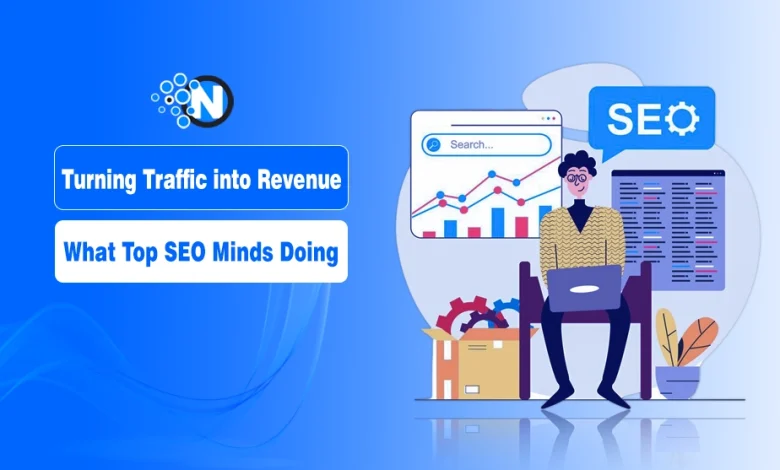
For years, SEO success was measured by rankings and traffic numbers. Today, those metrics tell only part of the story.
In 2026, the businesses winning organic search are not necessarily attracting the most visitors. They are attracting the right visitors and guiding them toward meaningful actions such as purchases, demo requests, newsletter subscriptions, or service inquiries.
Search engines, AI-powered answer engines, and evolving user behaviors have transformed SEO into a revenue-focused discipline. The most successful marketers understand that traffic without conversions is simply a vanity metric.
SEO has evolved from keyword stuffing and backlink chasing to data-driven, user-first strategies. The top SEO professionals now focus on building brand trust, solving real problems, and creating seamless customer journeys that convert visitors into customers.
- Traffic alone does not guarantee business growth.
- Search intent matters more than keyword volume.
- AI search optimization is becoming a competitive advantage.
- Engagement metrics often matter more than pageviews.
- Revenue should be the primary SEO success metric.
The Role of Organic Traffic in Business Growth
Organic traffic remains one of the most valuable digital marketing assets for businesses of all sizes. Unlike SEM (paid advertising), which stops generating visitors when budgets run out, organic traffic can deliver long-term visibility, qualified leads, and sustainable revenue growth.
When users discover your website through search engines, they are often actively looking for information, products, or services related to your industry. This means organic visitors typically have stronger intent and are more likely to engage with your content, subscribe to your email list, request a quote, or make a purchase.
Why Organic Traffic Matters?
Builds Long-Term Brand Visibility
Ranking for relevant search queries helps your brand appear consistently in front of potential customers. Over time, this increases brand recognition and authority within your industry.
Attracts High-Intent Visitors
Organic search users are often seeking solutions to specific problems. By targeting the right keywords and search intent, businesses can attract visitors who are already interested in their offerings.
Delivers Sustainable Marketing ROI
Unlike paid campaigns that require continuous spending, well-optimized content can generate traffic and leads for months or even years after publication.
Supports Every Stage of the Buyer Journey
Organic traffic helps businesses connect with potential customers during:
- Awareness stage
- Consideration stage
- Decision stage
- Post-purchase support
This creates multiple opportunities to nurture visitors and increase conversions.
Enhances Trust and Credibility
Users often trust organic search results more than advertisements. Consistently appearing in search results can strengthen your reputation and establish your business as an authoritative source.
How SEO Experts Turn Traffic Into Revenue
There are multiple ways through which you can turn traffic into revenue. I’ve discussed the top ones below:
1 – Focusing On Intent Over Keywords
It’s not enough to rank for a popular keyword. What matters is whether the visitor is ready to act. A keyword generating 500 monthly visits with strong commercial intent often produces more revenue than a keyword attracting 10,000 informational searches.
Modern content strategies align with every stage of the customer journey:
- Informational content for awareness
- Comparison content for evaluation
- Commercial content for purchase decisions
- Transactional pages for conversions
The goal isn’t attracting everyone. It’s attracting people most likely to become customers.
2 – Following In The Footsteps Of Experts
What works for one business may not work for another. Experts know they need to build strategies around real business outcomes, not just rankings. They study user behavior and adjust based on what drives results. The goal is always revenue, not vanity metrics.
One person doing this well is Brian Ratzker of Data First Digital. With a strong background in performance marketing, he focuses on using data to drive revenue. His approach combines technical SEO, paid media, and analytics to help businesses grow in a predictable, measurable way.
3 – Building Content Clusters That Drive Authority And Conversions
Instead of publishing random blog posts, top marketers build clusters of content around one core topic. This helps search engines see your site as a trusted source. It also keeps users on your site longer, guiding them through related content until they’re ready to take action.
These content clusters make your website feel organized and helpful. They build trust with readers, and trust is a big part of why people choose to convert. The structure also improves internal linking, which boosts visibility and supports growth.
4 – Using CRO And UX Together
Great content means nothing if the user leaves too quickly. Experts combine conversion rate optimization (CRO) and user experience (UX) to create websites that are easy to use and hard to leave. They test things like button colors, page layout, and load speed to boost results.
Even small improvements can lead to more leads or sales. Faster websites, clearer calls-to-action, and cleaner design all help users move through the buying journey. CRO and UX work best when used together, not as afterthoughts.
5 – Using First-Party Data To Guide Strategy
As privacy rules get stricter, collecting your own data is more important than ever. Top marketers use first-party data—like customer behavior, email engagement, and site activity to understand what people want and when they want it.
This kind of data helps shape smarter strategies. Instead of guessing, businesses use facts to plan content, offers, and follow-ups. First-party data gives you better control, leading to more targeted campaigns and stronger results.
6 – Creating Conversion-Optimized Content
Top-performing marketers don’t stop at getting content to rank. They make sure every piece is designed to convert. That means adding things like clear calls to action, helpful visuals, and real customer reviews. These elements build trust and guide the user to take the next step.
They also focus on formatting. Breaking up text with headings, bullet points, and images makes content easier to read. This keeps users on the page longer, which helps increase the chance they’ll click, sign up, or make a purchase. Great content is always written with the end goal in mind.
7 – Investing In Video And Interactive Assets
Modern users want more than just words on a page. That’s why the best marketers are adding videos, calculators, quizzes, and tools to their websites. These elements make the experience more engaging and often lead to higher conversions.
For example, a short video explaining your service can do more than a long paragraph. Interactive tools also let users see results for themselves—like cost savings or timelines. These types of content help build trust and make the site more memorable, encouraging users to act.
8 – Prioritizing E-E-A-T to Build Trust And Drive Sales
People buy from brands they trust. That’s why the smartest professionals focus on E-E-A-T, Experience, Expertise, Authoritativeness, and Trust. They show who’s behind the content, include expert opinions, and add social proof like ratings and testimonials.
Having real names, photos, and contact details on your site builds credibility. So does linking to respected sources and showing up-to-date information. All of these small things help users feel confident in choosing your product or service. Trust directly impacts revenue, especially online.
9. Optimizing for AI Search and Answer Engines
A major shift in 2026 is the rise of AI-powered search experiences. Businesses are increasingly optimizing for Answer Engine Optimization (AEO) alongside traditional SEO.
This includes:
- Structured content
- Direct answers to questions
- Comprehensive topic coverage
- Schema markup
- FAQ sections
- Clear content organization
Research suggests websites visible in AI-generated results often receive more qualified visitors with stronger conversion intent.
10 – Turning SEO Into A Team Sport
Gone are the days when search optimization was one person’s job. Today, it’s a team effort. Leading companies bring content writers, designers, developers, and marketing managers together to build better-performing sites and campaigns.
Everyone has a role. Writers create clear content, designers build appealing pages, and developers keep everything running fast and smooth. Regular communication keeps projects aligned with business goals. This team-based approach creates a stronger, more focused strategy that leads to better results.
Turning Visitors into Revenue
Traffic alone does not grow a business anymore.
The most successful SEO professionals in 2026 focus on attracting qualified visitors, improving engagement, optimizing conversions, and creating measurable business outcomes. They understand that rankings and pageviews are only part of the equation.
Real SEO success comes from turning visibility into trust, trust into action, and action into revenue.
People Also Ask
How do you turn website traffic into revenue?
By attracting high-intent visitors, optimizing conversion paths, improving user experience, and aligning content with business goals.
What is the biggest SEO trend in 2026?
The shift from traffic-focused SEO to revenue-focused SEO, including AI search optimization and conversion rate optimization.
Why is search intent important for conversions?
Search intent helps you understand what users want, allowing you to create content that matches their needs and increases conversion opportunities.
Does more traffic always mean more revenue?
No. High-quality, conversion-focused traffic often generates more revenue than large volumes of low-intent visitors.
How does AI search affect website revenue?
AI search is changing how users discover content, making visibility in AI-generated answers increasingly important for attracting qualified traffic.