After more than 15 years of working in SEO, I’ve learned that successful content strategies rarely start with writing. They start with understanding what people are actually searching for.
Keyword research has changed significantly over the years. Today, it’s less about chasing search volume and more about understanding search intent, building topical authority, and identifying how users discover information through both traditional search and AI-powered experiences.
In this guide, I’m sharing five keyword research tools we regularly use to uncover content opportunities, analyze competition, and build SEO strategies that drive sustainable organic growth.
- Keyword research is still essential, but now focused on intent and topics, not just keywords.
- Modern SEO tools go beyond volume and difficulty — they analyze competition, intent, and authority.
- Tools like Ahrefs and Semrush are best for advanced SEO strategies.
- Free tools like Google Trends and Keyword Planner still provide valuable insights
- The goal of modern SEO is to build topical authority, not just rank individual pages.
What Are Keyword Research Tools?
Keyword research tools are SEO software platforms that help you discover, analyze, and organize search terms people use on search engines like Google.
Instead of guessing what your audience is searching for, these tools provide real data such as:
- Search volume (how many people search a keyword)
- Keyword difficulty (how hard it is to rank)
- Search intent (what users actually want)
- Competitor rankings (who is already ranking)
- Related keyword ideas and questions
Modern keyword research tools in 2026 go beyond simple keyword suggestions. They help you build complete content strategies by grouping keywords into topics, identifying ranking opportunities, and analyzing competitor performance.
Why Keyword Research Still Matters in 2026
Even with AI search and evolving Google algorithms, keyword research is still essential because it helps you:
- Understand what your audience is searching for
- Identify content gaps in your niche
- Build topic clusters and authority
- Improve organic traffic potential
- Align content with search intent
- Compete more effectively in SERPs
However, modern keyword research is less about individual keywords and more about topics, intent, and content ecosystems.
What Modern Keyword Research Tools Do Today?
Modern tools are designed to help you build smarter SEO strategies, not just keyword lists.
They help you:
- Understand search intent (informational, transactional, navigational)
- Find low-competition ranking opportunities
- Build topic clusters and content silos
- Analyze competitor keyword strategies
- Identify content gaps in your niche
- Track keyword trends and seasonality
- Improve content planning and SEO forecasting
If a tool doesn’t support these features, it’s no longer competitive in 2026 SEO workflows.

Top 5 Keyword Research Tools We Use for SEO
1- Google Keyword Planner – Find Keyword Ideas for Free
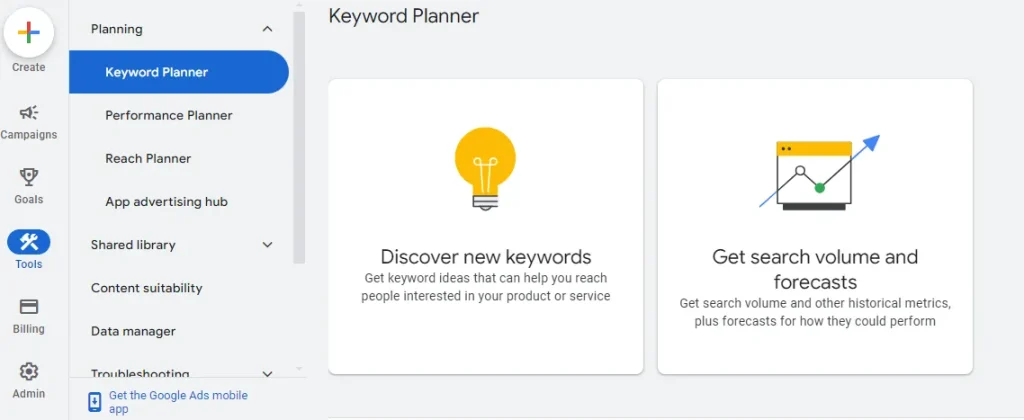
One of the most commonly used and free keyword research tools available on the web.
The basic reason behind its popularity is that it’s totally free to use and directly fetch data from Google and provides authentic results for each query.
In order to get started, you just need a Google account (if you don’t have one, simply create one for free) and make the process of keyword research more efficient and easier as well.
You would also love to use this amazing keyword research tool powered by Google because it provides deep information and data offered by Google.
For beginners, Google Keyword Planner is great, but if you want in-depth keyword research data based on various factors, you must go with another advanced one from the list of best keyword research tools for SEO in order to get a detailed and competitive analysis.
Key Features:
- Provides keyword ideas directly from Google data
- Shows average monthly search volume ranges
- Displays competition level (low, medium, high)
- Estimates cost-per-click (CPC) for paid campaigns
- Helps group keywords into ad campaigns
- Useful for validating keyword demand
2- Ahrefs – A Premium Keyword Generator
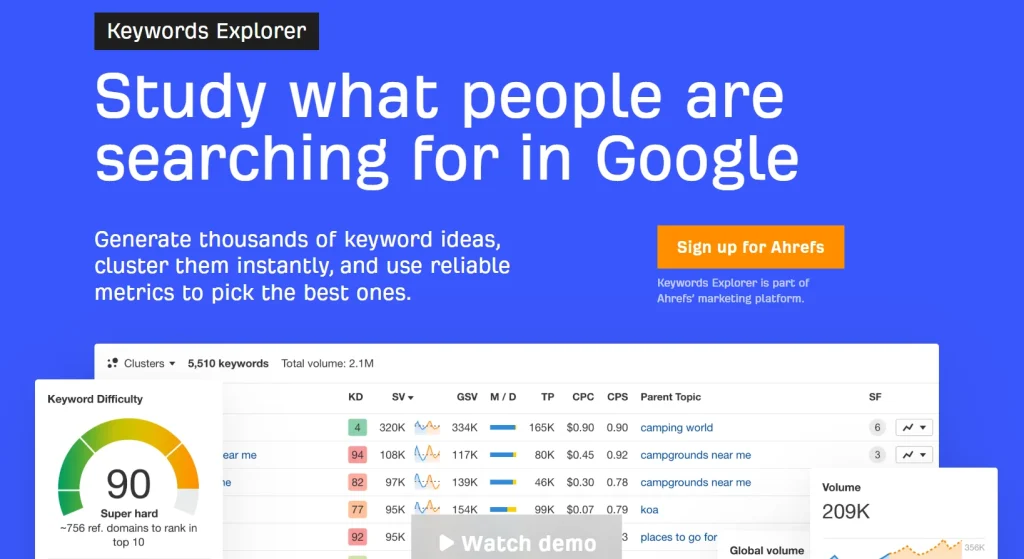
Basically, Ahrefs is an online company with a huge collection of SEO tools, and their keyword explorer is an amazing keyword research tool for SEO around the world, and billions of people are using it.
All you need to do is create an account there and log in to the account using your details, and navigate to the Keywords Explorer section.
By typing your favorite topic or keyword in the search box, you can have up to 100 options there for authentic and perfect keyword research.
You can choose your favorite country from the options because they get and include data for your keyword research from several countries.
Effective keyword research becomes even more valuable when combined with a strong technical SEO foundation.
After that, you will be able to see important metrics for your favorite keywords such as monthly search volume, competitiveness, traffic potential, and LSI keywords, etc., in order to get something great in results.
Key Features:
- Massive global keyword database
- Accurate keyword difficulty (KD) scoring
- SERP analysis with ranking insights
- Content gap analysis to find missing opportunities
- Competitor keyword tracking
- Click-through rate (CTR) estimation
- Topic and backlink integration for deeper SEO insights
3- SEMrush – Do Keyword Research Like a Pro
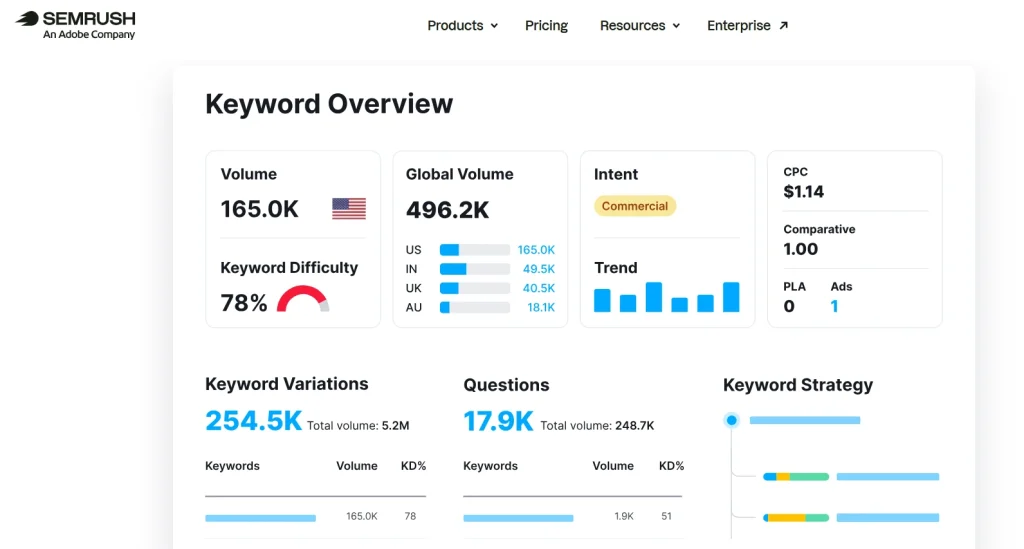
It is a brilliant and one of my favorite SEO keyword research tools ever. It provides you with great keyword research results along with information on keywords for both PPC and organic traffic to find out which keywords would be fruitful for you, either to get high ranks or to get a high PPC rate.
SEMrush is a handy keyword research tool for SEO that offers both short and long-tail keyword research for its users.
It also shows how many searches different keywords are getting, whether the searches are paid or free, and what the CPC Adwords price each of them has.
SEMrush can work well when it comes to checking the competition for keywords you are about to work on.
A lot of digital marketers are also using SEMrush to spy on competitors in order to beat them in SERPs by making foolproof marketing strategies.
Key Features:
- Keyword Magic Tool with millions of keyword ideas
- Intent-based keyword categorization (informational, transactional, etc.)
- Competitor keyword research and domain comparison
- Topic clustering for content planning
- SEO content optimization assistant
- PPC keyword data and advertising insights
- Position tracking and SERP monitoring
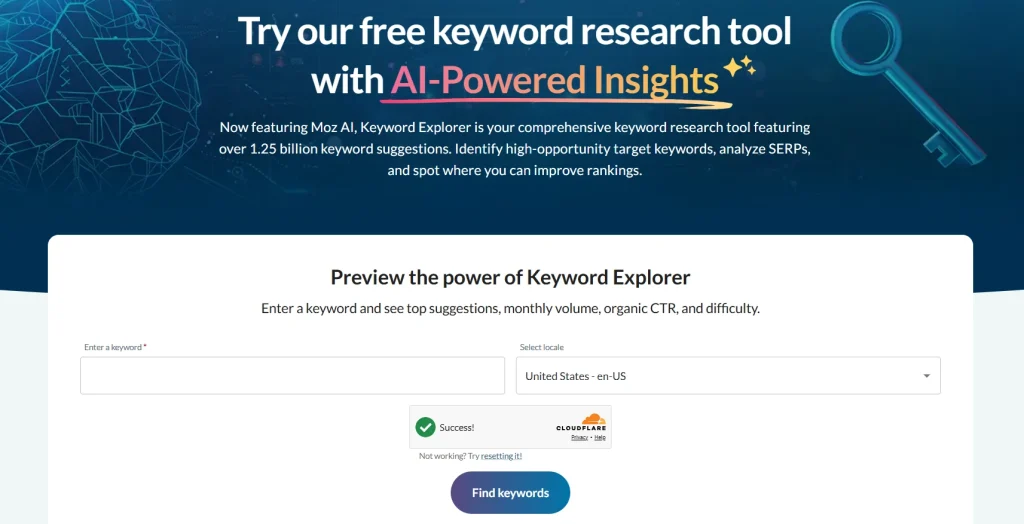
4- Moz Keyword Explorer – Find the Best Keywords
Moz keyword explorer is one of the best keyword research tools that helps you find and prioritize keywords for your SEO campaigns.
Not only this, you can also find the keywords you are ranking for in search results.
It sounds like a ‘Freemium’ keyword research tool and they provide perfect results with keyword analysis features.
The keyword competition checker is one of the great features of this tool that helps you find out how difficult it would be for you to rank a specific keyword in search engines.
Key Features:
- Keyword difficulty scoring for ranking potential with AI insights
- Opportunity score to estimate SEO value
- Organic CTR predictions
- SERP analysis for top-ranking pages
- Keyword suggestions and related queries
- Priority score combining multiple SEO metrics
- Clean and beginner-friendly interface
5- KWfinder – Ultimate LongTail Keyword Research Companion
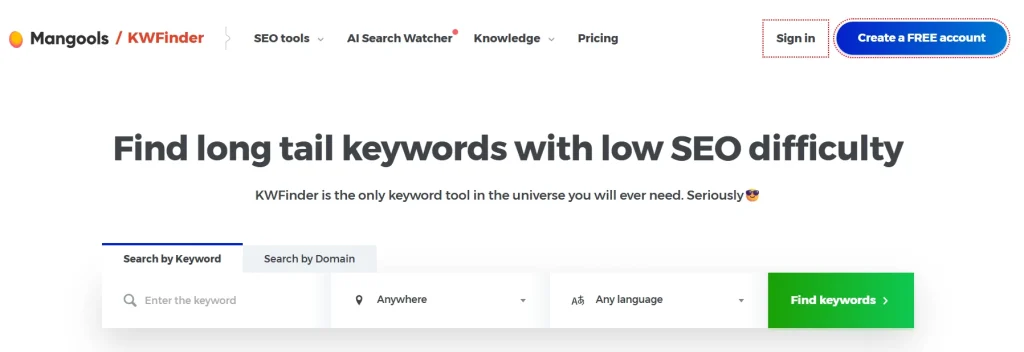
KWfinder is the right choice for you if you are looking for the best keyword research tool for SEO, which is completely dedicated to Keyword research only and provides bona fide results as well.
Since it is the new tool in the digital marketing industry powered by Mangools, it is one of the fastest-growing SEO tool companies with a strong customer & fan base.
It comes with some free and premium plans that suit all your needs when it comes to finding keywords that drive more traffic and leads as well.
KWfinder is a superb keyword tool to find longtail keywords that are great to help your articles rank higher in search results.
Key Features:
- Easy keyword discovery with long-tail suggestions
- Accurate keyword difficulty scoring
- Local SEO keyword research support
- SERP analysis for each keyword
- Keyword filtering based on volume and difficulty
- Simple, beginner-friendly dashboard
- Fast keyword lookup for quick research
Keyword Research Tools Comparison Table
| Tool | Best For | Difficulty Data | Competitor Analysis | Pricing |
|---|---|---|---|---|
| Google Keyword Planner | Beginners & free keyword research | Basic | No | Free |
| Ahrefs | Professional SEO campaigns | Excellent | Excellent | Premium |
| Semrush | SEO & content marketing | Excellent | Excellent | Premium |
| Moz Keyword Explorer | Keyword prioritization | Good | Good | Paid |
| KWFinder | Long-tail keyword research | Good | Limited | Budget-Friendly |
Which Tool Should You Choose?
- Beginners → Google Keyword Planner
- Budget SEO Users → KWFinder
- Content Marketers → Semrush
- SEO Professionals → Ahrefs
- Easy Keyword Prioritization → Moz
Choosing the Right Keyword Research Tool
Keyword research in 2026 is no longer about collecting keywords; it’s about understanding the intent, search behavior and building topic authority.
The best keyword research tools help you:
- Identify real user intent
- Discover ranking opportunities
- Build structured content strategies
- Compete more effectively in SERPs
I mostly use Semrush and Ahrefs for finding the right keywords based on intent and search behaviour to dominate in search results and AI answers.
If used correctly, these tools don’t just improve rankings, they create a predictable system for long-term organic growth.
People Also Ask
What is the best keyword research tool for SEO in 2026?
Ahrefs and Semrush are considered the most powerful tools for advanced keyword research, competitor analysis, and content strategy.
Are free keyword research tools still useful?
Yes. Tools like Google Keyword Planner and Google Trends are still valuable for basic keyword research and trend analysis.
How many keyword research tools should I use?
Most SEO professionals use 2–3 tools together to get more accurate data and better keyword insights.
What is the most important factor in keyword research today?
Search intent is now more important than search volume or keyword difficulty.
Can beginners do keyword research without paid tools?
Yes. Beginners can start with free tools like Google Keyword Planner, Google Trends, and AnswerThePublic.
What is the difference between keyword research and topic research?
Keyword research focuses on individual search terms, while topic research focuses on building clusters of related content around a subject.