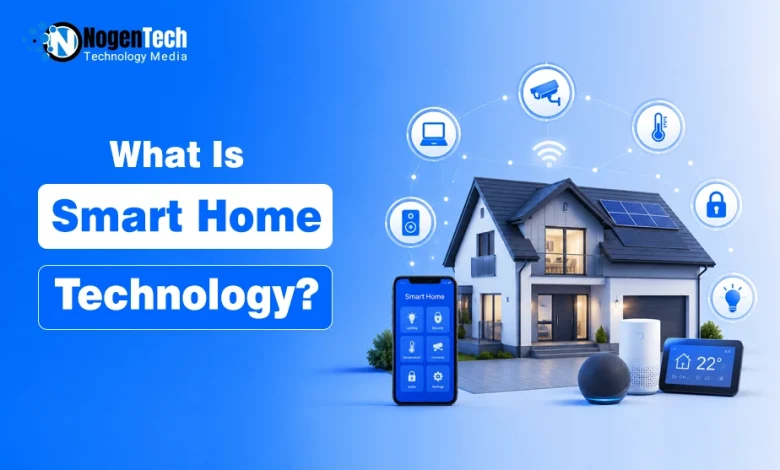
Smart home technology connects devices such as smart speakers, thermostats, security cameras, smart locks, lighting systems, and appliances so they can be monitored, controlled, and automated through apps, voice assistants, or smart home platforms.
This makes homes more convenient, secure, and efficient. What was once limited to costly installations is now accessible to homeowners and renters alike.
Moving next, let’s explore what smart home technology is, how it works, its key benefits, popular devices, emerging trends, and whether it’s worth investing in a smart home in 2026.
- Smart home technology connects devices through the internet for automation and remote control.
- AI and Matter are making smart homes more intelligent and compatible.
- Smart homes can improve convenience, security, accessibility, and energy efficiency.
- Privacy, cybersecurity, and device compatibility remain important considerations.
- Starting with a few essential devices is often more cost-effective than building a fully connected home immediately.
What Is Smart Home Technology and Where Is It Used?
Smart home technology refers to connected devices and systems that allow homeowners to monitor, control, and automate different parts of their homes through smartphones, tablets, computers, voice assistants, or smart home platforms.
These connected devices and systems can be grouped into several key categories, each serving a different aspect of home management:
| Category | Examples |
|---|---|
| Smart Security | Video doorbells, smart locks, security cameras |
| Smart Lighting | Smart bulbs, switches, and automated lighting |
| Smart Climate Control | Smart thermostats, smart sensors, connected cooling systems |
| Smart Entertainment | Smart TVs, streaming devices, smart speakers |
| Smart Monitoring | Leak detectors, smoke sensors, and environmental monitors |
| Smart Automation | Schedules, routines, voice-controlled actions |
Instead of manually adjusting every device, this technology enables users to manage lighting, climate control, security, entertainment systems, and smart home appliances from a single platform or app.
A smart home can be as simple as controlling a smart speaker and integrated LED lighting while adjusting a few accent lights, or as advanced as a fully connected ecosystem managed through simple voice commands.
In such a setup, devices can automatically respond to schedules, routines, and user behavior.
How Does Smart Home Tech Work to Automate Your Daily Housing Chores?
A typical smart home works through a simple process: a device detects information or receives a command, the information is transmitted through the connected network or platform, and a user command or automation rule triggers the appropriate action.
For example, a motion sensor can detect movement and trigger connected lights to turn on. Most smart homes consist of four key components.
Smart Devices That Integrate Together
These are the products users interact with every day, ranging from basic smart speakers to more advanced smart home technology gadgets designed for security, automation, and energy management. Examples include:
- Smart thermostats
- Smart locks
- Smart speakers
- Smart lighting systems
- Security cameras
- Smart plugs
- Smart appliances (like multi-tasking cleaning gadgets like the Tineco Floor One S9 Artist Steam Wet Dry Vacuum)
Connectivity Setup for the Process of Integration
Smart home devices can communicate through different networking technologies and standards, depending on the device and ecosystem.
- WiFi
- Bluetooth
- Zigbee
- Z-Wave
- Matter
Matter is an interoperability standard that helps compatible smart home devices from different manufacturers work together across supported ecosystems. These protocols allow devices to exchange information and respond to commands.
Smart Home Ecosystems for Commanding Devices to Work
Many users manage devices through platforms such as:
- Amazon Alexa
- Google Home
- Apple HomeKit
These ecosystems provide a central way to set up compatible devices, control them, create routines, and manage automation across supported products.
Smart Automation Workflows That Work on Their Own
Automation allows devices to perform actions automatically based on schedules, routines, or sensor activity. For example:
- Lights turn on when motion is detected.
- Doors lock automatically at bedtime.
- Thermostats adjust temperatures based on occupancy.
- AI-enabled security cameras activate when nobody is home.
Smart home automation generally follows a trigger and action model. A sensor, schedule, or user command acts as the trigger, while the connected device performs the resulting action.
What Are the Benefits of Smart Home Technology?
The growing popularity of smart homes is driven by practical benefits rather than novelty. Here are some of the key ways smart home technology can make everyday living easier and more efficient:
- Accessibility: Smart home accessories can improve independence for older adults and people with disabilities by providing hands-free control of everyday household functions.
- Greater Convenience: Smart devices simplify everyday tasks by letting users control household functions remotely, such as turning off lights, adjusting room temperature, creating daily routines, or using voice commands.
- Improved Home Security: Smart technology provides greater control and awareness with devices such as video doorbells, motion sensors, smart locks, indoor and outdoor security cameras, and smart alarm systems. These tools can provide real-time monitoring and instant alerts when unusual activity is detected.
- Better Energy Efficiency: Smart devices can help reduce unnecessary energy use through features such as automatic thermostat adjustments, lighting schedules, energy-monitoring smart plugs, and smart cooling systems, which may help lower electricity bills over time.
Many of these benefits become possible when smart devices work together through automation, allowing everyday tasks to happen automatically with little manual input.
How Much Does Smart Home Technology Cost in 2026?
A smart home setup can fit almost any budget. The total cost depends on the number and type of devices you choose, installation requirements, the smart home ecosystem you use, and any subscription or service fees.
- Entry-Level Setup ($100–$500): A basic smart home can start with a few affordable devices, such as a smart speaker, smart bulbs, and smart plugs. Individual smart bulbs typically cost around $10–$50, while smart plugs generally cost $10–$35 and smart speakers around $50–$100.
- Mid-Range Setup ($500–$2,000): A more connected setup may include a video doorbell, smart thermostat, security cameras, and smart locks. Smart thermostats typically cost around $130–$250, smart locks around $150–$300, and video doorbells around $200. Security systems can add another $200–$700+, depending on the equipment and monitoring plan.
- Advanced Smart Home ($2,000+): A fully connected home can include whole-home automation, smart blinds, multi-room audio, advanced security systems, and energy management systems. Costs can increase significantly when multiple rooms, professional installation, or ongoing monitoring services are involved.
The good news is that homeowners do not need to build everything at once. Starting with a few useful devices and gradually adding compatible products can make it easier to spread out the cost while creating a more connected home over time.
Challenges of Implementing Smart Technology in Your Home
Despite its advantages, smart home technology also comes with a few challenges that homeowners should consider before building a connected home:
- Initial Costs: Building a fully connected smart home can require a significant upfront investment, especially when purchasing multiple devices at once.
- Privacy Concerns: Connected devices collect data that may raise privacy concerns. Reviewing privacy settings and choosing reputable manufacturers can help reduce these risks.
- Security Risks: Like any internet-connected technology, smart devices can become targets for cyberattacks if they are not properly secured.
- Compatibility Issues: Not every device works seamlessly with every smart home ecosystem. Checking compatibility before purchasing is especially important when combining products from different manufacturers.
- Internet Dependence: Some smart home features rely on an internet connection for cloud services, remote access, or account-based functionality. However, certain local automations may continue working without internet access, depending on the device and ecosystem. Choosing the right internet connection can also affect smart home performance.
What’s Changing in Smart Home Technology in 2026?
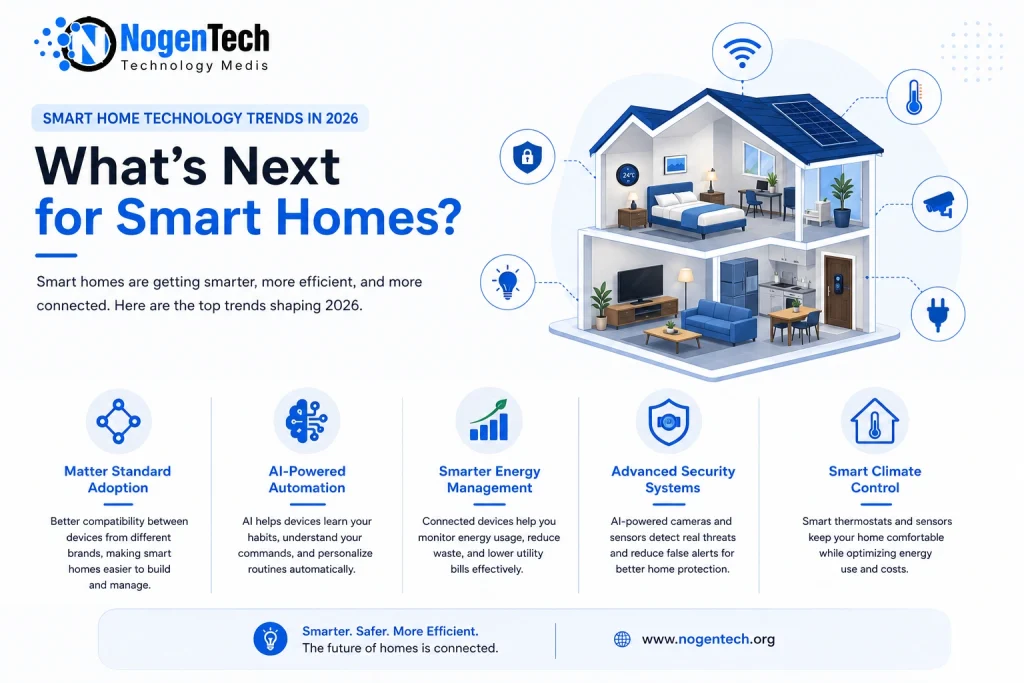
Smart homes are becoming more intelligent, connected, and personalized as new technologies improve how devices work together. From AI-powered automation to better compatibility and energy management, several trends are shaping smart homes in 2026.
- Matter Standard Adoption: Matter is improving compatibility between devices from different brands, making smart homes easier to build and manage without being tied to a single ecosystem.
- AI-Powered Automation: AI is making automation more adaptive by helping devices recognize patterns, understand user commands, and personalize routines based on user preferences.
- Smarter Energy Management: Connected devices are giving homeowners better ways to monitor energy consumption, reduce waste, and manage heating and cooling more efficiently.
- Advanced Security Systems: AI-powered cameras and sensors are improving threat detection while helping reduce unnecessary or false alerts.
- Smart Climate Control: Connected thermostats and smart sensors are helping homeowners maintain comfortable indoor temperatures while using energy more efficiently.
Curious More About Smart Home Technology? Here Are Some Answers
What is the main purpose of smart home technology?
The main purpose of smart home technology is to automate household tasks, improve convenience, enhance security, and help homeowners manage energy usage more efficiently.
What devices are commonly used in a smart home?
Common smart home devices include smart speakers, thermostats, security cameras, video doorbells, smart locks, smart lighting systems, smart plugs, and home monitoring sensors.
Do smart home devices require WiFi?
Most smart home devices use WiFi, although some also communicate through Bluetooth, Zigbee, Z-Wave, or Matter depending on the product and ecosystem.
Is smart home technology safe?
Smart home technology is generally safe when devices are regularly updated, protected with strong passwords, and connected to a secure home network.
Can smart home technology reduce electricity bills?
Yes. Smart thermostats, automated lighting systems, energy-monitoring plugs, and connected climate control devices can help reduce unnecessary energy consumption.
Can smart home devices work without the internet?
Some smart home devices and automations can continue working locally without an internet connection, while cloud-based features such as remote access and certain notifications may require internet connectivity. The exact behavior depends on the device and ecosystem.
Which smart home ecosystem is best?
Amazon Alexa offers broad device compatibility, Google Home integrates well with Google services, and Apple HomeKit focuses heavily on privacy and security. The best choice depends on individual preferences and existing devices.
Final Thoughts on Smart Home Technology
Smart home technology is no longer just about controlling lights with your phone. From home automation, smart security, and energy management to AI-powered devices and better connectivity, it is gradually changing how we interact with our homes.
In my view, the best smart home is not the one with the most devices, but the one that solves everyday problems without adding unnecessary complexity. Start small, choose compatible devices, and build a setup that genuinely makes your home more comfortable, secure, and efficient.