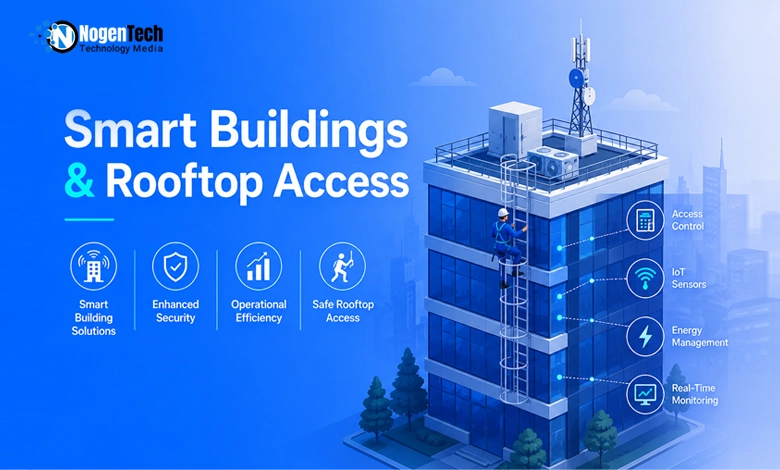
In modern smart buildings, rooftop systems are no longer passive structures. They are part of a connected ecosystem that includes IoT sensors, automated HVAC systems, predictive maintenance tools, and remote facility monitoring.
Yet even in highly advanced smart buildings, rooftop access points, such as hatches and covers, often remain a weak link. These components are still exposed to extreme weather, and when they fail, they can disrupt not only physical integrity but also digital building systems connected to them.
In this guide, you will learn about the ways extreme weather impacts rooftop access points in smart-enabled environments and how to prevent damage.
Role of Rooftop Access Points in Modern Buildings
Rooftop access points play a critical role in modern buildings by providing safe entry to roof areas for maintenance, inspections, and system management. In both traditional and smart buildings, they serve as essential gateways to rooftop infrastructure such as HVAC systems, drainage units, solar panels, and communication equipment.
In modern smart buildings, their role goes beyond physical access. Rooftop access points are increasingly integrated into building management systems (BMS) and IoT-enabled infrastructure, helping facility teams monitor conditions, schedule maintenance, and ensure operational efficiency.
How Extreme Weather Impacts Smart Rooftop Access Points in Modern Buildings
1. Thermal Movement Disrupts Seals and Smart Monitoring Accuracy
Temperature fluctuations cause metal frames and seals to expand and contract daily. Over time, this weakens gaskets and compromises airtight sealing.
In smart buildings, this issue goes beyond physical wear. Small seal failures can:
- Trigger inaccurate humidity and temperature sensor readings
- Increase HVAC workload through undetected air leakage
- Reduce energy efficiency tracked by smart systems
UV exposure also accelerates rubber degradation, creating micro-gaps that are often invisible until performance data starts showing abnormal energy consumption patterns.
Modern smart hatches often integrate thermal break designs and sensor feedback loops that alert facility managers when seal integrity begins to decline.
2. Ponding Water Overloads Sensors and Structural Protection Systems
Flat roofs often experience water pooling after heavy rainfall. Even minor ponding around access hatches can create hydrostatic pressure that forces moisture through weak points.
In smart infrastructure, this becomes more complex:
- Water intrusion can damage IoT sensors installed near rooftop systems
- Moisture can interfere with smart HVAC and ventilation controls
- Alert systems may trigger false readings if insulation becomes saturated
The best defense is a raised curb; if your hatch frame is a few inches above the roof, the pool will be stopped. And while you’re engineering that solution, have your curb outfitted with drainage channels to stop even minor leaks from causing a problem.
For facilities exploring engineered options designed around these real-world conditions, the Surespan Covers homepage offers access solutions built to handle actual environmental loads rather than average-condition assumptions. Water ingress through a compromised hatch doesn’t stay in the ceiling cavity, it finds electrical conduit, insulation, and structural framing.
3. Wind Uplift Can Disrupt Connected Rooftop Infrastructure
High wind events don’t just damage physical covers—they can destabilize entire rooftop ecosystems.
Wind uplift can:
- Dislodge access hatches connected to sensor networks
- Damage rooftop communication hardware (5G nodes, Wi-Fi repeaters)
- Interrupt automated climate control systems linked to rooftop HVAC units
According to IBHS data, wind speeds as low as 70–80 mph can initiate structural failures in roof penetrations, especially at weak connection points.
In smart buildings, these failures can cascade into system-wide monitoring blind spots, where automation systems lose real-time rooftop data during critical weather events.
4. Snow and Ice Interfere with Automated Access and Safety Systems
Snow accumulation adds structural load stress, while ice introduces operational failure risks for smart access systems.
In connected facilities, this can lead to:
- Frozen smart locks or automated access controls
- Blocked emergency egress systems linked to building safety networks
- Sensor malfunctions caused by ice bridging around frames
Ice buildup is particularly dangerous in smart emergency systems, where access points may be electronically monitored or remotely controlled.
To mitigate this, modern smart hatches integrate heated frames, anti-ice coatings, and automated de-icing alerts tied into facility management dashboards.
5. Slip Hazards Affect Both Physical Safety and Smart Maintenance Systems
Extreme weather significantly increases slip risks around rooftop access points, especially during maintenance operations.
In smart buildings, this risk extends further:
- Maintenance robots or drones may be limited during unsafe roof conditions
- Sensor calibration tasks may be delayed due to access restrictions
- Safety systems may trigger lockdown protocols that limit rooftop entry
It is no longer enough to rely only on slip-resistant materials. Smart facilities now incorporate:
- Real-time weather condition monitoring
- Automated maintenance scheduling based on roof safety data
- Integrated alerts for hazardous rooftop conditions near access points
Rooftop Access Points as Part of the Smart Building Ecosystem
In a smart building environment, rooftop access points are no longer isolated structural elements, they are part of a connected infrastructure that influences energy efficiency, safety systems, and operational intelligence.
When these access points fail, the impact extends beyond physical damage. It can disrupt data flow, compromise automation systems, and reduce the accuracy of smart building analytics.
Investing in weather-resistant, sensor-ready, and intelligently designed access systems ensures long-term resilience. Features such as thermal breaks, reinforced seals, load-rated construction, and IoT compatibility are no longer optional; they are essential for modern building performance.
FAQs
What are smart rooftop access points?
Smart rooftop access points are modern roof hatches and covers integrated with sensors, IoT systems, and automated building management technologies.
How does extreme weather affect rooftop access systems?
Extreme weather can cause seal damage, water intrusion, wind uplift, ice blockages, and structural stress, all of which may impact both physical and digital building systems.
Why are rooftop access points important in smart buildings?
They provide entry for maintenance while also connecting to monitoring systems that track environmental conditions, safety, and energy efficiency.
Can IoT systems detect rooftop damage early?
Yes, many smart buildings use IoT sensors to detect leaks, temperature changes, or structural stress before major damage occurs.
What is the biggest risk to rooftop access points during storms?
Wind uplift and water intrusion are the most critical risks, as they can quickly compromise both structural integrity and connected systems.
How can smart buildings protect rooftop systems?
Using reinforced materials, thermal breaks, raised curbs, IoT monitoring, and weather-responsive maintenance scheduling helps reduce risk.