Living in 2026 means our homes are more connected than ever before, which makes a reliable internet connection as essential as electricity or running water.
Whether you are streaming high definition content, navigating a virtual workspace, or managing a house full of smart devices, your home internet is the invisible engine powering it all. I remember when a simple dial-up tone was the height of technology, but today, we demand seamless speed and instant connectivity.
To help you understand this complex tech system, I have created this guide to explain what home internet is, along with its types and the speed you will get for downloading and uploading. Also, I have listed the 5 best options here.
What is Home Internet?
Home Internet is a high-speed Internet service providing fixed network access to residences. It connects local devices to the global web via service providers, utilizing hardware like modems and routers.
The key elements of home internet are:
- ISPs: These are the companies that act as your gateway to the digital world by providing the infrastructure and service needed to access the internet.
- Bandwidth: Bandwidth represents the maximum capacity of your connection to transmit data over a specific period, essentially acting like the width of a highway for information.
- Data: This is the actual information, such as text, images, or video, that is converted into digital signals and moved across the network during your online activities.
- Connectivity Protocols: These are the standardized sets of rules and digital handshakes that allow different devices, like a smart TV, mobile, or computer, and networks to communicate with each other seamlessly.
How Home Internet Works?
The working principle of Home Internet is the same as it is in professional workspaces: your ISP delivers signals to your door through physical wires or wireless beams. After that, both the modem and the router play their own role by translating them into data and then broadcasting that data as WiFi.
Home internet is designed to ensure Internet safety and to handle the heavy internet usage of multiple devices, like smartphones, smart TVs, and gaming PCs, operating simultaneously under one roof.
In 2026, home internet has evolved from a luxury into a fundamental utility. It is not just about browsing websites anymore. It is about supporting immersive environments and real-time data transfers that keep us productive and entertained.
7 Types of Home Internet Connections in 2026
The landscape of connectivity has shifted dramatically over the last few years, and in 2026, we have 7 distinct types of home Internet to get your house online. In the following table, I have compared the Internet speed you can get from them.
| Connection Type | Typical Download Speed | Typical Upload Speed | Average Speed | Ping (Reaction Time) | Latency (Delay) |
|---|---|---|---|---|---|
| Fiber Optic | 1 Gbps – 8 Gbps | 1 Gbps – 8 Gbps | 940 Mbps | 5 – 15 ms | 8 – 19 ms |
| Cable Internet | 100 Mbps – 2 Gbps | 10 Mbps – 200 Mbps | 400 Mbps | 15 – 35 ms | 20 – 45 ms |
| 5G Home | 100 Mbps – 1 Gbps | 10 Mbps – 50 Mbps | 300 Mbps | 20 – 40 ms | 30 – 50 ms |
| Satellite (LEO) | 50 Mbps – 250 Mbps | 10 Mbps – 30 Mbps | 100 Mbps | 25 – 60 ms | 30 – 70 ms |
| LTE (Backup) | 25 Mbps – 100 Mbps | 5 Mbps – 15 Mbps | 40 Mbps | 35 – 60 ms | 45 – 80 ms |
| DSL | 5 Mbps – 100 Mbps | 1 Mbps – 10 Mbps | 25 Mbps | 25 – 50 ms | 35 – 60 ms |
| Hybrid (HFC) | 300 Mbps – 1.5 Gbps | 20 Mbps – 100 Mbps | 350 Mbps | 15 – 30 ms | 18 – 40 ms |
Now, I have explained them below:
1. Fiber Optic Internet (FiOS)
Fiber is currently the gold standard for anyone who values raw power and reliability. It uses incredibly thin strands of glass to transmit data as pulses of light.
Because light travels faster than electrical signals in copper, fiber offers speeds that can easily reach several gigabits per second. I recommend this for households involved in heavy gaming or professional creators who need to move massive files without waiting.
To pick the right provider, you should check my guide on the best fiber Internet providers in the USA. In this way, you can make an informed decision.
2. Cable Internet
Cable remains a very popular choice because it utilizes the same coaxial cables that deliver television services.
While it is generally very fast and widely available, it can sometimes experience slowdowns during peak evening hours when everyone in your neighborhood is online at once.
It is a reliable workhorse for the average family that enjoys streaming movies and fast and secure browsing.
3. 5G Home Internet
5G home internet uses the same cellular towers that power your smartphone, but delivers that signal to a dedicated gateway in your house.
It is a fantastic wireless alternative for people who live in areas where laying physical cables is difficult or for those who want a simple setup without professional installation.
Besides switching your connection, I have also provided tips to improve Home WiFi speed so you can overcome the speed challenges easily.
4. Satellite Internet (LEO)
Low Earth Orbit satellite networks have revolutionized connectivity for rural residents.
Unlike the old satellites that sat high in the atmosphere and caused massive delays, these newer constellations are much closer to Earth. It means you can get decent speeds even if you live in the middle of a forest or on a remote mountainside.
If you don’t know which type of Home Internet you are using, you can check our complete guide on “What Type of Home Internet Do I Have?“
5. LTE (Wireless Backup)
LTE stands for Long Term Evolution, which is essentially 4G technology. While it is slower than 5G, many people still use it as their primary home internet in areas where 5G hasn’t arrived yet.
In 2026, it is also frequently used as a failover or backup, especially by gamers when playing on remote locations using their gaming laptops. Some premium cable plans include an LTE backup, like in XFinity Pro, so that if a storm knocks out your physical wire, your home stays online using the cellular network.
6. DSL (Digital Subscriber Line)
DSL is an older technology that runs over your existing copper telephone lines.
While it is significantly slower than fiber or cable, it is still available in many areas where other high-speed options haven’t arrived yet. It is generally the most budget-friendly option, though it struggles with high-bandwidth activities like 4K streaming.
7. Hybrid Fiber Coaxial (HFC)
Many modern Home Internet providers use a hybrid approach where fiber lines run to a central hub in your neighborhood, and then coaxial cable covers the final stretch to your home.
It gives you a significant boost over traditional cable while keeping costs lower than a full fiber to the home installation.
5 Best Home Internet Service Providers in 2026
Choosing a Home Internet service provider is a personal decision based heavily on where you live, but in 2026, 5 companies have consistently risen to the top of the pile.
That’s why I have provided a short overview of these 5 best home internet service providers in 2026, along with their Internet speeds, like download, upload, average, ping, and latency.
1. Google Fiber
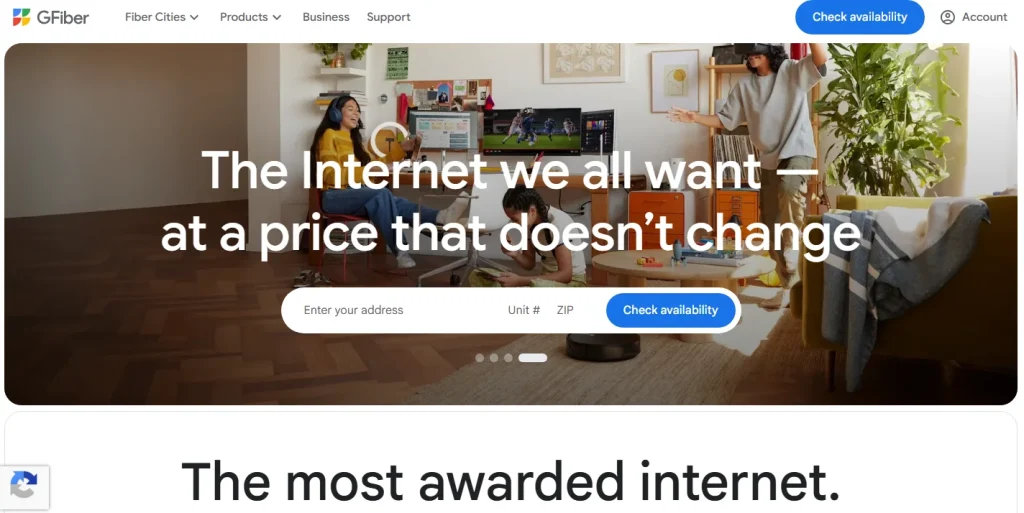
If you are lucky enough to live in a city where they operate, Google Fiber is hard to beat. They offer incredibly high speeds with no data caps and very transparent pricing.
Their customer service is generally rated higher than that of traditional cable giants. In 2026, Google Fiber expanded its multi-gigabit tiers, which makes it the preferred choice for power users and households with dozens of connected devices.
The connection is famous for its symmetry, which means you get the same blistering speed whether you are pulling data down or pushing it out.
| Metric | Performance Value |
|---|---|
| Download Speed | 1 Gbps to 8 Gbps |
| Upload Speed | 1 Gbps to 8 Gbps |
| Average Speed | 940 Mbps (on 1 Gig plan) |
| Ping | 10 ms to 15 ms |
| Latency | 12 ms to 19 ms |
2. Starlink
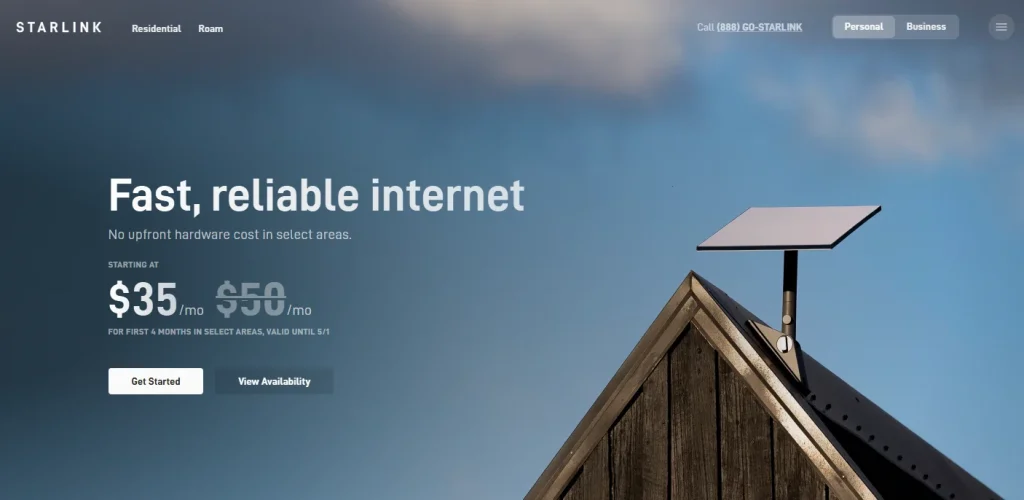
For those off the beaten path, Starlink has become the go-to provider. Their satellite technology has matured significantly in 2026. Hence, they offer low latency and impressive speeds to almost any location on the planet.
I have seen it transform connectivity for people in rural areas who previously had no options beyond slow dial-up or expensive legacy satellite. With thousands of new satellites in orbit, the service is more stable than ever.
Hence, it is now a viable alternative even for competitive gaming and high-quality video calls in remote regions. I have also covered the Starlink vs Google Fiber vs xFi Complete comparison that will help you find the best internet.
| Metric | Performance Value |
|---|---|
| Download Speed | 50 Mbps to 250 Mbps |
| Upload Speed | 10 Mbps to 30 Mbps |
| Average Speed | 100 Mbps |
| Ping | 25 ms to 50 ms |
| Latency | 30 ms to 60 ms |
3. Verizon 5G Home
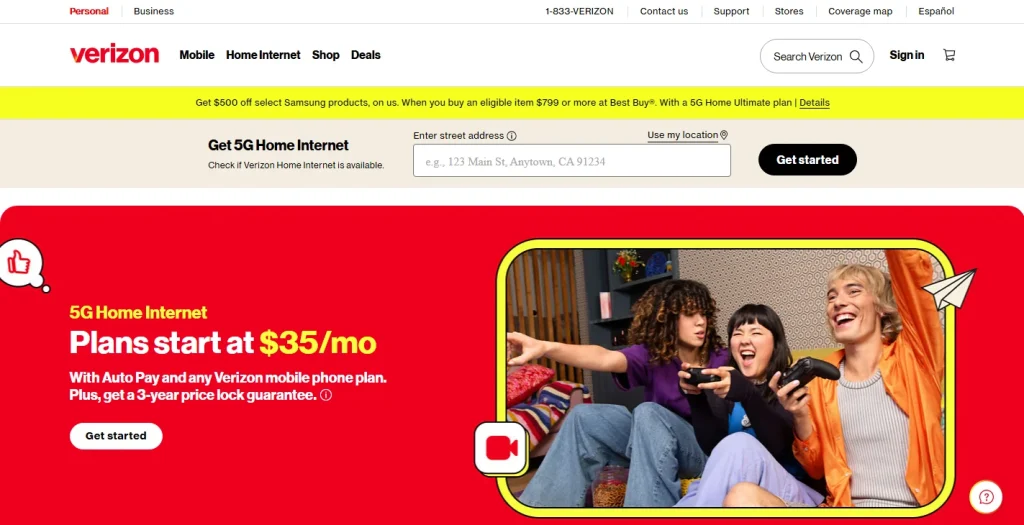
Verizon has expanded its wireless home internet to cover a huge portion of the country. It is often praised for its ease of use and the fact that you can often bundle it with your mobile phone plan for a significant discount.
I find this particularly appealing for renters or people who move frequently because there are no wires to install. You simply plug in the gateway near a window, and you are ready to go.
In 2026, their 5G Ultra Wideband network has become dense enough to provide speeds that rival traditional cable in many urban and suburban environments.
| Metric | Performance Value |
|---|---|
| Download Speed | 300 Mbps to 1 Gbps |
| Upload Speed | 50 Mbps to 150 Mbps |
| Average Speed | 300 Mbps |
| Ping | 20 ms to 35 ms |
| Latency | 30 ms to 45 ms |
4. AT&T Fiber
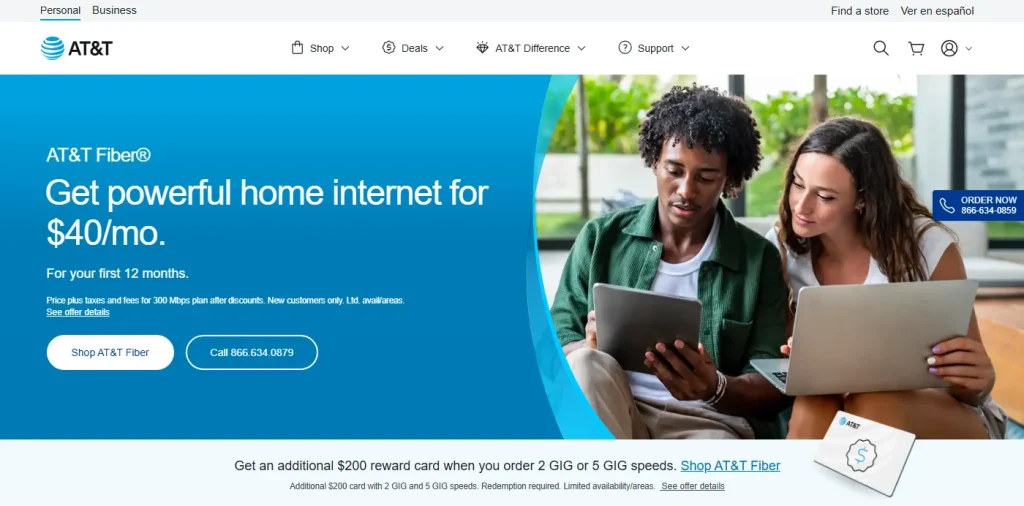
AT&T has been aggressively laying glass across the suburbs, and its fiber service is exceptionally stable. They are known for providing consistent speeds and including high-quality equipment with their plans.
I appreciate that they have moved away from data caps on their fiber tiers similar to providers like Spectrum, allowing families to stream and download as much as they want without fear of extra charges. Their infrastructure is built for longevity.
That’s the reason it often maintains its performance even during the most congested hours of the day when other networks might start to struggle.
However, if you find AT&T Fiber not suitable for you, you can go through my guide on the best Fiber Internet Providers in the USA to find a suitable pick for yourself.
| Metric | Performance Value |
|---|---|
| Download Speed | 500 Mbps to 5 Gbps |
| Upload Speed | 500 Mbps to 5 Gbps |
| Average Speed | 940 Mbps (on 1 Gig plan) |
| Ping | 5 ms to 12 ms |
| Latency | 8 ms to 15 ms |
5. Xfinity (Comcast)
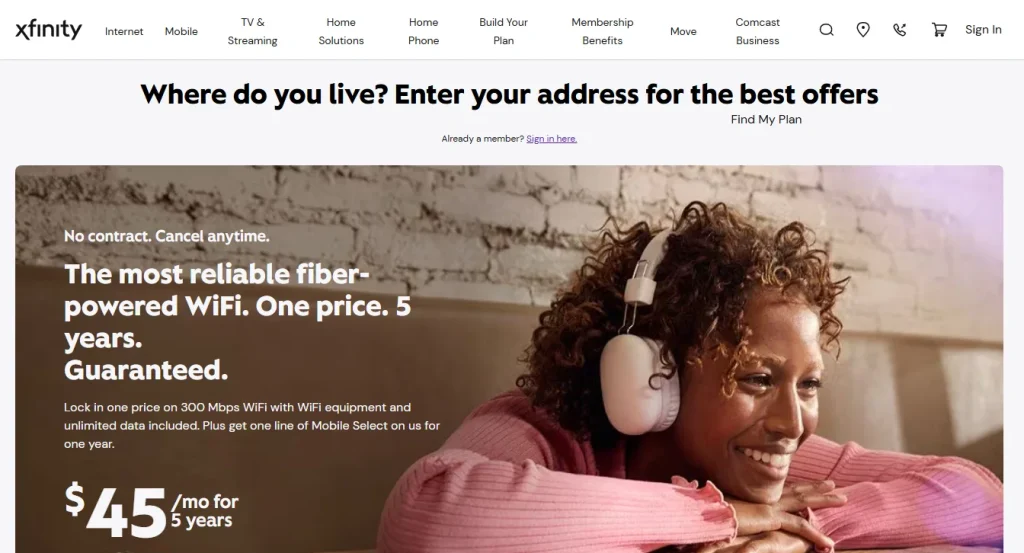
Next comes Xfinity Home Internet and it has some of the widest availability in the USA. They offer a huge range of XFinity Internet plans from basic budget options to high-end multi-gigabit tiers, along with add-ons like xFi Complete for unlimited data and WiFi 7, along with the latest XB10 router.
These perks make Xfinity a versatile choice for almost anyone. I often recommend setting up Xfinity Home Internet to people who want to bundle their internet with mobile or home security services. And now, they are even coming with Xfinity Pro, which can turn to LTE Backup in case of a power outage.
While the Xfinity Home Internet speed has historically been lower than fiber, their 2026 network upgrades have significantly narrowed that gap.
| Metric | Performance Value |
|---|---|
| Download Speed | 75 Mbps to 2 Gbps |
| Upload Speed | 20 Mbps to 200 Mbps |
| Average Speed | 400 Mbps |
| Ping | 15 ms to 25 ms |
| Latency | 20 ms to 35 ms |
My Recommendation on Home Internet Services
Honestly, I am biased towards Xfinity, as they have been progressing really hard to be the top choice for all Internet users in the USA.
If you are already using it with xFi Complete, great. And if you are going to pick them up, you should choose XFinity Pro. And for your assistance, I have already covered the guide on xFi Gateway vs xFi Complete vs XFinity Pro, so you can make an informed decision.
Navigating the world of home internet in 2026 does not have to be an overwhelming experience. But when you understand the different types of connections and know which metrics, like latency and upload speed, truly matter for your lifestyle, you can claim control over your digital environment.
People Also Ask
What is home internet lite?
Home internet lite refers to affordable, data-capped plans designed for lighter users in areas where unlimited 5G home internet is not yet available.
What is a good internet speed for home?
In 2026, a speed of 100 Mbps is considered the baseline for small households, while 500 Mbps or higher is recommended for families and heavy streamers.
What home internet is available at my address?
You can check availability by visiting the websites of major providers like Xfinity, AT&T, or T-Mobile and entering your specific street address into their service maps.
What is the best home internet service (name Xfinity)?
Xfinity is widely considered the best choice for many due to its vast availability, high-speed multi-gigabit options, and reliable performance across the country.
What is the cheapest home internet service?
5G home internet and fixed wireless options are typically the cheapest services, often offering entry-level plans with competitive pricing and no hidden equipment fees.