Let me be direct: 2026 is the strongest year we’ve seen for launching a gadget business. New smart tools are going viral every day, and small founders are turning simple ideas into real, revenue-earning brands.
But here’s the part most beginners miss: “Success in this market isn’t about selling gadgets… It’s about following a smart, structured plan.“
After advising countless new founders, I’ve learned one thing: “The people who win are the ones who stay focused, move fast, and execute with clarity.“
If you’re ready to turn your tech passion into a business that actually makes money, this 30-day blueprint will give you an idea to do so.
How to Launch a Gadget Business in 2026
First, you need to have a ready-to-act-on plan for a business if you want to make it a giant in 2026. I’ve compiled this guide on starting a gadget business and to make the most out of it.
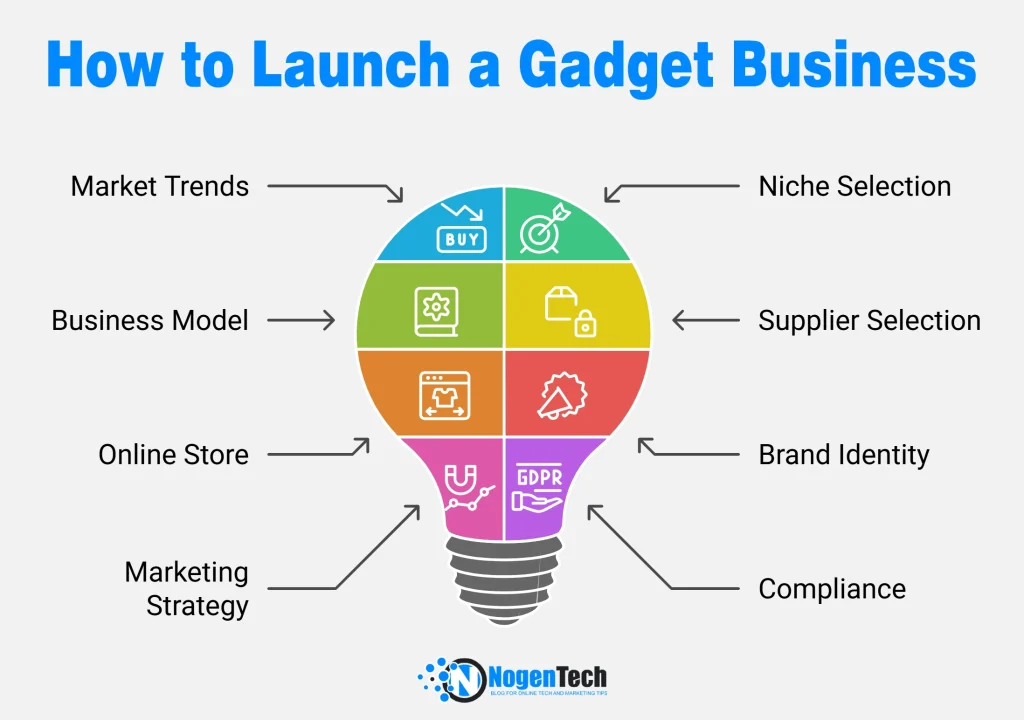
1. Understand the 2026 Gadget Market Trends
Before choosing products, you need to study the gadget market trends. Here are the hottest gadget trends that will become profitable and popular in 2026:
- AI-Integrated Everyday Devices: Smart glasses, AI earbuds, AI note-taking devices, and intelligent wearables.
- Creator Tools: Portable microphones, gimbals, smart lights, mini projectors, and advanced phone accessories.
- Home & Lifestyle Tech: Smart home hubs, Wi-Fi enhancers, robot cleaners, and energy-efficient appliances.
- Health & Wellness Gadgets: Smart rings, sleep trackers, posture-correcting wearables, and biometric sensors.
- Eco-Friendly Tech: Solar-powered chargers, biodegradable gadgets, and sustainably packaged products.
Popular and profitable gadget categories include smart home devices, wearables, and mobile accessories within the consumer electronics market. This market is expected to exceed $881 billion by 2025.
Global Wearables Shipments
Worldwide shipments of wearable devices from 2019 to 2024
2024 Total
543M
units
YoY Growth
+6.1%
vs 2023
5-Year Growth
+61.4%
since 2019
2. Pick a Profitable Niche (Don’t Try Everything!)
The biggest mistake beginners make? They start selling every gadget under the sun, and lose their identity. Because people can’t assess what they are actually selling in the market. That’s the reason they lost several potential customers in the first place.
In 2026, hyper-focused niche stores perform way better than general gadget shops.
Top Niche Ideas
- Smart Home Gadgets
- Smartphone Accessories
- Wearables & Fitness Tech
- Gaming Consoles
- Creator & Streaming Gear
- Travel Gadgets
- Car Gadgets
- Pet Tech
Choose a niche where:
- Demand is rising,
- competition is manageable, and
- You can create authority around the products.
3. Decide Your Business Model
A business model is essentially the plan or framework a company uses to make money. It explains how a business creates, delivers, and captures value. That’s why you should decide how you would like to earn money in the simplest ways before starting to do anything.
There are three main models to start a gadget business in 2026:
A) Dropshipping
- No inventory needed
- Low startup cost
- Fast market entry
- Can test multiple products
Dropshipping is perfect for beginners, but margins are lower. However, you can try visiting several dropshipping platforms to decide where you are in profit to choose one smartly.
B) Wholesale/Import
- Buy in bulk
- Higher profit margins
- Real brand building
You’ll need capital, suppliers, and storage space to implement this type of business structure while starting your own business.
C) Private Labeling
- Create your own branded gadget line
- High profits
- Long-term brand value
- Custom packaging and identity
Ideal for entrepreneurs ready to build a long-lasting brand. Further, you can also contact private labeling agencies near you to get your own branded products.
4. Find Trusted Suppliers in 2026
A trusted supplier is the backbone of the business, as it helps you manage your inventory and gives you access to reliable manufacturers. With so many fake listings and unreliable manufacturers, your supplier can make or break your business.
Where to find suppliers
- Amazon Verified
- Global Sources
- CJ Dropshipping
Supplier checklist:
- Check reviews & ratings
- Ask for a sample
- Verify certifications (CE, FCC, RoHS)
- Test durability and battery safety
- Negotiate pricing
As many brands believe in a universal mantra:
“Reliable suppliers = fewer returns and better customer satisfaction.“
5. Build a Strong, Conversion-Focused Online Store
Before building an online store, you must know what customers nowadays expect from an online brand. In 2026, customers expect:
- fast websites
- smooth UX
- clear product value
- Artificial Intelligence-powered recommendations
Recommended platforms:
- Shopify (best overall)
- WooCommerce (flexible)
- Wix (simple to start)
Must-have store elements:
- Clean product photography
- Short demo videos
- Smart search & filters
- Trust badges
- Fast checkout
- Live chat or AI support
Your website is your digital storefront, and the first thing people will interact with, so try to make it feel premium.
6. Create a Brand Identity That Sells
People don’t buy only gadgets. They buy cool, smart, problem-solving experiences from a brand, which they can refer someone to. That’s when you need to build a feel for them that they’re buying from a brand and not from a local store:
Build your brand around:
- Innovation
- Reliability
- Modern design
- User-friendly tech
Branding essentials:
- Short, memorable name
- Unique value proposition
- Strong color palette
- Clean packaging
- Social media presence
A solid brand lets you charge more than your competitors, which means extra revenue with extra trust and less effort.
7. Market Your Gadget Business Like a Pro
The internet has become a global stage where businesses interact with each other and their customers to build links. Now, people only buy things from brands that they know. And in 2026, visibility will be equal to sales, which is why you need to improve your business visibility.
Here are the best strategies to do so:
A) SEO and Blogging
Review articles, how-to guides, and comparison posts because they all generate passive traffic.
B) TikTok and Instagram Reels
Short gadget demos and before/after videos work absolutely well.
C) Influencer Collaborations
Micro-influencers will get you high trust at a low cost.
D) YouTube Shorts
You can use YouTube to showcase your gadget in action.
E) Paid Ads
You can advertise your brand or product on Facebook, Google Shopping, and TikTok Ads.
8. Ensure Safety, Warranty & Compliance
Tech products require proper care. But the majority of customers expect brands to understand their demands. You may:
- Offer at least a 6-month warranty
- Provide clear instructions
- Follow electronics safety standards
- Maintain responsive customer support.
👉 Pro Tip: Happy customers keep coming back. Delight a customer today, and they could become your best source of word-of-mouth referrals.
Last Words on Launching Your Gadget Business
Starting a gadget business in 2026 is one of the most promising opportunities, especially with the explosion of AI-powered devices and smart accessories.
If you follow the right niche, build a strong brand, market aggressively, and prioritize quality, you can turn a simple store into a highly profitable tech business. I’ve mentioned the proven strategies to get your inner businessman out and get what you want.
30-Day Gadget Business Launch Plan for 2026
🔵Week 1: Research & Strategy
• Days 1–2: Explore 2026 gadget trends and top-selling products.
• Days 3–4: Choose a profitable niche.
• Days 5–6: Decide your business model (dropshipping, wholesale, or private label).
• Day 7: Set goals and KPIs.
🔵Week 2: Supplier Sourcing & Product Prep
• Days 8–10: Find trusted suppliers and order samples.
• Days 11–12: Test products and select your launch items.
• Days 13–14: Prepare inventory and logistics.
🔵Week 3: Brand & Store Setup
• Days 15–17: Create brand identity (name, logo, story).
• Days 18–21: Build your online store with product listings, payments, and shipping.
🔵Week 4: Marketing & Launch
• Days 22–24: Plan content, social media campaigns, and influencer outreach.
• Days 25–26: Ensure safety, warranty, and compliance.
• Days 27–28: Launch pre-orders or soft launch.
• Days 29–30: Full launch and optimize based on initial feedback.
People Also Ask
What is the easiest way to start a gadget business in 2026?
The easiest way is through dropshipping, where you sell gadgets online without holding inventory. You can test multiple products with low startup costs and scale once you find winning items.
Do I need a physical store to sell gadgets?
No. Most successful gadget businesses in 2026 are online-first, using platforms like Shopify, WooCommerce, or marketplaces like Amazon. A physical store is optional for branding or local sales.
Should I offer warranties on gadgets?
Yes. At least a 6-month warranty builds trust and reduces returns. Clear instructions and responsive customer support are crucial for customer satisfaction.
Can I start a gadget business with no prior tech knowledge?
Absolutely. With dropshipping or curated stores, you don’t need to develop gadgets yourself. Focus on marketing, customer service, and selecting trending products.
Is 2026 a good time to start a gadget business?
Yes. The rise of AI-powered devices, smart home tech, and wearable gadgets makes 2026 a perfect time to enter the market with innovative products and strong branding.