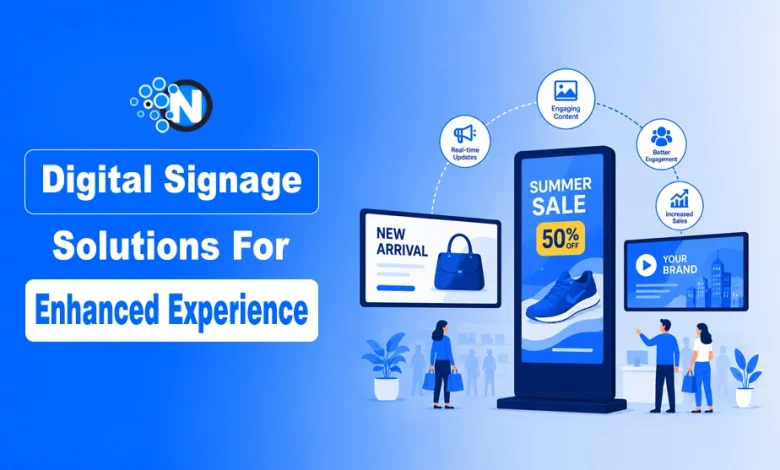
What if one screen could improve customer experience, increase engagement, and boost sales? That’s exactly how digital signage solutions are helping modern businesses stay ahead.
Modern customers expect fast service, personalized experiences, and instant access to information. Businesses that fail to meet these expectations often face low engagement and weak customer retention.
This is why now, retail stores, restaurants, and even healthcare facilities use digital display ads, interactive kiosks, and smart signage systems to deliver real-time information and connected experiences.
Unlike traditional signage, digital displays support dynamic content, instant updates, and interactive features.
Moving onward, you will explore what digital signage is, what it matters, key ways digital signage improves experience, its benefits, and best practices to implement it.
What Are Digital Signage Solutions?
Digital signage solutions refer to electronic display systems used to share information, advertisements, promotions, and interactive content through digital screens.
These systems typically include:
- Commercial display screens
- Cloud-based content management software
- Media players
- Interactive kiosks
- Digital menu boards
- Smart wayfinding systems
Businesses use digital signage to deliver targeted content in real time across one or multiple locations.
Major technology companies like Samsung, LG, and Sharp Corporation continue to develop advanced commercial display technologies that support modern customer engagement strategies.
Why Digital Signage Matters for Modern Customer Experience?
Customer expectations have changed significantly over the past decade. Today’s consumers expect:
- Instant access to information
- Faster service
- Personalized recommendations
- Interactive experiences
- Seamless navigation inside stores and facilities
Digital signage helps businesses meet these expectations by providing real-time communication and visually engaging experiences. Businesses using digital signage often experience:
- Better customer engagement
- Increased brand visibility
- Improved operational efficiency
- Reduced waiting frustration
- Higher customer retention
Key Ways Digital Signage Improves Customer Experience
Here are some of the key ways digital signage is improving the customer experience:
1. Real-Time Information Improves Customer Convenience
One of the biggest advantages of digital signage is the ability to provide instant updates. Businesses can display:
- Store hours
- Promotions
- Product availability
- Queue updates
- Safety alerts
- Event announcements
For example, retail stores can instantly update promotional offers across multiple locations without replacing printed materials.
Restaurants can modify digital menus in real time based on inventory or pricing changes. This improves customer convenience while reducing confusion and communication gaps.
2. Interactive Displays Increase Customer Engagement
Interactive digital displays allow customers to explore products and services independently.
Touchscreen kiosks help customers:
- Browse product catalogs
- Compare pricing
- Check availability
- Access recommendations
- Customize purchases
Retail Industry Example
Retail businesses place interactive kiosks in high-traffic areas to improve customer interaction and increase dwell time.
Hospitality Industry Example
Hotels use smart kiosks for:
- Self check-ins
- Room directions
- Local recommendations
- Event schedules
Interactive experiences create a more customer-focused environment while reducing pressure on staff.
3. Digital Product Displays Improve Buying Decisions
Customers make purchasing decisions faster when accurate product information is easily accessible.
Digital signage near products can display:
- Product specifications
- Customer online reviews
- Usage instructions
- Product comparisons
- Promotional bundles
Some of the most common benefits of digital product information include:
- Faster Decision Making: Customers can compare features without waiting for assistance.
- Better Transparency: Real-time pricing updates reduce confusion caused by outdated signage.
- Improved Product Discovery: Businesses can promote related or recommended products directly on screen.
This creates a smoother shopping experience and improves conversion rates.
4. Visual Communication Captures Attention Faster
Visual content is significantly more effective than static printed communication. Digital signage uses:
- Videos
- Short edits
- Motion graphics
- Animations
- High-quality visuals
- Interactive media
These formats help businesses communicate messages more clearly and quickly. Its most common use cases include:
- Promotional Campaigns: Dynamic visuals attract customer attention more effectively than traditional posters.
- Product Demonstrations: Short videos simplify product explanations and improve understanding.
- Wayfinding and Navigation: Digital maps help customers navigate large stores, hospitals, airports, and shopping malls.
- Emergency Communication: Businesses can instantly update alerts and important notifications during emergencies.
5. Queue Management Systems Reduce Customer Frustration
Long waiting times negatively impact customer satisfaction. Digital queue management systems improve transparency and create a more organized waiting experience.
Businesses use queue displays to show:
- Estimated waiting times
- Queue numbers
- Service announcements
- Promotional offers
- Loyalty rewards
Queue Displays improve customer satisfaction by:
- Reduced Perceived Wait Time: Engaging content helps customers feel less frustrated while waiting.
- Better Customer Flow: Clear queue information reduces overcrowding and confusion.
- Increased Upselling Opportunities: Businesses can promote offers and discounts during waiting periods.
Industries Using Digital Signage Solutions
Nowadays, the top industries are using digital signage to enhance their customer experience and get conversions, including:
Retail Stores
Retail businesses use digital signage for:
- Promotions
- Product recommendations
- Smart shelf displays
- Interactive shopping experiences
Healthcare Facilities
Hospitals and clinics use digital signage for:
- Patient navigation
- Appointment schedules
- Health awareness campaigns
- Queue management
Hospitality Industry
Hotels use digital displays for:
- Guest communication
- Self-service check-ins
- Event schedules
- Concierge services
Transportation Industry
Airports and transit systems use digital signage for:
- Arrival and departure updates
- Navigation assistance
- Emergency alerts
Benefits of Digital Signage for Businesses
Digital signage not only improves customer experience. It also helps businesses:
- Improve brand communication
- Reduce printing costs
- Increase operational efficiency
- Deliver consistent messaging
- Improve customer retention
- Increase sales opportunities
Cloud-based systems also allow businesses to manage content remotely across multiple locations. For example, when testing Look Digital Signage, you will find that multi-location screen management becomes much easier when the software supports instant remote updates.
Many organizations modernizing legacy business applications like IBM’s AS/400 are also adopting cloud strategies to improve scalability and long-term support.
Best Practices for Implementing Digital Signage
Here are some of the best practices that you must opt for implementing digital signage across your business:
Place Screens Strategically
Install displays in high-visibility, high-traffic areas to maximize the impact of your content and ensure customers can easily see important information.
- Entrances: Capture attention as customers walk in and set the tone with welcome messages, key promotions, or important announcements.
- Checkout counters: Use screens near checkout areas to promote add-on products, loyalty programs, and last-minute offers while customers wait.
- Waiting areas: Keep customers engaged and reduce perceived wait times with informative, entertaining, or promotional content in waiting zones.
- Product sections: Place displays near specific product categories to highlight features, offers, recommendations, and related items directly where buying decisions happen.
Keep Messaging Simple
Focus on clarity and readability so customers can quickly understand your message at a glance.
- Short text: Use concise, easy-to-read copy that communicates the main point within a few seconds.
- Clear visuals: Include high-quality images or icons that visually reinforce your message and make it more memorable.
- Strong calls-to-action: Add direct, action-oriented prompts (e.g., “Buy Now,” “Scan to Learn More,” “Join the Loyalty Program”) to guide customer behavior.
- Avoid overcrowded designs: Leave enough white space, limit the amount of text, and avoid clutter so your content remains clean, focused, and easy to process.
Update Content Regularly
Refresh on-screen content frequently to keep it relevant, timely, and engaging for returning customers. Regular updates help:
- Maintain customer interest over time.
- Reflect current promotions, events, and seasonal campaigns.
- Prevent your signage from feeling outdated or ignored.
Track Customer Engagement
Monitor how customers interact with your digital signage and use insights to continuously improve performance.
- Analyze customer behavior: Observe viewing patterns, dwell time, interaction rates (for touchscreens), and foot traffic around displays.
- Collect feedback: Use surveys, staff input, or digital feedback tools to understand what content customers find most useful or engaging.
- Optimize over time: Adjust content, screen placement, and messaging strategy based on data and feedback to steadily improve signage effectiveness.
Future Trends in Digital Signage Technology
Digital signage technology continues to evolve rapidly. Its emerging trends include:
- AI-powered personalization
- Smart analytics
- Voice-controlled kiosks
- Augmented reality displays
- IoT-integrated signage systems
- Programmatic advertising
As businesses focus more on customer experience, digital signage will continue to become a critical part of modern communication strategies.
Frequently Asked Questions
Can digital signage work without an internet connection?
Yes. Many digital signage systems can continue displaying previously uploaded content offline. However, internet access is usually required for remote updates and cloud-based management.
What type of content performs best on digital signage?
Short videos, promotional visuals, product highlights, announcements, and interactive content usually perform best because they capture attention quickly and improve engagement.
Do digital signage systems require technical expertise?
Most modern digital signage platforms are designed with user-friendly dashboards that allow businesses to manage content easily without advanced technical skills.
Can digital signage improve employee communication?
Yes. Many businesses use digital signage internally to share announcements, schedules, training information, and company updates with employees more efficiently.
How secure are cloud-based digital signage systems?
Reputable digital signage providers use encrypted cloud systems and secure access controls to protect content management and business data.
What is the average lifespan of digital signage displays?
Commercial digital signage displays typically last between 5 and 10 years, depending on usage, screen quality, and maintenance.
Is digital signage expensive for small businesses?
Modern cloud-based digital signage systems are now affordable for many small and medium-sized businesses, depending on hardware and software requirements.
Can digital signage increase business sales?
Yes. Digital signage improves product visibility, customer engagement, and promotional effectiveness, which can positively influence purchasing decisions.
My Final Thoughts on Digital Signage
Digital signage solutions are transforming how businesses communicate with customers.
From interactive kiosks and product displays to queue management systems and real-time announcements, digital signage helps businesses create more engaging, efficient, and customer-friendly environments.
Businesses that invest in smart digital communication systems can improve customer satisfaction, strengthen brand engagement, and stay competitive in an increasingly experience-driven market.