
How Smart Picking Technologies Are Transforming E-commerce Fulfillment
Smart picking technologies transform e-commerce fulfillment by automating order picking, reducing errors, speeding up warehouse operations, and improving inventory accuracy.

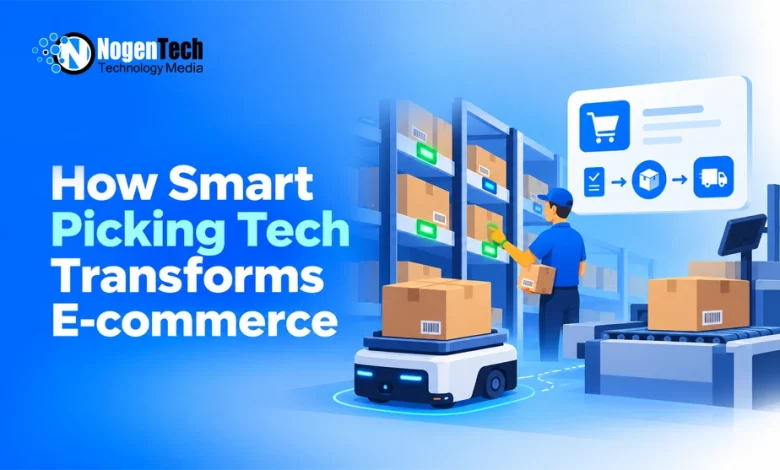
Orders now account for 17.1% of all retail sales in the United States, and each of those orders has to come off a shelf before it reaches a doorstep. Shoppers who expect a box tomorrow rarely think about the aisle where their order starts, yet that aisle is where a fast delivery promise either holds or falls apart.
Most late and wrong shipments trace back to the pick, because a worker who reads a paper list, walks to the wrong bay, or grabs a lookalike product from the next bin creates a problem that no carrier upgrade can fix later.
Smart pick technologies target that weak spot, and they now fit a small outsourced warehouse as well as a national retailer.
Lights on the Shelf Remove the Search
The simplest upgrade puts instructions right where the product sits. A pick to light system in warehouse aisles mounts a small display at each bin, and when an order comes in, the correct locations light up and show the exact quantity to pull.
The worker takes the units, presses a button to confirm, and the warehouse management system (WMS) records the change in stock.
This setup works best for fast movers in fixed spots, such as phone accessories, cosmetics, or small parts in carton flow racks. Seasonal staff learn it within a shift because the job comes down to a simple routine: follow the light, take the count, and confirm.
When several people share a zone, each worker can get a separate light color so nobody pulls from a location meant for a colleague. A related tool called put-to-light works at the other end of the process and shows staff which tote should receive each item after a batch pick.
Robots Walk the Aisles So People Can Stay Put
Long walks between bays eat into every shift, so the next tier of smart pick technology cuts the walk out. Autonomous mobile robots carry totes to a pick station or meet workers in the aisle, and goods-to-person systems such as vertical lift modules bring the shelf to the operator instead of the other way around.
At the pack station, software can then suggest the right carton size, which reduces filler material and the dimensional weight charges carriers add to oversized boxes.
These systems cost more than lights and need floor space, power, and strong WiFi, so they fit operations with steady volume better than businesses with sharp seasonal spikes.
Software Decides Where Every Product Lives
Hardware draws the attention, but the software behind it does much of the heavy work. A modern WMS groups orders into batches so a single trip through the aisles fills several orders, and it reslots products so best sellers sit near the pack area at waist height rather than on a top shelf at the far wall.
AI forecasts study past sales and seasonal patterns to flag products that will run short before a promotion, and they estimate how many workers each shift will need, so managers can book temporary staff before a rush rather than scramble once it starts.
Real-time inventory sync then updates stock across every sales channel after each confirmed pick, so the online store never sells an item that is already gone.
Where to Start Without a Full Rebuild
The smartest rollouts begin small and grow with proof.
- Audit your pick data before you shop. Rank products by how often they left the shelf last quarter, since the top names on that list are where lights or a new slot plan will pay off soonest.
- Put lights on fast movers, not the whole building. A light zone over your busiest bays costs far less than a full rollout and shows results fast enough to justify the next phase.
- Get the integration details in writing. Ask vendors exactly what data the system trades with your WMS or ERP, from order details and bin locations to confirmations and stock updates, and reject any setup that relies on manual data entry.
- Plan for the day the lights go out. Keep RF scanners or printed lists on hand so orders still move when the network fails.
- Test new tech in a slow month. A trial outside peak season gives staff room to flag problems while mistakes are cheap.
- Ask the people on the floor. Pickers know which bins cause errors, and their input often shapes a better layout than any vendor demo.
Final Thoughts
Smart pick technology works best as a series of targeted fixes rather than a single big purchase. Start where your data shows the most walks and wrong picks, prove the gain in a small zone, and expand from there.
The warehouses that ship accurate orders through the holiday rush rarely own the flashiest robots, since what sets them apart is that they removed guesswork from every aisle, bin by bin.