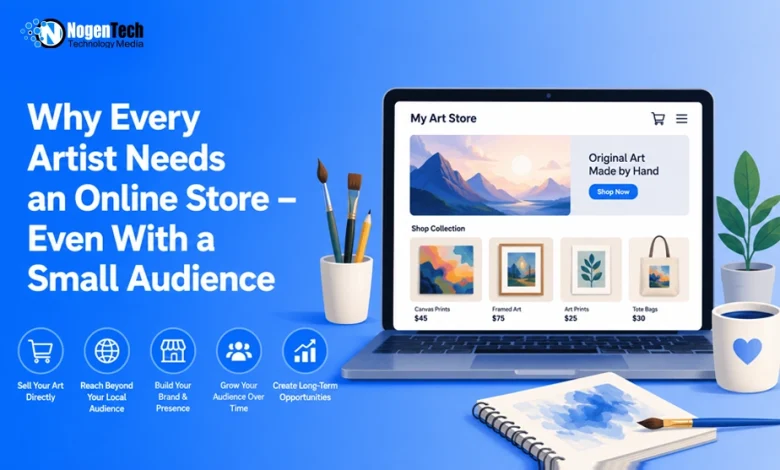
There’s a very specific kind of hesitation a lot of artists carry around before opening their online store. They think, “I’ll open a shop once I have more followers.”
It sounds reasonable on the surface. Why set up a whole store for an audience of a few hundred people?
But this logic has quietly talked thousands of talented artists out of making any money at all, sometimes for years, while they wait for a follower count that feels arbitrary the moment they actually hit it.
The truth is, a shop isn’t a reward for having an audience. It’s part of how you build one.
An Online Store Is a Statement
When someone lands on your page and sees actual products for sale, not just a “DMs open for prints, contact me” caption, it changes how they see you almost instantly. It shows you take your art seriously enough to make it purchasable, not just a hobby.
That perception shift matters more than artists expect, especially early on. A follower deciding whether to buy something is subconsciously wondering whether it’s a legitimate thing to spend money on.
A proper storefront answers that question before they even have to ask it. That’s the biggest reason to build an art store early rather than waiting.
It simply signals that you’re open for business, whether you have a hundred followers or thousands of them.
Small Audiences Convert Better Than People Assume
There’s a strange myth that small accounts don’t sell. In reality, smaller, more engaged audiences often convert at a higher rate than big, passive ones.
A small, engaged following
If you have 400 followers who’ve been watching your process posts, sketch dumps, and other content, these are people who already feel invested. They aren’t strangers, and a chunk of them will buy something the first time you give them an easy way to.
A large, passive following
Compare that to an account with 50,000 followers who mostly scroll past without engaging. Bigger numbers don’t automatically mean more buyers. Engagement matters more than follower count, and small audiences are often more engaged simply because you can still actually talk to most of them.
Waiting Costs You Opportunities and Money
Every month without a shop is a month of missed opportunities that don’t come back. Imagine someone loves a piece you posted in March and wants to buy it, but finds no way to do that. They might screenshot it, or they might just move on. Either way, that interest is fleeting. It won’t wait around for you to open your shop. It just evaporates.
There’s also a compounding effect worth taking seriously. A shop that’s existed for a year has search visibility, return customers, buyer reviews, and a catalogue people can browse. A shop that opens a year later than it could have starts out behind.
Artists who feel like merch isn’t working for them, or that it’s too early to have a shop, are often just new to running one. That doesn’t make them less talented or popular than artists who started earlier.
You Don't Need a Warehouse to Start
One objection some artists have to starting a shop is logistics. They picture themselves buried under boxes of unsold prints, doing bank runs, and packing orders at midnight.
That version of merch selling did require some scale to make sense. But print-on-demand and dropshipping-style setups have changed that math completely.
Products get made and shipped only when someone actually buys them, which means a shop with three followers and a shop with thirty thousand followers carry roughly the same operational risk. You don’t have to gamble on inventory anymore.
That’s a big part of why the entry point has gotten so much easier for smaller artists. Tools that used to require a business mindset and upfront capital are now accessible to anyone with a finished illustration and an afternoon to set things up.
What a Small Shop Actually Does for You
Even if the first few months bring in modest sales, don’t be discouraged. An online store isn’t just for making money. The other benefits include:
- A reason for people to check back, instead of just liking a post and forgetting it
- A searchable catalogue that keeps working for you long after a post stops getting engagement
- Practice with the real, practical side of selling while the stakes are still low
- A signal to new followers that you’re an artist who sells work, not just someone who posts it
Start Before You Feel Ready
If you’re waiting for some invisible follower threshold before opening a shop, it’s worth asking honestly whether that number is about readiness, or just fear of an empty storefront.
The truth is, every artist with a thriving shop today opened it while their audience was still small. The shop is what helped grow it, not the other way around.
You don’t need permission from a follower count to start selling your work. You just need to start.