For many online sellers, the biggest threat to profit isn’t the product; it’s the cost of shipping.
Shipping is one of the highest hidden costs for online sellers. While a product may have a healthy profit margin, expensive carrier rates, incorrect packaging, customs delays, and poor freight planning can quickly reduce profitability.
Freight planning should be part of every eCommerce business model from the start, especially for sellers shipping bulky products, sending inventory internationally, or supplying B2B customers.
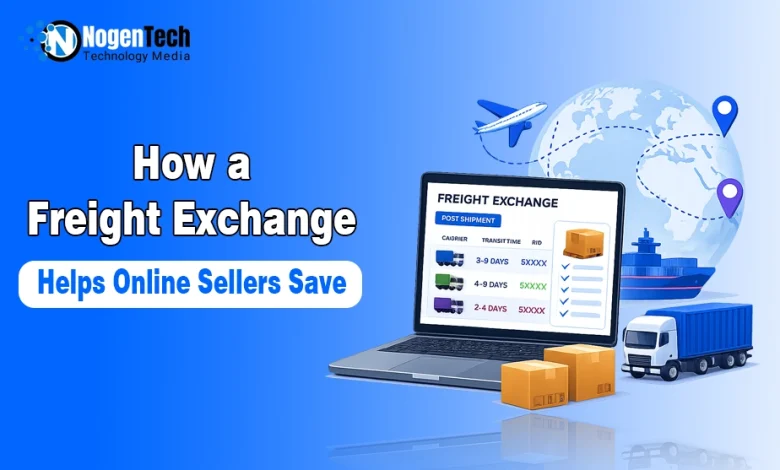
A freight exchange helps businesses compare shipping quotes from multiple verified carriers instead of relying on a single provider, making it easier to evaluate costs, delivery times, and service options.
This guide explains how freight exchanges work and shares practical strategies to reduce shipping costs, improve delivery reliability, and protect profit margins as an eCommerce business grows.
What Is a Freight Exchange?
Unlike traditional freight forwarders, a freight exchange functions as a freight auction marketplace that connects shippers directly with verified carriers. This transparency removes middleman markups and gives sellers more control over their logistics. For example, an online furniture seller may need to ship pallets from one country to another.
Rather than contacting several freight companies individually, the seller can share the shipment size, destination, pickup date, and delivery requirements in one place. Carriers can then offer rates based on their available capacity and routes.
This process can help online sellers find better shipping options without spending hours requesting quotes manually.
Why Shipping Costs Matter for Online Sellers
It matters because high shipping fees cut directly into product profit margins, while poor freight planning can trigger unexpected customs delays, penalties, and negative customer reviews.
Many new store owners focus heavily on product sourcing, website design, and advertising. However, freight costs can become a major issue as order volume grows.
Shipping expenses usually increase because of:
- Oversized or poorly packed parcels
- Limited carrier comparisons
- Incorrect freight classification
- International customs charges
- Remote delivery locations
- Urgent delivery requirements
For sellers building one of the online businesses, controlling these costs can protect margins and make pricing more competitive.
Why Should You Choose Products With Shipping Costs in Mind?
Sellers must analyze packaged dimensions and freight weight before sourcing, as lightweight, durable items protect eCommerce profit margins from expensive shipping rates.
The products you choose directly affect freight costs, packaging needs, customs paperwork, and delivery risk. Before deciding what to sell, estimate the product’s packaged weight, dimensions, likely delivery zones, and potential customs requirements. This helps sellers avoid products with shipping costs that make their margins too small.
Why Should You Compare Multiple Carrier Bids Instead of One Quote?
Comparing multiple carrier bids leverages reverse auction technology to drive down shipping rates, ensuring competitive market pricing and improved delivery reliability.
The biggest advantage of a freight exchange is competition. When multiple carriers can bid for the same shipment, businesses are not limited to one provider’s standard rate.
Platforms like AiDeliv use a patent-pending reverse auction technology, where each new bid must be lower than the previous one, ensuring the most competitive market price.
This does not always mean choosing the cheapest bid. A low price may come with slower delivery, limited tracking, or weak customer support. Sellers should compare:
- Total freight cost
- Estimated delivery time
- Insurance options
- Tracking availability
- Carrier reputation
- Customs support
A balanced choice can reduce shipping expenses while keeping delivery reliable for customers.
Why Is It Important to Use Accurate Package Details?
Carriers calculate prices using weight and dimensions; precise details prevent unexpected post-pickup fees and allow sellers to choose right-sized packaging to avoid dimensional-weight charges.
Incorrect details can lead to extra charges after pickup. Before listing a shipment, sellers should confirm:
- Exact package weight
- Outer dimensions
- Number of cartons or pallets
- Pickup and delivery addresses
- Fragile or restricted goods
- Required delivery date
Right-sizing packaging is especially important. Large empty spaces inside a box can increase dimensional-weight charges, even when the product itself is light.
How Does Proper Labeling Help Avoid Freight Delays?
Clear labeling reduces warehouse handling confusion and customs errors; accurate recipient data, handling instructions, and documentation prevent expensive transit delays.
Each package should include the correct recipient information, shipment reference, handling instructions, and required customs documentation.
For eCommerce stores, secure order management also matters. Following basic website security practices can help protect customer addresses, invoices, shipping labels, and payment-related data.
A shipping delay caused by missing labels or incorrect paperwork can cost more than the original freight rate.
Why Should You Understand HS Classification Before Shipping Internationally?
HS codes standardize international product data; understanding this classification prevents costly customs delays, unexpected import duties and taxes, and severe regulatory penalties during cross-border freight.
They help authorities determine duties, taxes, restrictions, and documentation requirements. Using the wrong HS classification can create delays, penalties, or unexpected import charges. Sellers should verify the code for each product before arranging cross-border freight.
This is particularly important for electronics, machinery, beauty products, food items, textiles, and products containing batteries. A freight partner with international shipping experience can help businesses prepare the right paperwork before goods leave the warehouse.
Better Delivery Can Improve Customer Reviews
Reliable freight planning ensures on-time, undamaged orders; when fulfillment meets expectations, satisfied shoppers are significantly more likely to leave positive reviews.
Customers may forgive a slightly higher product price, but they often remember late deliveries, damaged parcels, and unclear tracking updates.
For B2B sellers, dependable delivery also builds trust with wholesale buyers, distributors, and long-term clients.
How Does Freight Data Support B2B Growth?
Analyzing route costs and carrier performance reveals fulfillment bottlenecks, helping wholesale brands improve supply chain efficiency, negotiate better rates, and ensure B2B growth.
For companies selling to other businesses, freight efficiency can also become part of their value proposition. It supports stronger B2B growth by helping brands offer more predictable delivery timelines and clearer shipping communication.
Answers to Common Freight Exchange Related Questions
How does a freight exchange work?
A freight exchange lets businesses post shipment details such as weight, dimensions, pickup location, destination, and delivery date. Freight carriers then submit competing bids, allowing the shipper to compare prices, transit times, and service options before choosing a carrier.
Is a freight exchange cheaper than booking directly?
It can be cheaper because multiple carriers can bid on the same shipment. However, the lowest quote is not always the best option. Businesses should also compare delivery time, tracking, insurance, carrier reliability, and any extra fees before booking.
What details do I need before requesting freight bids?
You should have the shipment weight, package dimensions, number of boxes or pallets, pickup and delivery addresses, product type, preferred delivery date, and any special handling requirements. Accurate information helps carriers provide more reliable quotes.
What is dimensional weight in freight shipping?
Dimensional weight is a pricing method based on the space a package takes up, not only its actual weight. A lightweight but oversized package may cost more to ship because it occupies more room in a truck, aircraft, or container.
Why is right-sized packaging important for shipping costs?
Right-sized packaging reduces unused space and may lower dimensional-weight charges. It can also reduce packaging material, prevent product movement during transit, and help businesses fit more goods into a shipment.
What is an HS code?
An HS code is an international product classification number used by customs authorities. It helps determine import duties, taxes, restrictions, and required documentation for cross-border shipments.
What happens if I use the wrong HS code?
Incorrect HS codes can lead to customs delays, unexpected duties, fines, shipment holds, or rejected deliveries. Sellers should verify the correct classification before shipping products internationally.
Can small eCommerce businesses use freight exchange?
Yes. Small eCommerce businesses can use freight exchange when shipping bulky orders, inventory, pallets, large product quantities, or international deliveries. They can be especially useful when a business does not have negotiated carrier rates.
Should I choose the lowest freight bid?
Not always. Review the carrier’s delivery time, service area, tracking, insurance, reviews, customs experience, and any additional charges. A slightly higher bid may provide better reliability and fewer delivery problems.
How can freight shipping affect customer reviews?
Late deliveries, damaged products, missing tracking updates, and unexpected customs charges can lead to negative customer feedback. Choosing reliable freight services and communicating shipping expectations clearly can improve customer satisfaction and reviews.
Final Thoughts: Turn Shipping Into a Competitive Advantage
A freight exchange can help online sellers compare carrier bids, reduce unnecessary freight costs, and make better shipping decisions. However, the best results come from combining competitive rates with accurate package details, proper labeling, correct HS codes, and reliable delivery partners.
For growing eCommerce businesses, freight should not be treated as an afterthought. It is a practical part of customer experience, profit protection, and long-term business growth.