As parcel volumes continue to grow across corporate offices, universities, healthcare facilities, and warehouses, manual processes struggle to keep pace, leading to errors, delayed notifications, and limited package visibility.
OCR-based parcel management combines Optical Character Recognition (OCR), workflow automation, and cloud-based parcel management software to streamline package handling.
It helps organizations:
- Automatically capture shipping label data
- Reduce manual data entry and processing errors
- Enable real-time parcel tracking and centralized records
- Improve operational efficiency, accountability, and the employee experience
Modern parcel management systems provide the speed, accuracy, and scalability businesses need to man
age growing delivery volumes efficiently.
This is especially true for large corporate campuses, busy hospitals, and third-party distribution companies that process thousands of items daily.
Next, you’ll explore how OCR-based parcel management, workflow automation, and AI improve the speed and efficiency of modern parcel management systems.
Why Doesn't Manual Parcel Management Work for Growing Businesses?
Manual parcel management limits efficiency as parcel volumes grow, causing errors, poor tracking, and delays that a modern parcel management system can eliminate.
As delivery volumes increase, paper logs, spreadsheets, and manual processes become difficult to manage, reducing visibility and slowing operations.
Common challenges include:
- Manual data entry that increases errors
- Lost or misplaced packages due to limited tracking
- Delayed recipient notifications
- Administrative bottlenecks from repetitive tasks
- Time-consuming record management
- Higher operational costs as parcel volumes grow
These limitations make manual workflows difficult to scale for corporate offices, universities, healthcare facilities, and warehouses.
What Is OCR-Based Parcel Management?
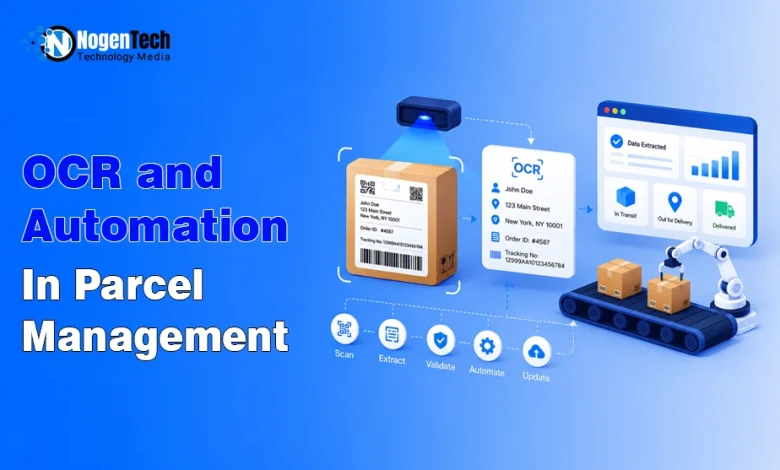
OCR-based parcel management uses Optical Character Recognition (OCR) to capture shipping label data automatically, improving the speed and accuracy of parcel management systems.
Instead of manually entering package details, OCR extracts information from shipping labels, delivery documents, and barcodes, converting it into searchable digital records.
It automatically captures:
- Recipient names
- Tracking numbers
- Carrier details
- Shipping addresses
- Reference numbers
- Delivery timestamps
By eliminating manual data entry, OCR-based parcel management reduces administrative effort, minimizes errors, and keeps parcel management software records accurate and up to date.
How Does OCR-Based Parcel Management Improve Accuracy?
OCR-based parcel management improves accuracy by automatically capturing delivery data, reducing manual errors, and keeping parcel management software records consistent.
Modern OCR-based parcel management platforms read shipping labels and transfer delivery information directly into a centralized parcel management system, eliminating repetitive manual data entry.
Key benefits include:
- Eliminating duplicate data entry
- Reducing typing and processing errors
- Processing deliveries faster
- Standardizing digital records
- Improving record searchability
- Maintaining accurate delivery histories
By automating routine data capture, staff can spend more time managing parcels and less time handling paperwork.
How Does OCR-Based Parcel Management Improve Parcel Management Systems?
OCR-based parcel management improves systems by automating workflows, increasing visibility, strengthening security, and supporting AI-powered operations.
After Optical Character Recognition (OCR) captures delivery data, workflow automation manages the parcel lifecycle, reducing manual work and improving processing efficiency.
How Does Workflow Automation Speed Up Parcel Processing?
Workflow automation automates parcel processing, reducing manual tasks and delivery delays.
A parcel management system can automatically:
- Register incoming packages
- Assign recipients
- Update tracking records
- Send collection notifications
- Record pickup confirmations
- Archive delivery history
These workflows improve speed, consistency, and operational efficiency.
How Does Digital Parcel Tracking Improve Visibility?
Digital parcel tracking provides real-time visibility, making parcels easier to locate and manage.
Each parcel includes a digital record with:
- Arrival time
- Carrier information
- Recipient details
- Storage location
- Collection status
- Pickup history
Unlike paper logs or spreadsheets, parcel management software keeps delivery records searchable and reduces lost packages. This level of transparency is foundational to modern asset tracking, giving businesses full control over their inventory from the warehouse floor to the final destination.
How Does Automation Improve the Employee Experience?
Automation improves the employee experience by sending real-time parcel notifications and reducing collection delays.
Parcel management systems automatically notify recipients, helping organizations:
- Speed up parcel collection
- Reduce mailroom congestion
- Minimize administrative follow-ups
- Improve recipient satisfaction
How Do AI and Automation Improve Parcel Management?
AI and workflow automation improve parcel management software by optimizing parcel processing and operational performance.
Key capabilities include:
- Intelligent package classification
- Duplicate detection
- Delivery pattern analysis
- Predictive workload forecasting
- Exception management
- Automated reporting
These insights help organizations optimize workflows and manage increasing parcel volumes efficiently. Implementing these features is a great step, especially when paired with other best AI tools for business to automate wider company operations
How Do Parcel Management Systems Improve Security and Compliance?
Parcel management systems improve security with verified records, controlled access, and complete audit trails.
Common features include:
- Recipient verification
- Digital signatures
- Role-based access controls
- Audit trails
- Secure cloud storage
- Historical delivery records
These features strengthen accountability, support compliance, and reduce delivery disputes.
What Is the Future of Parcel Management?
The future of parcel management will rely on AI, Machine Learning, OCR, cloud computing, and IoT to automate operations and improve scalability.
Emerging technologies are transforming parcel management systems by enabling:
- AI-powered automation
- Machine Learning for predictive insights
- OCR for faster data capture
- Cloud-based parcel management
- IoT-connected smart lockers
- Mobile delivery applications
Together, these technologies help organizations process parcels faster, improve visibility, and scale operations more efficiently.
Recommended Logistics Reading:
- Learn how Freight Exchange helps online sellers save on outbound shipping rates and optimize delivery overhead.
- Discover our top sustainable shipping tips and check out NogenTech’s EcoEnclose review for greener packaging strategies.
- Explore how macro-level maritime logistics are evolving in a deep dive on the impact of port automation on shipping.
Still Have Questions About OCR-Based Parcel Management?
What is OCR in parcel management?
OCR (Optical Character Recognition) automatically extracts information from shipping labels and delivery documents, reducing manual data entry while improving processing speed and accuracy.
How does automation improve parcel management?
Automation streamlines repetitive tasks such as parcel registration, recipient notifications, delivery tracking, and record management, helping organizations process packages more efficiently.
Which businesses benefit most from OCR-based parcel management?
Corporate offices, universities, hospitals, logistics companies, government agencies, warehouses, and large enterprises handling high parcel volumes benefit significantly from automated parcel management systems.
Can OCR reduce parcel handling errors?
Yes. OCR minimizes manual typing mistakes by automatically capturing recipient details, tracking numbers, carrier information, and delivery references directly from shipping labels.
Is AI becoming important in parcel management?
Yes. AI enhances OCR by improving package classification, predicting delivery volumes, generating operational insights, detecting anomalies, and automating increasingly complex workflows.
What Is Multi-Carrier Parcel Management?
Multi-carrier parcel management enables organizations to manage deliveries from multiple shipping carriers within a single parcel management system.
It centralizes package tracking, recipient information, and delivery records, regardless of the carrier.
Who Should Use Parcel Management Software?
Parcel management software is designed for organizations that handle frequent deliveries and need accurate tracking, automation, and centralized parcel records.
Common users include:
- Corporate offices
- Universities
- Healthcare facilities
- Warehouses
- Government agencies
- Logistics companies
How Do You Choose the Right Parcel Management Software?
Choose parcel management software that offers OCR, workflow automation, multi-carrier support, real-time tracking, and strong security features.
Organizations should also consider scalability, cloud deployment, reporting capabilities, and integration with existing business systems.
Final Thoughts: Why Should Businesses Invest in OCR-Based Parcel Management?
As parcel volumes continue to grow, investing in OCR-based parcel management is becoming a practical step for organizations seeking greater efficiency and accuracy.
By combining Optical Character Recognition (OCR), Artificial Intelligence (AI), workflow automation, and cloud-based parcel management systems, businesses can streamline operations, improve visibility, and reduce manual effort.
From my perspective, organizations that modernize their parcel management software today will be better equipped to handle future delivery demands while maintaining scalable, secure, and reliable parcel operations.