7 Ways Crenoxis Limited Turns User Feedback Into Product Fixes
Crenoxis Limited turns user feedback into product fixes by collecting reports in one place, prioritizing important issues, identifying their causes, assigning them to development teams, and keeping users informed about the improvements.

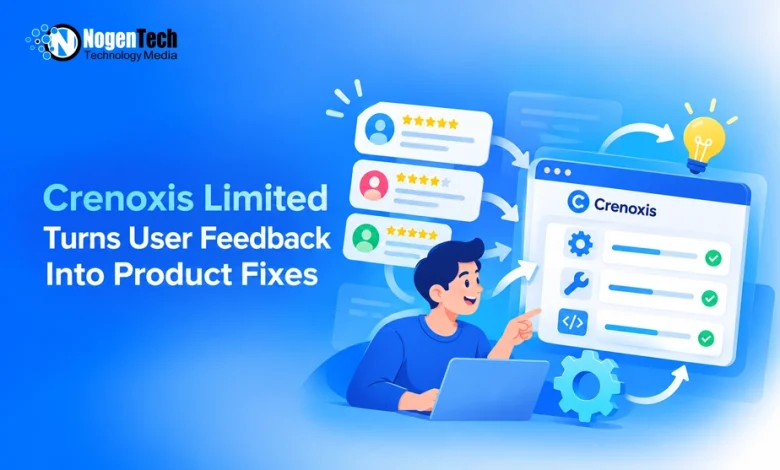
User feedback collection is easy, but turning it into actual product fixes isn’t always straightforward. A platform may have feedback forms, support tickets, and regular reviews, yet the same problems keep coming back because there’s no clear process for acting on what users report.
According to Pendo’s research, 80% of software features are rarely or never used. This highlights why understanding user needs matters just as much as developing new features. Without a system to organize, prioritize, and act on feedback, valuable information can go unused.
Crenoxis Limited focuses on product operations and performance support for digital platforms. Below are seven ways Crenoxis Limited approaches user feedback, from collecting and prioritizing reports to connecting issues with product fixes.
| Approach | What It Does | Why It Matters |
| Centralized feedback | Brings reports from different channels together | Helps identify recurring problems |
| Feedback classification | Separates bugs, requests, and other issues | Routes reports to the right teams |
| Severity triage | Evaluates impact alongside report volume | Helps prioritize critical problems |
| Release history tracking | Connects issues to product changes | Supports root-cause investigation |
| Development routing | Assigns verified issues to development work | Moves reports toward resolution |
| User communication | Updates people who reported problems | Makes the outcome visible |
| Pattern analysis | Identifies recurring issues over time | Helps guide future product improvements |
Why Does User Feedback Need a Clear Process?
User feedback can reveal bugs, performance problems, confusing features, and gaps in a product’s design. But collecting reports doesn’t automatically lead to improvements.
As Atlassian explains, organizing feedback by category, theme, and priority helps product teams connect user insights with development decisions.
For example, a customer might report a payment error through live chat, while several others describe the same problem in app reviews. If those reports stay in separate systems, your product team may not realize they’re dealing with one recurring issue.
A useful feedback process needs to connect reports, identify priorities, assign responsibility, and track what happens next. Here’s how the seven approaches described by Crenoxis Limited fit into that process.
1. Centralizing Feedback From Multiple Channels Into One System
Users don’t report problems in one place. Some submit support tickets, others leave app store reviews, and many contact customer support directly.
When these reports stay in separate systems, it’s difficult to understand how widespread a problem really is.
Crenoxis Limited describes a centralized intake process that collects feedback from active channels and organizes it into a consistent format.
The approach involves:
- Collecting reports from support tickets, in-app forms, reviews, and other channels
- Organizing feedback in a shared system
- Identifying reports that describe the same underlying issue
- Tracking recurring problems across different sources
Why is it that Important?
Imagine a problem receives 10 in-app reports, 6 support tickets, and 15 app store complaints. Viewed separately, each channel shows a smaller issue. Together, those 31 reports reveal a more significant pattern.
Centralizing feedback makes those connections easier to identify without forcing users to report problems through a single channel.
2. Classifying Feedback by Type Before Routing It
Not every user report needs the same response. A broken login button needs technical investigation, while a request for a new dashboard feature may belong in product planning. A security concern could require immediate attention.
Sending all three into the same queue can slow down the response. Crenoxis Limited’s described process classifies feedback before routing it. Reports can be grouped into categories such as:
- Software bugs
- Feature requests
- Usability complaints
- Performance issues
- Security concerns
Classification may be automated for high-volume feedback, with human review where judgment is needed. This helps determine which team should handle the report, how urgently it needs attention, and who is responsible for the next step.
3. Prioritizing Issues by Severity, Not Just Report Volume
The problem receiving the most complaints isn’t always the one that needs fixing first. For example, hundreds of users might report a minor interface inconvenience, while only a few experience a payment failure that prevents them from completing a transaction.
The second issue may deserve higher priority despite receiving fewer reports. Crenoxis Limited separates issue severity from report volume when evaluating feedback.
Its described triage approach considers:
- How seriously the problem affects users
- Which user groups are affected
- Whether users can complete their main tasks
- The consequences of leaving the issue unresolved
- Whether the problem appears isolated or widespread
This gives product teams a clearer basis for deciding what needs immediate attention and what can be scheduled for later.
4. Linking Feedback to Specific Product Areas and Release History
It is more than necessary to always keep an eye on what went wrong, but understanding why it happened helps prevent the same problem from returning. Crenoxis Limited connects reported issues to specific product areas and their release history to identify when a problem first appeared.
This approach helps teams determine whether an issue:
- Started after a recent software update
- Existed before the latest release
- Has been present since the product was launched
The same principle of tracing signals to their source is discussed in an article about Crenoxis Limited’s transaction risk analysis. For product teams, identifying when an issue started can help narrow down its possible causes.
For example, a bug introduced by a recent update might need a targeted patch or rollback. An older issue may require bigger changes to the product’s design or underlying system.
How Release History Helps Prevent Repeated Fixes
Fixing a visible problem without addressing its root cause can allow it to return in another form. By connecting user feedback with release history, product teams can investigate what caused the issue instead of repeatedly applying temporary fixes.
This helps reduce recurring problems and makes future troubleshooting more effective.
5. Moving Verified Issues Into the Development Cycle
A support ticket marked as reviewed doesn’t mean the problem is being fixed. For feedback to lead to an improvement, verified issues need to become part of the software development process.
This involves passing along the original user report, the affected product area, the severity of the issue, and any relevant release history. Developers may also need details about possible causes or suggested fixes.
Crenoxis Limited describes this as a formal handoff between product operations and development. The purpose is to make sure verified issues are assigned to the appropriate team rather than remaining in a feedback queue without further action.
6. Updating Users When Their Reported Issues Are Fixed
When users report a problem, they often don’t know what happens next. Even if the issue gets resolved, they may never receive an update.
Communicating the outcome is an important part of feedback management. Once a fix is available, users who reported the issue can be informed about what changed, whether the update has been released, and whether they need to take any action.
Crenoxis Limited includes this communication step in its described feedback process. Clear, accurate updates help users understand what happened to their reports, close the feedback loop, and improve the overall digital customer experience.
7. Aggregating Feedback Patterns to Surface Systemic Issues
Individual bug fixes help maintain a product, but recurring complaints can reveal something bigger.
For example, repeated reports about confusing navigation may indicate that users are struggling with the product’s overall design rather than one broken feature.
Crenoxis Limited describes analyzing feedback patterns over defined periods alongside individual issue triage.
This involves reviewing recurring complaints, identifying common themes, and examining whether they point to broader product problems.
The findings can inform decisions about:
- Features that need redesigning
- Workflows that create repeated difficulties
- Performance problems affecting multiple product areas
- Changes that should be considered for future releases
This is where feedback becomes useful beyond routine maintenance.
Instead of addressing only the latest reported problem, product teams can use recurring patterns to understand where the product may need more substantial improvements.
Final Thoughts: Turning Feedback Into Meaningful Product Fixes
User feedback becomes valuable when it leads to informed decisions and measurable product improvements.
The seven approaches outlined by Crenoxis Limited show how feedback can move through centralized collection, classification, prioritization, investigation, development, and user communication.
The important distinction is between collecting feedback and acting on it. A platform may receive hundreds of reports, but without clear ownership and follow-through, those reports can remain unresolved.
For product teams, building a reliable process around user feedback is what makes it possible to identify important problems, address their causes, and use recurring issues to guide future improvements.