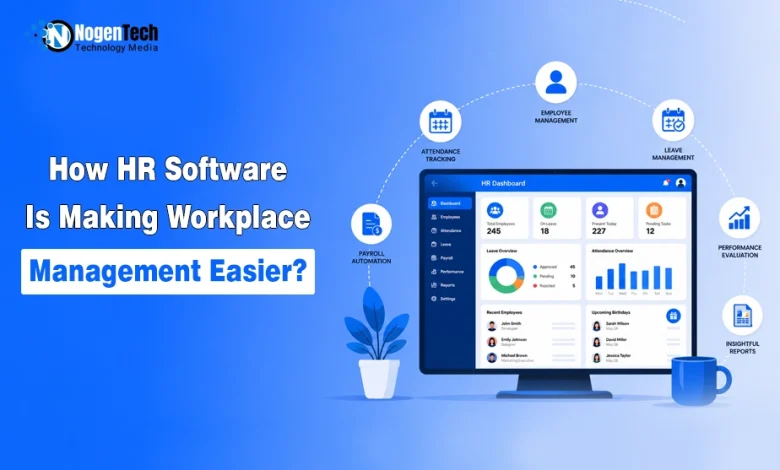
Human resources teams manage a wide range of responsibilities, including hiring, onboarding, attendance tracking, payroll, employee records, and workplace communication.
As organizations grow, handling these tasks manually becomes more time-consuming and increases the risk of delays and administrative errors.
To improve efficiency, many businesses now rely on an all-in-one HR software solution that brings core HR functions into a single platform.
In this guide, I will explain how digital HR tools are making workplace management easier for modern organizations.
What is HR Software?
HR software is a digital platform designed to help organizations manage their human resources functions more effectively.
It serves as a centralized system where employee data, administrative workflows, and communication tools all come together.
Instead of relying on manual processes or multiple disconnected tools, HR teams can handle everything from recruitment to payroll within one unified environment.
At its core, HR software is built to reduce the administrative burden on HR professionals while improving accuracy and compliance.
Whether a business has ten employees or ten thousand, the right platform can adapt to its needs and provide real-time visibility into workforce data.
This makes decision-making faster, more informed, and less prone to costly errors.
How HR Software Makes Workplace Management Easier?
HR software addresses some of the most persistent pain points in workforce management.
From slow hiring cycles to manual leave approvals and fragmented communication, digital tools are replacing outdated processes with smarter, faster alternatives.
Below are the key areas where HR software is making a measurable difference.
1. Faster and More Structured Recruitment
Hiring has traditionally been one of the most resource-intensive tasks for HR departments. Manually reviewing hundreds of applications, tracking candidates across spreadsheets, and following up individually takes enormous time.
HR software automates resume filtering and centralizes candidate tracking, allowing recruiters to identify the right people faster.
Speed matters more than most hiring teams realize. According to CIPD, 44% of jobseekers reject offers if the hiring process takes longer than four weeks.
Automated screening and instant candidate updates keep the process moving and reduce the risk of losing strong applicants to faster-moving competitors.
2. Simplified Employee Management with the Right Tools
Day-to-day employee management involves a constant stream of small but time-consuming tasks. Leave approvals, record updates, and attendance tracking can quietly consume hours that HR teams could spend on more strategic work.
Platforms like TalentHR bring these functions together in one place, making it easy for managers to approve requests, update records, and track workforce data without switching between systems.
Research from inFeedo.ai shows that small HR teams spend at least six hours per week on basic administrative tasks like leave approvals alone.
Automating these processes through a centralized platform gives that time back and reduces the risk of errors in employee records and payroll calculations.
3. Better Communication Across a Remote Work Model
As more organizations adopt a remote work model, keeping teams connected across departments and locations becomes increasingly difficult.
Emails get buried, decisions get delayed, and important updates fail to reach the right people in time.
HR software that integrates communication tools helps solve this by creating structured, searchable channels for team interaction.
Platforms like Microsoft Teams, often integrated within broader HR ecosystems, allow teams to organize conversations, generate meeting summaries, and stay aligned without the noise of traditional email threads.
For HR teams managing distributed workforces, this kind of structured communication is no longer a luxury. It is a core operational requirement.
4. Support Continuous Employee Development
Keeping employees skilled and engaged requires more than an annual training session.
HR software with integrated learning management features allows employees to access development resources at their own pace, without disrupting their daily responsibilities.
Whether you are delivering standard skills training or rolling out a dedicated compliance training platform to meet regulatory requirements, having these tools built into your HR ecosystem keeps learning consistent, measurable, and seamless across the entire organization.
5. Accurate and Automated Payroll Processing
Manual payroll is one of the highest-risk areas in HR operations. Errors in calculations, missed deadlines, and compliance oversights can create serious financial and legal consequences.
HR software automates payroll calculations, applies tax rules, and generates payslips, reducing the margin for error significantly while saving hours of manual work each pay cycle.
Another best thing about these software is that they can integrate different types of payroll services.
If you are looking for the right service for your business, read our guide on the best payroll services for businessmen.
It will help you pick the right service that you can integrate in your HR software and streamline your payroll process efficiently.
Key Features to Look for in HR Software
Not all HR platforms are built the same. Before committing to a solution, it is important to evaluate whether it covers the core functions your team actually needs.
Here are the key features worth prioritizing.
1. Centralized Employee Database
A good HR platform should store all employee information in one place, from contact details and employment history to performance records and documents.
This eliminates the need to dig through multiple systems or spreadsheets when you need critical data, and ensures everyone in the HR team is working from the same source of truth.
2. Recruitment and Applicant Tracking
The software should support the full hiring workflow, including job posting, resume filtering, interview scheduling, and candidate communication.
A built-in applicant tracking system keeps every stage of the recruitment process organized and reduces the time it takes to move candidates from application to offer.
3. Leave and Attendance Management
HR software should make it easy for employees to submit leave requests and for managers to approve or decline them quickly.
Automated attendance tracking, integrated with payroll, ensures that records are always accurate and that nothing falls through the cracks during busy periods.
However, before fully rolling out a system, it is important to understand what to consider before attendance software deployment to ensure a smooth transition for your team.
4. Payroll Processing and Compliance
Payroll is one area where errors are costly. Look for software that automates salary calculations, handles tax deductions, and generates payslips without manual input.
Compliance features that stay updated with local labor laws are an added advantage, especially for businesses operating across multiple regions.
5. Learning and Development Tools
An integrated learning management system allows employees to access training materials, complete courses, and track their progress without needing a separate platform.
This keeps professional development consistent and makes it easier for HR teams to identify skill gaps across the workforce.
6. Reporting and Analytics Dashboard
Data-driven HR decisions require visibility. A strong reporting dashboard gives HR leaders real-time insight into headcount, turnover rates, leave patterns, payroll costs, and more.
This kind of visibility helps teams spot issues early and make informed decisions rather than reactive ones.
7. Self-Service Employee Portal
A self-service portal lets employees handle routine requests on their own, such as updating personal information, downloading payslips, or checking leave balances.
This reduces the volume of repetitive queries HR teams receive daily and gives employees a greater sense of autonomy over their own information.
How HR Software Supports Compliance and Data Security?
Staying compliant with employment laws, tax regulations, and data protection requirements is one of the most challenging responsibilities for any HR team, especially as these rules continue to evolve.
HR software helps by automating compliance-related tasks such as contract management, statutory reporting, and audit trails, reducing the risk of oversight that comes with manual processes.
On the data security side, reputable HR platforms store sensitive employee information using encrypted servers, role-based access controls, and regular security updates.
It ensures that personal data is only accessible to those who need it, helping organizations meet requirements under frameworks like GDPR and other regional data protection standards.
The ROI of Investing in HR Technology
Investing in HR technology delivers strong ROI beyond operational savings.
Companies can reduce administrative costs by up to 40%, while automation improves productivity by 47% and reporting accuracy by 73%.
It also improves retention, reducing employee turnover by 5–15%, which can save over $41,000 annually for a 120-employee company.
Most businesses see ROI within 6–12 months, with immediate time savings and longer-term retention benefits within 12–18 months.
Final Thoughts
HR technology delivers measurable value that extends well beyond cost reduction. By automating routine tasks, improving data accuracy, and streamlining workflows, it allows HR teams to focus on higher-impact work.
The combination of productivity gains, faster reporting, and improved employee retention creates a clear financial upside.
For most organizations, the short payback period makes HR software not just a support tool, but a practical investment in long-term efficiency and workforce stability.
People Also Ask
What are the primary benefits of using HR software?
HR software centralizes employee data, automates repetitive administrative tasks like payroll and leave management, ensures regulatory compliance, and provides data-driven insights that help HR teams focus on strategic culture-building.
How does HR software help HR teams save time?
HR software automates repetitive tasks like payroll, attendance tracking, and leave approvals. This allows HR teams to focus more on strategy, employee support, and business growth.
How does HR software improve the recruitment process?
By automating resume filtering and tracking candidates, HR software reduces hiring cycles. This speed is critical, as data shows that delayed feedback can lead to losing top candidates to competitors.
Is HR software suitable for small businesses?
A: Yes. Small businesses benefit significantly from HR software by reducing the time spent on manual administrative tasks (like leave approvals), allowing smaller teams to dedicate more time to growth and workplace culture.
How does HR technology improve employee retention?
It improves retention by streamlining administrative processes, reducing frustration caused by delays, and supporting professional development through integrated learning platforms, which contributes to a more positive employee experience.