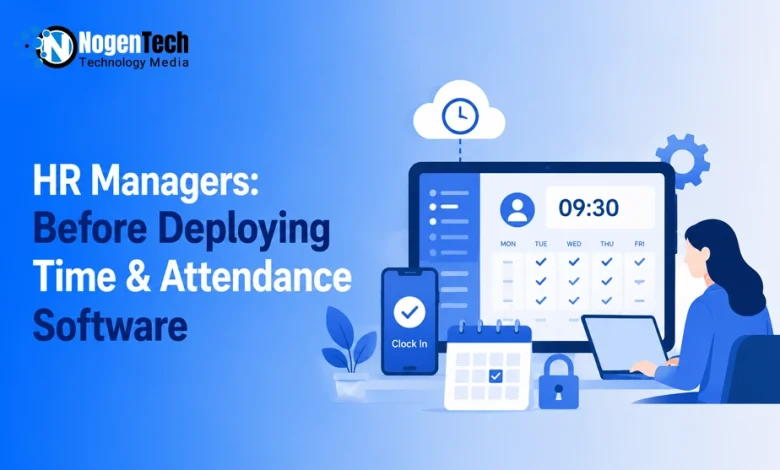
Payroll errors, attendance disputes, and manual time tracking can quickly become costly for any organization.
Employee time tracking has evolved beyond paper timesheets and spreadsheets. Modern time and attendance software helps organizations:
- Automate attendance tracking
- Streamline payroll processing
- Improve workforce management
- Support labor law compliance
For HR managers, payroll administrators, and business leaders, choosing the right solution is about more than tracking employee hours. It should support hybrid and remote teams, integrate with existing systems such as HR software, provide actionable reporting, offer mobile accessibility, and scale with business growth.
As you will read next, I will make you explore the key factors to consider before implementing time and attendance software, helping organizations improve payroll accuracy, simplify workforce management, and make more informed, data-driven decisions.
What Is Time and Attendance Software?
Time and attendance software is a workforce management solution that automates employee time tracking, attendance, shift scheduling, leave management, and payroll integration.
It helps businesses maintain accurate attendance records, improve payroll accuracy, ensure labor law compliance, and manage on-site, remote, and hybrid workforces from a centralized platform.
Why Do Businesses Use Time and Attendance Software?
Businesses use time and attendance software to replace manual timesheets with automated workflows that improve efficiency and reduce errors. Its key benefits include:
- Automated attendance tracking
- Accurate employee time tracking for payroll
- Simplified shift scheduling and workforce planning
- Centralized leave management
- Improved labor law compliance
- Real-time workforce analytics and reporting
- Mobile access for remote and hybrid teams
Most cloud-based HR software also integrates with payroll systems and HRIS platforms, enabling HR teams to manage attendance, overtime, and leave from a single dashboard while improving productivity and reducing payroll errors.
What to Consider Before Choosing Time and Attendance Software?
Choosing the right time and attendance software requires more than comparing features. Evaluating your business needs, workforce requirements, integration capabilities, and long-term goals helps ensure a successful implementation and maximize your return on investment.
Here are some of the key factors that you cannot ignore by any chance:
- Defining your implementation goals
- Assessing your workforce requirements
- Evaluating essential software features
- Supporting remote and hybrid teams
- Planning employee training and change management
- Using workforce analytics for better decision-making
- Integrating attendance with payroll and HR systems
- Maintaining labor law compliance
- Aligning attendance software with business goals
- Following implementation best practices
Why Define Clear Business Objectives?
Defining clear business objectives before choosing time and attendance software helps you select a solution that addresses your organization’s challenges, improves operational efficiency, and supports long-term growth.
Before evaluating vendors, identify the outcomes you want to achieve, such as:
- Improving payroll accuracy
- Automating attendance tracking
- Reducing administrative workload
- Supporting hybrid and remote teams
- Strengthening labor law compliance
- Improving workforce planning
Clear priorities make it easier to compare vendors, evaluate features, and invest in a scalable solution that meets both current and future business needs.
How Do You Evaluate Workforce Requirements?
Evaluating your workforce requirements helps you choose time and attendance software that supports your employees, work schedules, and daily operations.
Before selecting a solution, evaluate your:
- Work schedules
- Shift patterns
- Leave policies
- Overtime rules
- Remote and hybrid work requirements
- Reporting needs
Also, gather input from department managers and key stakeholders to ensure the software supports every team not just a single department. This helps you select a scalable solution that fits your organization’s current and future workforce needs.
Which Features Matter Most to Improve Daily Operations?
The best time and attendance software includes features that simplify HR processes, improve accuracy, and support your day-to-day workforce management needs.
Look for features such as:
- Automated attendance tracking
- Leave and absence management
- Shift scheduling
- Payroll integration
- Mobile employee access
- Real-time reporting and analytics
- Labor law compliance tools
- Cloud-based accessibility
Instead of choosing software with the longest feature list, prioritize capabilities that address your business challenges. Look for options that scale as your organization grows and integrate seamlessly with your existing payroll workflows or other essential employee review tools for performance management.
How Can You Support Hybrid and Remote Teams?
Choose time and attendance software that supports flexible work models with mobile access, automated workflows, and real-time attendance tracking.
Look for features such as:
- Mobile clock-in and clock-out
- GPS-based attendance verification
- Employee self-service portals
- Remote approval workflows
- Digital leave requests
These capabilities help HR teams manage remote and hybrid workforces, maintain accurate attendance records, and improve workforce visibility across multiple locations.
How Should You Prepare Employees for Implementation?
Successful time and attendance software implementation depends on employee adoption as much as the business technology itself. Clear communication and training help reduce resistance and encourage faster adoption.
Before launching the system, provide:
- Early communication about the rollout
- Employee training sessions
- Manager workshops
- A dedicated FAQ resource
- Ongoing technical support
Equip managers with the guidance they need to answer questions, address concerns, and support their teams throughout the implementation process.
How Can Workforce Analytics Improve Decision-Making?
Modern time and attendance software provides workforce analytics that help HR teams monitor trends, optimize scheduling, and make data-driven decisions.
Use workforce analytics to track:
- Attendance trends
- Overtime patterns
- Employee availability
- Scheduling efficiency
- Labor utilization
- Absence rates
These insights help identify operational inefficiencies, improve workforce planning, optimize staffing levels, and support more informed HR decisions through real-time reporting.
How Does Time and Attendance Software Improve Payroll Accuracy?
Integrating time and attendance software with your payroll system automates time tracking, reduces payroll errors, and ensures employees are paid accurately and on time.
Key benefits include:
- Reduced manual data entry
- Fewer calculation errors
- Faster payroll processing
- Lower compliance risks
Accurate attendance records streamline payroll workflows, minimize administrative corrections, and improve employee trust by ensuring consistent and accurate pay.
How Does Time and Attendance Software Support Compliance?
Time and attendance software helps organizations maintain accurate attendance records, support labor law compliance, and simplify record management through automated documentation and secure data storage.
Much like utilizing dedicated management program for document storage, combining attendance tracking with a centralized repository ensures that all critical corporate and employee records remain audit-ready.
Key compliance features include:
- Secure storage of historical attendance records
- Audit trails for attendance changes and approvals
- Approval history for leave and attendance requests
- Accurate leave balance tracking
- Standardized attendance policies
Cloud-based record management also improves accessibility for HR teams responsible for multiple offices or business locations, demonstrating some of the key benefits of cloud computing for businesses.
How Can Time and Attendance Software Support Business Growth?
Time and attendance software should do more than track employee hours. When integrated with HR and business systems, it provides workforce data that supports strategic planning and operational growth.
Use attendance data to improve:
- Workforce planning
- Budget forecasting
- Productivity analysis
- Resource allocation
- Operational efficiency
- Business performance reporting
Integrating time and attendance software with broader business processes gives leadership better visibility into workforce performance, helping organizations make informed decisions and scale more effectively.
Best Practices for Successful Implementation
A successful time and attendance software implementation requires careful planning, employee adoption, and continuous optimization. Follow these best practices to maximize long-term value and return on investment:
- Define measurable implementation objectives
- Review current attendance workflows
- Select scalable cloud-based software
- Train employees and managers
- Integrate payroll and HR systems
- Monitor adoption and user feedback
- Regularly review workforce analytics
Following these best practices helps maximize software adoption while improving long-term business outcomes.
People Also Ask About
How do I choose the right time and attendance software?
Choose a solution that matches your workforce size, supports payroll integration, offers mobile access, and can scale as your organization grows.
What features should HR managers prioritize?
Attendance tracking, leave management, shift scheduling, payroll integration, reporting, and compliance tools are among the most important features.
Does attendance software improve payroll accuracy?
Yes. Automated attendance records reduce manual calculations and help minimize payroll errors.
Can attendance software support remote employees?
Most modern cloud-based platforms include mobile attendance, GPS verification, and self-service portals for remote and hybrid teams.
Final Thoughts: Is Time and Attendance Software Worth It?
Time and attendance software is more than a tool for tracking employee hours. It helps improve payroll accuracy, streamline workforce management, support labor law compliance, and enable better business decisions through real-time workforce data.
In my view, the best solution is one that addresses your organization’s needs, not the one with the most features. Prioritize scalability, seamless payroll and HR system integration, mobile accessibility, and employee adoption to maximize long-term value.
By assessing your business requirements, employee training, and alignment with organizational goals and following the best practices I gave you above, you can choose time and attendance software at the most efficient time that improves operational efficiency.