Compliance isn’t just about training employees, it’s about proving they were trained.
Regulatory compliance becomes far more challenging when employee training records are spread across spreadsheets, emails, and disconnected systems.
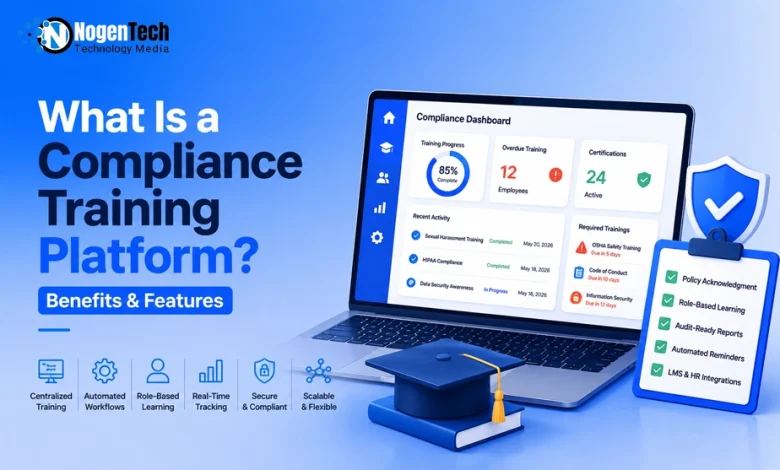
Missed deadlines, expired certifications, and incomplete documentation can quickly turn an audit into a costly risk. A compliance training platform provides a centralized, cloud-based solution to help organizations:
- Automate course assignments and reminders
- Track employee compliance training and completion status
- Generate audit-ready reports
- Deliver role-based learning
- Integrate with HR systems and Learning Management Systems (LMS)
Whether you’re evaluating the best compliance training platform or managing compliance training at scale, the right solution simplifies regulatory compliance, reduces administrative effort, and strengthens employee accountability.
What Is a Compliance Training Platform?
A compliance training platform is software that helps U.S. organizations assign, deliver, track, and document employee compliance training to meet regulations such as OSHA, HIPAA, SOX, and PCI DSS while maintaining audit-ready records.
It centralizes mandatory training, policy acknowledgments, certifications, and compliance records in one system, replacing manual tracking with automated workflows.
Core capabilities include:
- Automated course assignments based on employee roles
- Training completion tracking and compliance reporting
- Audit trails and digital recordkeeping
- Role-based learning paths
- Integration with Learning Management Systems (LMS) and HRIS
- Automated reminders for training and certification renewals
Organizations in manufacturing, healthcare, financial services, hospitality, and government use compliance training platforms to manage workplace safety, data privacy, information security, ethics, and other regulatory training requirements while maintaining consistent compliance across teams and locations.
Example: A U.S. manufacturer can automatically assign OSHA safety training to production staff and store completion records for future audits.
Key Benefits of Using a Compliance Training Platform
A compliance training platform helps U.S. organizations improve regulatory compliance by automating training, maintaining audit-ready records, reducing compliance risks, and improving workforce accountability.
Its biggest value lies in replacing manual compliance processes with standardized, measurable workflows that support audits, reporting, and regulatory changes.
How Does a Compliance Training Platform Centralize Compliance Management?
A compliance training platform centralizes employee training, certifications, and policy acknowledgments, giving HR and Compliance teams a single system to manage regulatory requirements.
Instead of multiple tools, organizations can:
- Assign training by role, department, or location
- Monitor completion status
- Identify overdue training
- Store certifications and policy acknowledgments
This improves visibility while reducing manual administration.
How Does a Compliance Training Platform Improve Audit Readiness?
Compliance platforms maintain audit-ready records for regulations such as OSHA, HIPAA, SOX, and PCI DSS, making training evidence easy to retrieve during audits.
Digital records include:
- Training completion dates
- Assessment results
- Employee certifications
- Policy version history
- Electronic acknowledgments
Centralized documentation reduces audit preparation time and strengthens regulatory reporting.
How Can Organizations Adapt to Regulatory Changes Faster?
A compliance training platform enables organizations to update training content, assign new courses, and notify employees whenever regulations or internal policies change.
Organizations can quickly:
- Publish updated courses
- Reassign mandatory training
- Notify affected employees
- Track completion progress
This helps prevent outdated compliance practices.
How Does Role-Based Learning Improve Compliance?
Role-based learning assigns relevant training based on job responsibilities, improving employee engagement and regulatory compliance. Examples include:
- Manufacturing: OSHA safety training
- Healthcare: HIPAA compliance
- Financial services: SOX, PCI DSS, ethics
- Marketing & IT: NIST cybersecurity practices and data privacy standards like GDPR compliance for email marketing
Relevant training improves knowledge retention and reduces unnecessary coursework.
Why Are Compliance Reports and Analytics Important?
Compliance reporting gives HR, Compliance Officers, and business leaders real-time visibility into workforce compliance. Key insights include:
- Completion rates
- Overdue assignments
- Certification renewals
- Assessment performance
- Department-level compliance trends
These insights help identify compliance gaps before they become regulatory risks.
How Does Continuous Training Improve Knowledge Retention?
Continuous compliance training reinforces regulatory requirements through regular refreshers instead of one-time annual courses. Common learning methods include:
- Scenario-based learning
- Interactive assessments
- Microlearning
- Mobile learning
Frequent reinforcement improves long-term policy awareness.
How Does Compliance Training Reduce Legal and Financial Risk?
Documented employee compliance training demonstrates that organizations have educated employees on regulatory requirements, strengthening their position during audits, investigations, and legal reviews.
Training commonly covers:
- Workplace safety
- Data privacy
- Information security
- Ethical conduct
- Workplace harassment
Consistent documentation supports stronger governance and enterprise risk management.
How Can a Compliance Training Platform Support Business Growth and Compliance at Scale?
A compliance training platform helps U.S. and global organizations scale employee compliance training by standardizing learning, supporting distributed teams, and automating recurring compliance tasks.
As organizations expand, a scalable platform maintains consistent compliance across locations without increasing administrative complexity.
How Can Organizations Standardize Compliance Training Across Multiple Locations?
A compliance training platform delivers consistent training across offices, remote teams, and hybrid workplaces, ensuring every employee follows the same approved policies and compliance standards.
Organizations can:
- Assign standardized training
- Track completion across locations
- Maintain centralized training records
This improves consistency across the organization.
How Does a Global Compliance Training Platform Support International Teams?
A global compliance training platform enables organizations to meet regional regulations while maintaining centralized compliance oversight. It supports:
- Multi-language training
- Country-specific policies
- Regional compliance requirements
- Global reporting
This simplifies compliance for multinational workforces.
Why Is Automation Essential for Growing Organizations?
Automation reduces manual administration by managing recurring compliance activities throughout the employee lifecycle.
For instance, just as financial institutions work to automate fintech compliance to keep pace with changing standards, training platforms automate essential HR and operations tasks, including:
- New hire onboarding
- Annual compliance training
- Certification renewals
- Policy acknowledgment reminders
This improves completion rates while reducing administrative effort.
How Do Cloud-Based Compliance Training Platforms Support Remote Employees?
Cloud-based platforms provide secure access to mandatory compliance training from any location while giving administrators real-time visibility into employee progress.
As organizations increasingly rely on cloud infrastructure, pairing employee training with strong cloud data security posture management ensures both workforce habits and data environments remain fully compliant.
Key benefits include:
- Mobile learning
- Self-paced training
- Progress tracking
- Centralized reporting
This keeps remote and on-site employees aligned with the same compliance requirements.
How Do You Choose the Best Compliance Training Platform?
The best compliance training platform helps U.S. organizations automate employee compliance training, maintain audit-ready records, integrate with existing systems, and scale with evolving regulatory requirements.
When comparing platforms, prioritize solutions that offer:
- Role-based learning and automated course assignments
- LMS, HRIS, SSO, SCORM, and xAPI integration
- Real-time reporting and compliance dashboards
- SOC 2 or ISO 27001 security standards
- Mobile learning and self-paced training
- Certification tracking and policy acknowledgments
- Scalable administration for multiple teams and locations
- Responsive customer support and regular product updates
Choose a platform that aligns with your organization’s regulatory requirements, workforce size, and existing technology stack instead of selecting software based solely on features or price.
Frequently Asked Questions About Compliance Training Platforms
What is the best compliance training platform?
The best compliance training platform for U.S. organizations automates training, supports LMS/HRIS integration, maintains audit-ready records, and scales with changing regulatory requirements.
Can a compliance training platform integrate with an LMS?
Most modern compliance training platforms integrate with Learning Management Systems (LMS), HRIS, SSO, and SCORM/xAPI standards to synchronize users, courses, and compliance records.
Which industries benefit most from a compliance training platform?
Industries such as manufacturing, healthcare, financial services, hospitality, and government use compliance training platforms to meet OSHA, HIPAA, SOX, and other regulatory requirements.
Can small businesses use a compliance training platform?
Yes. Small businesses use cloud-based compliance training platforms to automate employee training, maintain compliance records, and prepare for audits without dedicated compliance teams.
How often should compliance training be updated?
Compliance training should be updated whenever regulations, industry standards, or internal policies change, with annual refresher training where required.
Final Thoughts: Build a Stronger Compliance Program With the Right Training Platform
Choosing the right compliance training platform is about more than automating courses it’s about creating a repeatable process that keeps employees informed, reduces compliance risks, and prepares your organization for changing regulations.
Features like role-based learning, audit-ready reporting, LMS integration, and scalable administration can make compliance easier to manage as your business grows.
In my view, organizations benefit most when they choose a platform that fits their operational needs and long-term compliance strategy rather than focusing only on feature lists or pricing.