Apple Takes the Epic Games Fight to the Supreme Court, One Last Bid to Protect the App Store’s Economics
Apple petitioned the US Supreme Court on May 21, 2026, challenging the Epic Games contempt ruling and an injunction it says now affects all App Store developers, not just Epic.

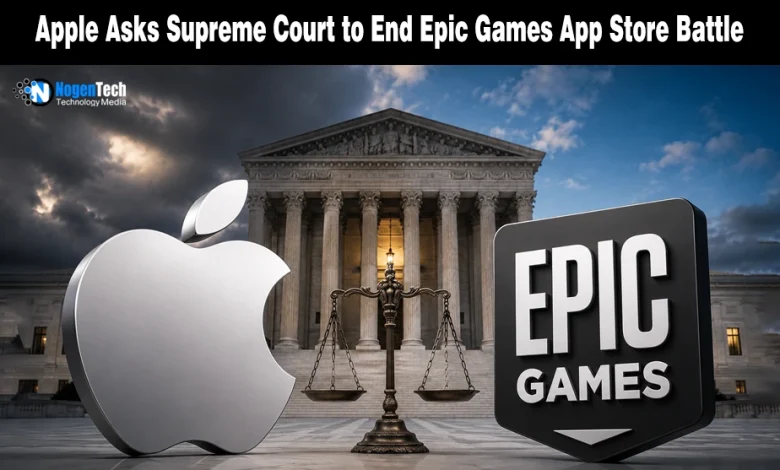
Six years after Epic Games filed its original lawsuit, Apple is still fighting. On May 21, 2026, Apple formally petitioned the US Supreme Court to review two major legal questions in the Epic Games dispute; questions that could reshape not just Apple’s App Store, but the legal framework governing digital marketplaces across America.
As MacRumors confirmed, the petition will be considered on June 25, with a decision expected before the court’s summer recess. The Supreme Court already rejected Apple’s earlier stay request this month, allowing District Court proceedings to continue while the company pursues what it admits remains an uncertain appeal.
The “Spirit” of an Injunction and Why Apple Says That Is Not Enough
Apple’s first argument attacks the legal standard that the Ninth Circuit used to uphold the contempt finding.
As the report confirms, Judge Yvonne Gonzalez Rogers, who recently dismissed the Musk v. Altman case, issued an original 2021 injunction requiring Apple to allow developers to include external links directing users to alternative payment methods.
However, the order never clearly stated whether Apple could charge commissions on purchases made through those external links. Apple allowed the links, but still imposed a 27% fee on transactions completed within seven days of a user clicking one.
The Ninth Circuit acknowledged the injunction’s text did not address commissions. Even so, it upheld the contempt finding, relying on the principle that a party can violate the “spirit” of an order even when the conduct is not specifically prohibited.
Apple’s Supreme Court petition argues that this spirit-based contempt standard is legally incoherent and could create risky precedent for companies operating under court injunctions.
Why Apple Says the Injunction Goes Too Far Beyond Epic
The second argument is about scope, and it is arguably the more far-reaching of the two.
As per MacRumors, Apple argues the Ninth Circuit’s decision now applies the original Epic Games injunction to all App Store developers, including Microsoft, Spotify, and thousands of companies that were never part of Epic’s lawsuit.
Apple points to the Supreme Court’s recent ruling in Trump v. CASA, which said lower courts cannot issue broad nationwide injunctions in unrelated cases. The company argues the same principle should apply here.
Apple states in its petition that Epic “never brought a class action and never attempted to show that enjoining Apple’s conduct against all other developers was somehow necessary to provide relief to Epic.”
This contrast is starkly illuminated by the separate Epic v. Google case, where Google was forced into a massive ecosystem settlement in March 2026 over similarly broad, platform-wide injunctions.
In its petition, Apple warns the combined effect of the contempt ruling and the expanded injunction could “reshape the global app marketplace.”
The company wants these legal questions resolved before the lower court resumes commission-rate proceedings.
What Comes Next and Epic’s Response
The case is currently before Judge Gonzalez Rogers, who will decide what commission Apple can charge on out-of-app purchases.
If the Supreme Court accepts Apple’s petition, the District Court proceedings could be paused while the company argues what it calls an “erroneous and prejudicial contempt label.”
Justice Elena Kagan already denied Apple’s earlier request to pause the fee proceedings, meaning the case continues for now.
As reported by 9to5 Mac, Epic responded to the petition with characteristic directness, calling it “one last Hail Mary to delay a conclusion to this case and avoid opening up the gates to payment competition.”
Apple’s legal headaches could soon multiply further, with reports indicating OpenAI is preparing a separate breach-of-contract lawsuit over their soured Siri integration partnership.
The Supreme Court’s decision on whether to hear the case, expected by late June or early July, will determine whether this chapter of one of technology’s longest-running legal battles closes or extends into 2027.
Source: Apple Asks Supreme Court to Review App Store Contempt Ruling



![Top Tech Stories of 10th Week [2026]](https://www.nogentech.org/wp-content/uploads/2026/03/Top-Tech-Stories-of-10th-Week-2026-390x220.webp)