Google I/O 2026 Recap: From XR Audio Glasses Rivaling Meta to Historical AI Search Overhaul
Google steps beyond the screen at I/O 2026, shifting from passive web indexes to fluid hardware and autonomous AI agents.

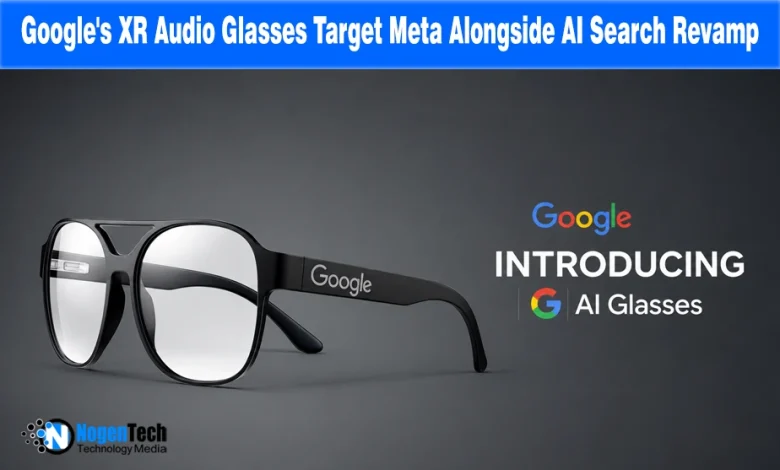
Google I/O 2026 marked a profound turning point in consumer technology, shifting focus away from traditional search bars and toward hands-free, autonomous digital ecosystems.
Instead of treating AI as a simple text box or a casual chatbot companion, Google’s latest framework builds software that actively acts on your behalf.
By fundamentally overhauling its core search interface and introducing premium smart eyewear, the company is bridging the gap between digital software and physical reality.
This structural evolution forces publishers, creators, and daily internet users to completely rethink how information is discovered, delivered, and experienced online.
Generative UI That Reimagins the Search
The traditional paradigm of typing keywords into a blank box to retrieve a page of blue links is officially dead.
As detailed by the Google Blog and firsthand reporting from The Verge, the freshly updated search interface features an Intelligent Search Box that handles text, live video feeds, and full Chrome browser tabs all at once.
Rather than sending users to external websites, a new design pattern called Generative UI dynamically builds custom interfaces, interactive dashboards, and mini-apps directly inside the search results.
This shift is deeply integrated with Search Agents, background systems that work continuously to monitor real-world changes, like tracking fluctuating real estate markets or retail drops.
Technical reviews from experts note that this ecosystem fundamentally transforms Google from a tool that points to information into an action-oriented engine designed to fulfill complex user intents in a single, closed loop.
Android XR Audio Glasses to Challenge Meta’s Wearable Tech
Google took a massive stride into the consumer hardware arena by unveiling its first-ever, display-free Audio Glasses built natively on the Android XR platform.
Developed in a high-profile hardware partnership with Samsung, the smart eyewear features stylized frames crafted by luxury designer Gentle Monster and popular retailer Warby Parker.
According to official product releases published by the Google Blog, the device serves as a lightweight, eyes-up smartphone companion rather than a standalone computer.
Users tap the frames or speak naturally to invoke Gemini, allowing the glasses to translate foreign speech in real-time, matching pitch, summarize missed alerts, or navigate using audio-only maps.
The integration of Nano Banana also permits hands-free photo editing via voice commands.
Scheduled for a fall 2026 release, these frames place Google’s ecosystem directly on the user’s face, creating an immediate, formidable challenge to Meta’s advanced smart glasses technology.
The Gemini 3.5 Flash Speed Behind Autonomous AI
The technical foundation making this ambient, instant interaction possible is Gemini 3.5 Flash, the newest high-speed architecture anchoring the Gemini 3.5 family as the direct successor to Gemini 3 Flash.
Unveiled during the developer keynotes, the model is engineered explicitly for complex, long-horizon workflows and coding tasks.
The Gemini 3.5 Flash reportedly operates an astonishing four times faster than existing frontier AI systems, drastically slashing latency to ensure voice interactions feel entirely human and conversational.
The model works alongside Google Antigravity 2.0, an agent-first application that famously built a working operating system from scratch using 93 sub-agents in just 12 hours during its live demo.
By handling background automation without lagging, this infrastructure allows a user to deploy background tasks, such as coordinating a DoorDash order or calling an Uber through voice, while their phone remains entirely untouched inside their pocket.
The Ambient Web: What an “Eyes-Up” Future Means for Publishers
As Google shifts toward an “always-on” AI model, traditional web traffic is starting to break down. With Gemini acting on users’ behalf, publishers and online businesses are being pushed beyond traditional SEO toward Generative Engine Optimization (GEO).
Industry analysis from The Verge highlights how zero-click searches will rapidly expand as tools like Universal Cart pull products across Gmail, YouTube, and the wider web into a centralized ecosystem.
To remain visible, platforms must structure data so autonomous agents can easily parse and present it within dynamic, AI-generated layouts.
When information is delivered instantly through audio glasses or customized search widgets, the publishers who survive will be those who establish direct, experience-driven connections that AI agents cannot replicate.
Source: Building the agentic future: Developer highlights from I/O 2026