A great product can attract customers, but the wrong business structure can cost you everything.
Launching a tech startup often begins with a great idea, but choosing the right business structure is just as important as building the product.
Many founders overlook legal structuring when figuring out a business plan, even though choosing the right entity directly impacts growth, finances, and liability.
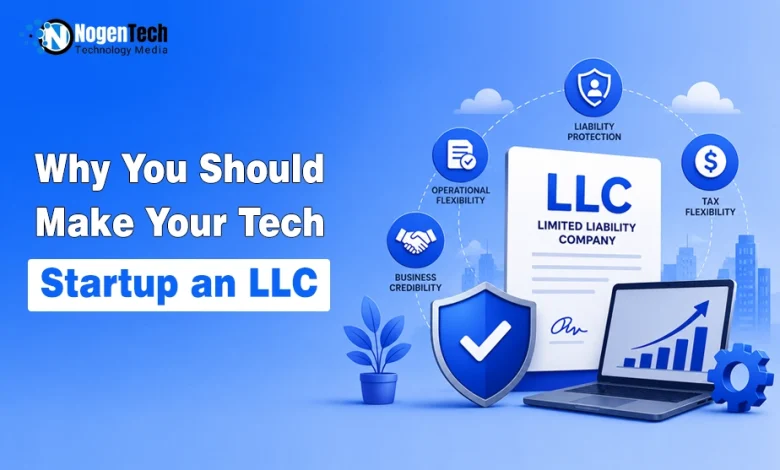
If you’re wondering what an LLC is or how to start an LLC in the US, a Limited Liability Company (LLC) has the potential to offer several high-ticket advantages to your company, such as:
- Personal liability protection
- Tax flexibility
- Operational simplicity
- Greater business credibility
Whether you’re planning LLC registration, hiring your first employee, or preparing to scale, choosing the right structure early can help you avoid costly legal and financial challenges.
Why Should Tech Startups Choose an LLC?
A Limited Liability Company (LLC) is a popular business structure in the United States that tech startups should focus on because it offers liability protection, tax flexibility, and simpler management.
Compared to a sole proprietorship, an LLC creates a separate legal entity, reducing personal liability while offering greater operational flexibility. Its key advantages include:
- Protecting personal assets from most business liabilities.
- Pass-through taxation to help avoid double taxation.
- Fewer compliance requirements than many corporations.
- Stronger credibility with customers, suppliers, and business partners.
- A flexible foundation for early operations and hiring initial employees.
Given these high risks, sadly, 90% of US startups fail over their full lifecycle, two-thirds of those within the first five years.
The Investor Catch: While these advantages are perfect for bootstrapped or self-funded startups, institutional investors (like VCs) generally refuse to invest in LLCs due to tax and equity structures, so also keep that in check with your future plans.
For many early-stage or bootstrapped startups in the United States, an LLC provides a practical balance of legal protection, flexibility, and professional credibility.
This gets done without unnecessary administrative complexity, while remaining adaptable enough to convert into a corporation if scaling requires outside venture capital later.
How Can You Start an LLC for Your Tech Startup?
Starting a Limited Liability Company (LLC) in the United States involves choosing a business name, filing state formation documents, appointing a registered agent, and obtaining an Employer Identification Number (EIN).
Forming an LLC is a straightforward process that creates a separate legal entity for your startup. While state filing requirements and filing fees vary, such as regional LLC formation costs in South Carolina, the core steps to register remain largely the same across the U.S.
Key steps to start an LLC:
- Choose a unique business name and verify its availability with your state’s business registry.
- Appoint a registered agent to receive legal notices and official government correspondence.
- File the Articles of Organization with the appropriate state agency to complete your LLC registration.
- Apply for an Employer Identification Number (EIN) from the Internal Revenue Service (IRS) to hire employees, open a business bank account, and file taxes.
- Create an operating agreement to define ownership, responsibilities, and how the business will be managed.
Completing these steps early helps establish a compliant business structure, separates personal and business finances, and prepares your startup for future growth.
How Does an LLC Protect Your Personal Assets?
A Limited Liability Company (LLC) in the United States separates personal and business assets, protecting owners from most business debts and legal liabilities.
Every startup faces financial and legal risks, including customer disputes, contract issues, and business debt. An LLC reduces personal exposure by establishing your startup as a separate legal entity.
Key benefits include:
- Protecting personal assets from most business debts and lawsuits.
- Separating personal and business finances for clearer financial management.
- Reducing personal liability for ordinary business obligations.
- Building confidence among customers, suppliers, and investors.
While an LLC provides strong legal separation, pairing your structure with the best business insurance for an LLC ensures comprehensive coverage against unexpected business liabilities and operational risks.
How Does an LLC Offer Tax Flexibility for Tech Startups?
A Limited Liability Company (LLC) in the United States typically uses pass-through taxation, allowing profits and losses to be reported on the owner’s personal tax return.
As your startup grows, tax planning becomes more important. An LLC offers flexible tax treatment that can adapt to your business needs.
Key tax benefits include:
- Pass-through taxation, helping avoid double taxation.
- Flexible tax elections as your business grows.
- Simplified tax reporting for many startups.
Tax requirements vary by business income, tax election, and state. A qualified CPA or tax professional can help ensure compliance with Internal Revenue Service (IRS) regulations and identify the most suitable tax strategy.
A qualified accountant can help you understand the main types of business taxes in the US and how they impact you, and estimate what you can expect to pay in taxes.
How Does an LLC Improve Operational Flexibility for Tech Startups?
A Limited Liability Company (LLC) in the United States has fewer management requirements than a corporation, making it easier to adapt as a startup grows.
The tech industry changes quickly, and startups need a business structure that supports growth without unnecessary administrative requirements. An LLC offers greater flexibility in managing daily operations and business decisions.
Key advantages include:
- Fewer compliance requirements than a corporation.
- No requirement to establish a board of directors or hold formal corporate meetings.
- Easy updates to the operating agreement when adding co-founders or changing ownership.
- Flexible management structure that supports business growth and changing priorities.
This flexibility allows founders to spend more time building products, serving customers, and scaling their business instead of managing corporate formalities.
How Does an LLC Enhance Business Credibility for Tech Startups?
A Limited Liability Company (LLC) in the United States enhances business credibility by establishing your startup as a legally registered business.
Customers, suppliers, and business partners are more likely to trust a startup that operates as an LLC because it reflects professionalism and long-term commitment.
An LLC helps build credibility by:
- Strengthening your professional business image.
- Using registered contracts, invoices, and business communications.
- Building trust with customers, suppliers, and potential partners.
- Supporting long-term business growth with a formal legal structure.
While an LLC doesn’t guarantee success, it provides a stronger foundation through liability protection, tax flexibility, operational flexibility, and business credibility.
Frequently Asked Questions About LLCs for Tech Startups
How do you create an LLC in the United States?
Create a Limited Liability Company (LLC) in the United States by choosing a business name, filing state documents, appointing a registered agent, and obtaining an Employer Identification Number (EIN).
Is an LLC better than a sole proprietorship for a tech startup?
In the United States, an LLC offers liability protection, tax flexibility, and greater business credibility than a sole proprietorship for most tech startups.
What does LLC stand for?
LLC stands for Limited Liability Company, a business structure in the United States that separates personal and business liabilities.
Do you need a registered agent for an LLC?
Yes. Most U.S. states require every Limited Liability Company (LLC) to appoint a registered agent to receive legal and government documents.
Can a single person own an LLC?
Yes. A Single-Member Limited Liability Company (LLC) is recognized in the United States, allowing one owner to operate with liability protection.
Final Thoughts: Build Your Startup on the Right Legal Foundation
Choosing the right business structure is one of the smartest decisions a founder can make before launching a startup.
While an LLC isn’t the perfect fit for every business, it offers a practical combination of liability protection, tax flexibility, operational simplicity, and professional credibility for many early-stage tech companies.
In my view, establishing an LLC early creates a stronger foundation, allowing founders to focus less on legal complexities and more on building products, serving customers, and growing a sustainable business.