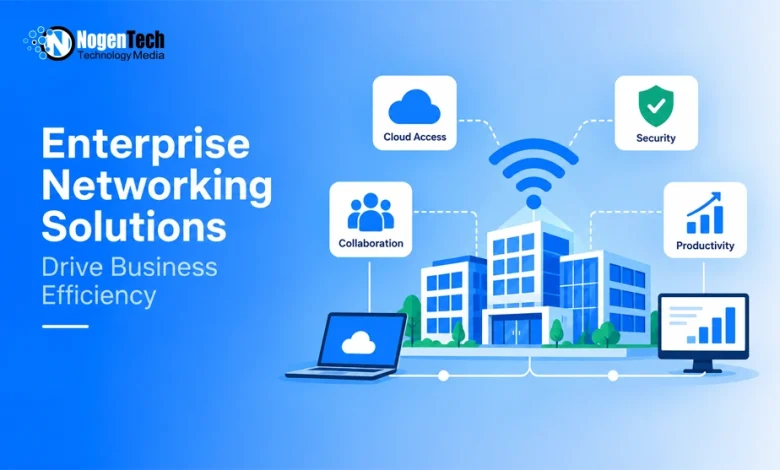
Efficiency rises or falls with the quality of a company’s network. Staff rely on steady access to files, calls, cloud platforms, and shared systems across every shift.
When links slow, coverage drops, or faults hide from view, wasted minutes multiply across departments. Sound network planning limits those losses.
For larger firms, connectivity supports daily output, service continuity, and cost control in ways leadership can measure.
Key Areas Where Strong Networks Improve Operations
Reliable Flow
Cloud software, video calls, live stock records, and connected equipment place constant pressure on business infrastructure.
In that setting, enterprise networking solutions help create dependable paths for traffic between offices, remote workers, and operational sites. Well-matched switching, routing, wireless access, and cabling reduce wait times.
Managers also gain clearer visibility into congestion, coverage gaps, and capacity limits before performance slips.
Less Downtime
Outages cut into revenue quickly. A dropped link can pause orders, interrupt support channels, and stop card payments within moments. Better architecture lowers that exposure by removing weak single points and improving failover behavior.
Recovery also becomes faster when paths are documented clearly. With higher availability, teams keep serving customers, schedules remain intact, and avoidable stoppages stop dictating the pace of the day.
Faster Decisions
Speed matters when information supports staffing, stock control, service response, and financial review. Delayed data leaves managers reacting to yesterday’s conditions instead of current activity.
Strong connectivity shortens that lag. Reports reach decision-makers sooner, while site leaders can track live conditions with greater confidence. Clearer visibility also helps departments compare trends across locations, which reduces guesswork during planning and day-to-day adjustments.
Smarter Collaboration
Teams work better when shared tools respond without friction. File access, voice calls, messaging platforms, and video meetings all depend on stable throughput and consistent coverage.
Weak wireless service or congested links can turn simple coordination into repeated follow-up. Reliable access changes that pattern. Groups finish tasks faster, handovers become cleaner, and fewer hours disappear into retries, missed updates, or duplicated effort.
Lower Support Load
Internal technology teams lose valuable time to recurring connection complaints. Poorly planned infrastructure creates a stream of tickets tied to coverage holes, port failures, and overloaded hardware. Better organization cuts that volume.
When equipment matches actual demand and records stay current, troubleshooting becomes shorter and more precise. Support staff can then focus on planned improvements rather than spending each week clearing the same preventable faults.
Better Use Of Space
Network design affects physical workplaces as much as software performance. Orderly racks, labeled ports, structured cabling, and sensible wireless placement improve service access and reduce maintenance delays.
Those details matter in plant rooms, offices, retail floors, and warehouses. Technicians can isolate issues faster when layouts remain clear. Expansion also becomes less disruptive because new gear fits into an organized environment without unnecessary rework.
Growth Without Friction
Expansion exposes weak foundations. A business may add staff, launch another site, or connect more devices, then find that earlier choices cannot handle the extra demand. Planning reduces that strain.
You can set capacity, coverage, and hardware standards with future workloads in mind. Keeping up with enterprise networking trends can also help infrastructure teams prepare for changing operational and security requirements. That preparation limits rushed purchases, avoids patchy add-ons, and keeps productivity stable while the organization grows.
Stronger Protection
Security supports efficiency because incidents consume time, money, and trust. Segmented networks make it easier to contain suspicious activity before it spreads into critical systems. Monitoring also helps teams spot unusual traffic patterns early, before service quality suffers.
Access controls matter here as well. When staff, contractors, and devices connect through sensible rules, businesses protect sensitive information without slowing legitimate work across the operation.
Practical Buying Priorities
Better results usually come from disciplined planning rather than expensive hardware alone. Decision makers benefit from reviewing traffic levels, building layout, remote access needs, and likely growth over the next few years.
Equipment should match those realities. Reliable switches, routers, access points, racks, and cabling perform best when selected as one coordinated system. That approach reduces waste and limits costly corrections later.
Conclusion
Enterprise networking has a direct, measurable effect on efficiency. Stable connectivity helps people communicate clearly, keeps platforms responsive, and reduces the drag created by repeated faults.
It also supports safer access, cleaner expansion, and better use of internal support time. For large organizations, the network is part of operational performance, not background infrastructure. When you plan it well, the whole business moves with fewer interruptions.