I have spent years analyzing the global streaming platforms, and one question keeps coming up: why does Netflix in the US look completely different from Netflix in South Asia?
If you’ve ever traveled abroad or tried to access your favorite show only to hit a wall, you already know the frustration.
The truth is that the way streaming apps work by country is far more complex, and it starts with something called content licensing.
Now I will show you exactly why regional streaming apps differ, how geo-restricted streaming services operate, and what you can do, legally, to navigate this fragmented global landscape.
How does app availability differ between regions for entertainment apps?
Streaming app availability differs between regions primarily because of content licensing agreements, which are negotiated territory by territory, not as a single global deal.
Streaming apps differ by region because content rights are licensed territory by territory rather than through a single global agreement.
A title available on Netflix in one country may belong to a local broadcaster or a competing streaming service in another. As a result, lightweight and full-featured streaming platforms like Netflix, Disney+, and Amazon Prime Video must negotiate rights separately for each market.
How Geo-Restrictions Actually Work?
Geo-restrictions work by detecting your location via your IP address and then limiting access to content based on the licensing rights available in that region.
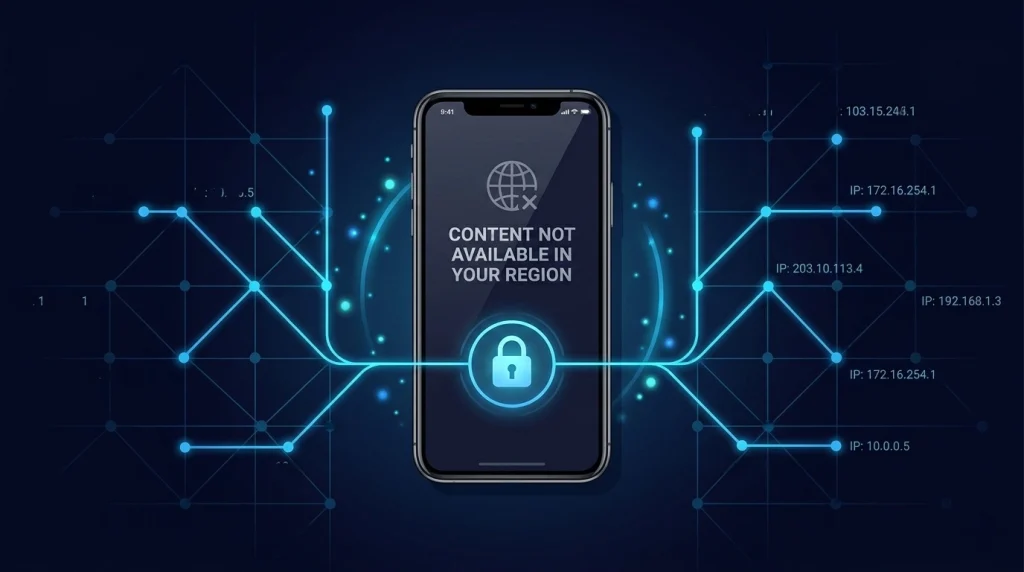
This is not incidental; it’s a contractual commitment. If Netflix showed a BBC-licensed show to users outside the UK, it would be violating its licensing agreement.
Does Streaming Availability Vary by Country?
Yes, streaming availability changes regularly by region, typically every 12 to 36 months, as licensing contracts expire, get renewed, or transfer to competing platforms.
Common reasons titles disappear include:
- License expiration: The platform’s rights to stream the title end.
- Rights transfers: Another service acquires the distribution rights.
- Regional renewals: Contracts are renewed on different timelines in different countries.
As a result, a show removed from the US library may still be available in the UK or other regions. This is why a title you watched last month can disappear from your platform while remaining accessible elsewhere.
How do OTT platforms localize content?
OTT platforms localize content by adapting their services to the preferences and requirements of each market. This includes regional pricing, local payment methods, subtitles, dubbing, and language-specific interfaces.
Localization goes beyond content libraries. Streaming services tailor the overall user experience to each country to make their platforms more accessible and relevant to local audiences.
How Do Streaming Plans Differ Between Regions?
Streaming plans differ between regions because platforms structure their subscription tiers around local market conditions, purchasing power, and competitive pressure from regional OTT platforms.
This means the plan you see on Netflix or Disney+ in the US is not the same product offered to a subscriber in the UK, not just in price, but in structure and available tiers entirely.
| Platform | Plan | US Price | UK Price |
|---|---|---|---|
| Netflix | Standard with Ads | $8.99/month | £5.99/month |
| Netflix | Standard | $19.99/month | £12.99/month |
| Netflix | Premium | $26.99/month | £18.99/month |
| Disney+ | Standard with Ads | $9.99/month | £5.99/month |
| Disney+ | Standard | $15.99/month | £9.99/month |
| Amazon Prime Video | With Ads (Default) | $8.99/month | £8.99/month |
| Amazon Prime Video | Ultra (Ad-Free + 4K) | $13.98/month | Not Available |
Prices are subject to change. Always verify current pricing on each platform’s official website for your region.
A Netflix Premium subscriber in the US pays $26.99, while the equivalent UK plan costs £18.99. Beyond the price gap, the content libraries those plans unlock are also different, meaning subscribers in both markets pay for access to different catalogs under the same platform name.
It is also worth noting that Amazon Prime Video now includes ads by default across both markets. Subscribers who want completely ad-free streaming must upgrade to the Prime Video Ultra tier, adding an extra $4.99 per month in the US on top of the base subscription cost.
How does streaming availability differ by user experience?
Streaming availability changes in intensity depending on your location. The user experience ranges from minor content gaps to complete platform restrictions based on licensing and regional rules.
Not all regional restrictions hit the same way. Here is how I categorize the user experience depending on where you are in the world.
Level 1 — Basic Availability Differences (Missing Shows)
This is the most common scenario. You have access to Netflix or Disney+ in your country, but specific titles are missing.
A show available in the US catalog might simply not appear in the Middle East or Southeast Asia. The platform works fine, the library is just smaller or different.
Level 2 — Moderate Regional Limitations (Partial Libraries)
In some countries, a major platform may operate with a noticeably stripped-down catalog. Disney+ country restrictions mean that content licensed in South Asia under the Hotstar brand operates under different terms than in Western markets.
Users get access to some Disney content but miss out on others, while gaining access to local Hotstar originals.
Level 3 — Severe Restrictions (Platform Unavailable)
Some platforms simply don’t exist in certain countries. Hulu, which is only available in the US, is the most well-known example.
The platform has never launched internationally due to its ownership structure and existing content licensing deals.
BBC iPlayer outside the UK is blocked entirely. You cannot legally access it if you’re not a UK TV licence holder. These are hard walls, not just library gaps.
Where Specific Shows Are Available by Country?
A title’s availability depends on which company holds the distribution rights in a particular region. That is why the same show can appear on different platforms in different countries.
This is one of the biggest sources of confusion for streaming users. You may find a show on Netflix in the US, discover it is available through Sky in the UK, or realize it is not licensed in your country at all.
Here are some examples of how regional licensing works:
| Title | US Platform | UK Platform | Notes |
|---|---|---|---|
| Friends | Max | Netflix / Comedy Central | Rights vary by territory and contract terms. |
| Young Sheldon | Max / Netflix | Sky / NOW | Warner Bros. licenses the series differently across regions. |
| Crazy Rich Asians | Varies | Varies | Film rights frequently rotate between services. |
| Rush Hour | Varies | Varies | Older catalog titles often have fragmented distribution rights. |
| Blood Diamond | Varies | Varies | Availability changes as licensing agreements expire and renew. |
The pattern is consistent: studios and distributors sell regional rights independently. As a result, the same movie or TV show can legally exist on multiple platforms across different countries at the same time, while remaining unavailable in others.
How to Watch Streaming Content Abroad (Legal Steps)
You can legally find and watch streaming content abroad by checking regional availability first, exploring local streaming alternatives, and understanding licensing windows before subscribing.
Here’s a practical, legally sound approach to have a secure browsing experience:
Step 1: Check Regional Availability First
Visit the official website of the streaming platform and check their help or content pages. Many platforms now list regional availability for specific titles.
JustWatch.com is also a widely used aggregator that lets you search for a title and see where it’s legally available in your country.
Step 2: Explore Local Streaming Alternatives
Regional OTT platforms are growing fast. The best streaming international services in the Middle East includeAmazon Prime Video, which has strong content.
For the UK, BBC iPlayer, ITVX, Channel 4, and BritBox provide strong free and subscription options alongside Netflix and Amazon.
In the US, the competitive landscape includes Hulu, Peacock, Paramount+, Max, Apple TV and Netflix alongside the global giants.
Step 3: Understand Licensing Windows Before Subscribing
Content doesn’t stay on platforms forever. Licensing windows mean that a show or film may disappear from a platform when its contract expires and may reappear on a competitor.
Before subscribing specifically to one title, check how long that title has been available and whether it’s nearing the end of its window.
What NOT to Do: Risks You Should Know About
- Illegal streaming sites: These platforms, such as Hurawatch, distribute content without licensing agreements, exposing users to malware, legal risk, and data theft.
- Piracy: Downloading or streaming pirated content violates copyright law in virtually every jurisdiction and harms the creators you enjoy.
- Unverified third-party apps: Services that promise access to every platform for a few dollars a month are almost always operating illegally, such third-party apps should be blocked.
Why Streaming Apps Work Better in Certain Countries?
Streaming apps perform better in some countries because of differences in licensing rights, local regulations, and market competition.
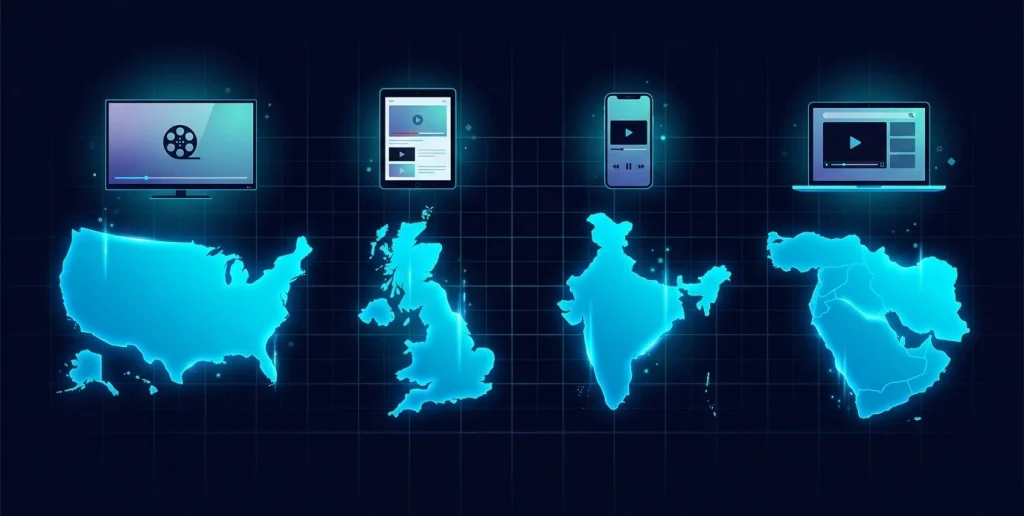
These factors determine both the size of the content library and the quality of service available in each region.
Here’s how that plays out across the world’s major streaming regions.
U.S. Market
The US hosts the most mature and competitive streaming market globally. Most major studios, including Warner Bros., Disney, and NBCUniversal, are US-based, giving domestic platforms first access to the widest range of first-run content deals.
This is why Netflix, Hulu, Max and Paramount+ all carry deeper libraries in the US than anywhere else.
U.K. Market
Ofcom’s strict broadcasting regulations have built a strong public media tradition in the UK. BBC iPlayer remains one of the world’s most-used free streaming services, while Sky’s NOW TV competes directly alongside Netflix and Disney+.
UK viewers benefit from both a robust free-to-air streaming ecosystem and full access to global platforms.
Middle Eastern Market
Across the Middle East, streaming apps available in Middle East markets like Shahid, OSN+, and StarzPlay sit alongside Netflix and Amazon.
Local regulations in some Gulf states also require content to be reviewed or modified before airing, which affects library depth.
Regional OTT Platforms Across Asia
Regional OTT platforms in Asia, including platforms like Viu, WeTV, and iQIYI, have built strong audiences by focusing on K-drama, C-drama, and local-language content that Western platforms can’t replicate.
Are There Misconceptions About Streaming Rights?
Streaming rights are misunderstood because people assume content is available globally, while in reality, it is licensed separately by region. Here are some common misconceptions:
1. Netflix has the same content everywhere
This is false. The fact that Netflix content differs by country is one of the most documented realities in the streaming industry, as Netflix officially confirms. Depending on the territory, catalogs can vary by hundreds or even thousands of titles.
2. VPNs always guarantee access
Not reliably, and not without risk. VPN for streaming services is a complicated topic. While a best VPN for Netflix might unblock certain content in some regions, Netflix and other platforms actively detect and block VPN IP addresses.
Using a VPN may also violate a platform’s terms of service, potentially resulting in account suspension. It does not give you a legal right to content you’re not licensed for in your territory.
3. Content is removed randomly
Content removal is almost never random. It is almost always tied to licensing contract expiry, not random decisions. When a license expires and isn’t renewed, often because the rights have moved to a competitor, the title disappears.
4. Localization only means subtitles
Localization is a full business strategy. It includes dubbing into local languages, adjusting subscription pricing for local purchasing power, integrating local payment methods, adapting UI language, and curating locally relevant content recommendations.
People Also Ask About Streaming Availability
Is streaming availability region-specific?
Yes. Streaming libraries vary by country because platforms license content separately for each region.
Does streaming availability depend on country?
Yes. Your country determines both which streaming services are available and which titles those services can legally offer.
Where can I watch a specific show in my country?
Use JustWatch to check which platforms legally offer a title in your region based on current availability.
Why is a show available in one country but not another on the same platform?
Because regional rights are sold separately. A platform may have rights to a title in one country but not in another.
What factors affect international streaming availability on Netflix, Disney+, and Hulu?
Regional licensing agreements, local regulations, and studio distribution deals all influence what content is available in different countries.
Can I access streaming content from another country legally?
Yes, but only if you access content through platforms that hold the rights in your location or while legitimately using the service in a country where that content is licensed.
Ending Thoughts on Streaming Geo-Restrictions
I have explored regional streaming differences and how licensing shapes content availability.
A show available in one country may be missing in another because of platform agreements and geographic restrictions, as users in places like the United Kingdom and the United States often experience.
These variations highlight the importance of understanding streaming rights and choosing legal platforms that suit your region.
In the end, the global OTT ecosystem is shaped by a balance of restrictions and opportunities, where what you can watch is defined as much by geography and licensing as by the platform itself.