
A Missed Termination Is the Quietest Failure on a Carrier Feed
A missed termination can leave former employees active on carrier records long after their benefits should have ended, quietly adding premiums to your bill that you may never recover.

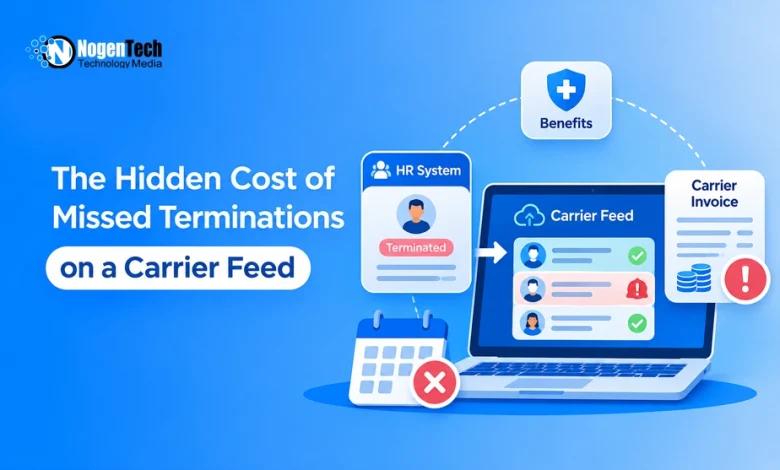
Terminating an employee’s benefits coverage seems simple. The employer records the departure, updates the coverage end date, and notifies the carrier. But what if the termination never gets processed?
Even with automated benefits carrier connections, terminations can get stuck between HR systems, benefits platforms, and carriers, leaving employers paying unnecessary premiums. According to Drewberry’s 2026 report, 33.5% of surveyed employers cited data accuracy and errors as benefits administration challenges.
Here’s where terminations commonly go wrong and how employers can catch them.
Why Missed Terminations Are Harder to Detect Than Enrollment Errors
Most enrollment errors become visible when someone tries to use their coverage. For example:
- A new employee discovers their coverage is missing when filling a prescription.
- A parent finds that their newborn has not been added to the health plan.
- An employee cannot verify coverage after switching plans during renewal.
These problems usually prompt employees to contact HR or their benefits administrator. A missed termination is different. The former employee may not notice that coverage remains active, while the carrier continues billing the employer. Payroll deductions have already stopped, so the error may not appear in payroll records either.
The problem often surfaces only when someone compares the carrier invoice against current enrollment records. Without regular reconciliation, unnecessary premiums can continue for several billing cycles.
1. Terminations Start in the HR System, Not the Benefits Feed
An employee’s departure is first recorded in the HR system, including the termination date and employment status or reason code. The benefits platform must then recognize the change and determine when coverage should end for each plan.
Marsh’s benefits technology research found that 39% of respondents cited system integration concerns as a barrier to technology investment. If that process fails, the carrier feed may never receive the termination. Common reasons include:
- Incorrect status codes: A leave or termination code does not trigger a benefits update.
- Backdated terminations: The departure is recorded after the scheduled feed has run.
- Pending approvals: A coverage termination remains in an approval queue.
- Manual carrier requirements: Certain changes must be submitted through a carrier portal.
These issues also show why HR automation needs proper system integration and oversight. Automating employee status updates can reduce manual work, but an incorrectly configured workflow may still leave a termination unprocessed.
These delays can push the requested coverage end date beyond the carrier’s permitted retroactive adjustment period.
2. Employment Termination Dates and Coverage End Dates Are Different
An employee’s last working day does not always determine when benefits coverage ends. Coverage dates depend on plan rules. Medical and dental coverage may continue through the end of the month, while certain life or disability benefits may end on the last working day.
Carriers may also interpret transmitted termination dates differently:
- Some treat the date as the last day of active coverage.
- Others treat it as the first day without coverage.
- Some apply a plan-specific month-end rule.
Sending the same end date to every carrier can cause errors. An early termination may interrupt valid coverage and lead to denied claims, while a late termination can result in additional premiums. Termination dates must therefore match each plan’s rules and the receiving carrier’s specifications.
3. A Missing Member on a Full-File Feed May Remain Active
Benefits enrollment data is typically transmitted through change-only or full-file feeds. A change-only feed sends specific updates, including enrollments, coverage changes, and terminations. A full-file feed sends the covered population at a particular point in time.
The problem is how carriers handle members missing from a full-file transmission. Some carriers interpret a missing member as a termination. Others require an explicit termination transaction.
This distinction helps prevent accidental coverage losses. If a carrier terminated every missing member automatically, an incomplete file could end coverage for an entire group.
As a result, removing a former employee from the employer’s enrollment file does not necessarily remove them from the carrier’s active records. Employers need to know whether each carrier accepts member absence as a termination or requires a separate transaction.
4. Carriers Can Reject Terminations Without Updating Coverage
Sending a termination does not guarantee that the carrier processes it. Carriers validate incoming transactions against their enrollment records. If the information does not match, the termination may be rejected or held for review.
Common reasons include:
- Unrecognized member identifiers: The carrier cannot match the submitted member information.
- Incorrect plan codes: A code changed during renewal but was not updated in the feed.
- Conflicting termination dates: The member already has a different termination date on record.
- Retroactive termination limits: The requested end date falls outside the carrier’s permitted adjustment window.
Retroactive restrictions can be especially costly. A carrier may require a later effective date or an exception request, and previously billed premiums may not be fully refundable.
Carriers may report rejected transactions through acknowledgment files, error reports, or portals. If these responses are not reviewed, the member can remain active and billable despite repeated transmissions.
5. Continuation Coverage and Rehires Can Complicate Terminations
Continuation coverage and employee rehires can create additional enrollment problems.
Continuation Coverage
When a former employee elects continuation coverage, such as COBRA in the United States, the carrier may need to process the original group termination before establishing the continuation enrollment.
These transactions may arrive from different administrators. If processed in the wrong order, they can result in rejected enrollments, conflicting records, or manual corrections.
Employee Rehires
When an employee returns within a carrier’s reinstatement window, the carrier may expect the original member record to be reactivated.
If the benefits system submits a new enrollment instead, a duplicate member record may be created. This can cause duplicate billing, claims processing issues, and additional administrative work. Both situations require the benefits system and carrier to handle enrollment changes in the correct sequence.
6. Carrier Invoice Reconciliation Helps Catch Missed Terminations
A successfully transmitted termination does not confirm that the carrier updated its records. Regular reconciliation and automated workflows can help employers identify former employees who remain active and billable.
A practical process includes:
- Review terminated employees: Identify whose coverage should have ended during the billing period.
- Check carrier records: Confirm that the expected termination dates were processed.
- Compare invoices: Look for former employees who remain active and billable.
- Investigate rejections: Review acknowledgment files, error reports, and carrier portal updates.
- Confirm corrections: Verify the updated records and check whether premium credits are available.
The same principle applies to financial recordkeeping, where reconciling transactions and checking system integrations helps uncover missing records and billing discrepancies. For carrier invoices, this means verifying that terminated employees are no longer being billed rather than assuming the feed update was successful.
These checks are particularly useful after large employee departures, plan renewals, or feed configuration changes. The objective is to confirm that the carrier’s enrollment records match the employer’s intended coverage changes.
Conclusion: A Termination Is More Than a Feed Transaction
Missed terminations often go unnoticed because they rarely trigger an immediate complaint. Meanwhile, employers may continue paying premiums for employees whose coverage should have ended.
Errors can occur during HR updates, coverage date mapping, feed transmission, or carrier validation. Continuation coverage and rehires can further complicate processing.
Employers can reduce these risks by monitoring rejected transactions, reconciling enrollment records, and reviewing carrier invoices. Automated feeds simplify data exchange, but confirming that terminations were processed remains essential.