Microsoft Commits $60 Million to Advance AI-Driven Scientific Discovery for the Genesis Mission

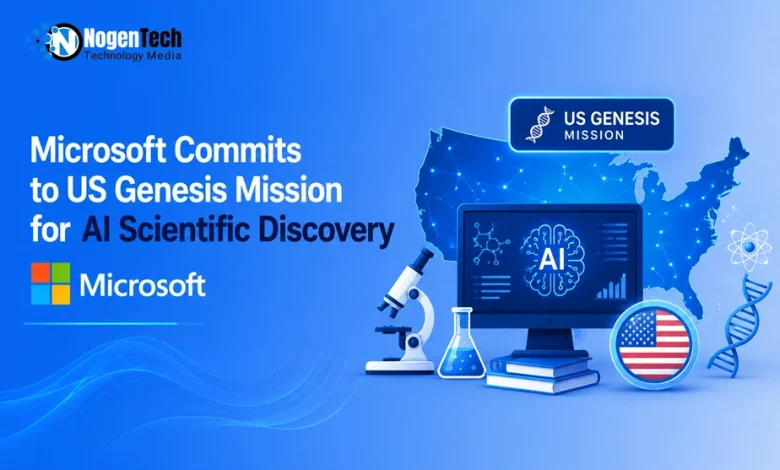
REDMOND, Wash., July 22, 2026 — Microsoft (NASDAQ: MSFT) has announced a $60 million commitment to support the U.S. Department of Energy’s Genesis Mission, a long-term initiative aimed at accelerating scientific discovery by integrating artificial intelligence into research.
The investment includes the launch of SPARK, a new coordination hub that will help connect Microsoft technologies, engineering expertise, and research capabilities with the mission’s work across the DOE’s National Laboratories.
The initiative reflects Microsoft’s broader strategy to expand the role of AI, cloud computing, and emerging technologies in advancing scientific research, national innovation, and future technological breakthroughs.
What Is the Genesis Mission?
The Genesis Mission is a U.S. Department of Energy initiative designed to accelerate scientific discovery by embedding artificial intelligence into the research process. It brings together the DOE’s 17 National Laboratories, scientific facilities, research data, and advanced computing resources within a unified platform to help researchers solve complex scientific challenges more efficiently.
The mission aims to double the productivity and impact of American research and innovation over the next decade by integrating AI directly into the scientific process. Microsoft is supporting the mission through a long-term commitment that combines funding, technology, and scientific collaboration to help expand AI-driven research across the national laboratory system.
How Microsoft Plans to Support the Genesis Mission
Microsoft’s support centers on a $60 million investment designed to help researchers adopt AI at scale across the Department of Energy’s National Laboratories. The package includes $40 million in Azure compute and AI credits over three years, along with $20 million in engineering and technical services to aid research teams in deploying and operationalizing AI technologies.
To coordinate these efforts, Microsoft is launching SPARK (Scientific Partnership Advancing Research & Knowledge), a program office that will serve as the central hub for collaboration with the Genesis Mission. SPARK will oversee program management, technical support, AI implementation, research collaboration, and resource coordination, creating a structured framework for bringing Microsoft’s cloud, AI, and research capabilities into scientific projects across the national laboratory network.
How Microsoft Technologies Will Support Scientific Research
Beyond funding and program coordination, Microsoft will contribute a portfolio of AI technologies designed to enable researchers accelerate scientific discovery. At the center of this effort is Microsoft Discovery, the company’s AI-powered discovery platform that combines AI models, simulation, data management, and experimental workflows within a unified environment.
Researchers participating in the Genesis Mission will also receive access to the Microsoft Discovery app, while Microsoft’s advancing quantum computing capabilities are expected to enable scientific work in areas such as materials science, chemistry, energy, and national security.
Together, these technologies are intended to help scientists move more efficiently from research data and simulations to real-world discoveries across the Department of Energy’s National Laboratory system. Microsoft also highlighted early collaborations supporting energy storage, biosecurity, autonomous laboratories, and nuclear energy research as examples of how the initiative is already being applied.
About Microsoft
Microsoft is a global technology company that develops software, cloud computing platforms, artificial intelligence solutions, productivity applications, and enterprise services.
The company invests heavily in AI research and scientific computing through initiatives spanning Microsoft Research, Azure, and quantum computing, while working with governments, businesses, researchers, and academic institutions on large-scale technology projects.
Learn More:
New to digital PR? Read our Guide to Digital PR to learn how press releases help improve brand authority, SEO, and media visibility.
Editorial Note: This article was independently prepared by NogenTech based on information published in Microsoft’s official announcement. It is intended for informational and editorial purposes and should not be considered an official Microsoft press release.
Source: Official Microsoft Blog