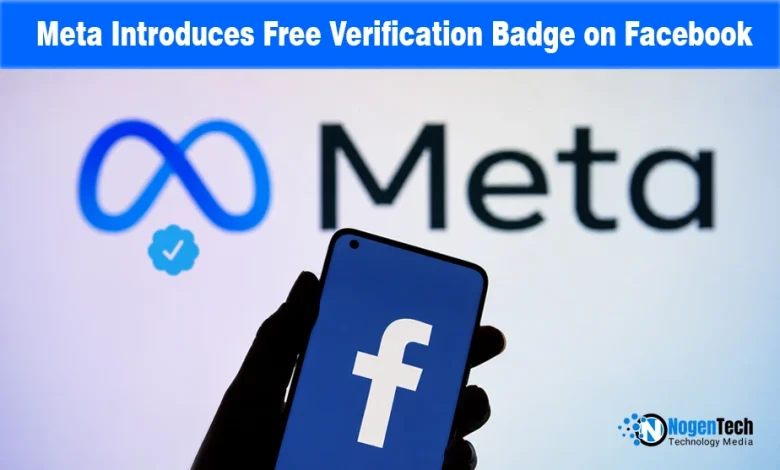
Meta Launches Facebook Verified, a Free Badge Confirming Real People Behind Profiles
Meta has introduced Facebook Verified, a free selfie-based badge meant to reassure users that a real person, not an AI-generated fake, sits behind a profile on Marketplace, Dating, and Groups.

Meta announced Facebook Verified this week in response to a problem it says has grown alongside generative AI: profiles, photos, and messages that look convincingly human but are not.
Even as some AI tools restrict image generation to verified users, fake accounts continue to spread, prompting Meta to introduce this free verification badge so users know a real person sits behind a profile.
The rollout is starting in select markets, before expanding globally. Unlike the company’s paid Meta Verified subscription, the new badge is free and exists solely to verify human identity rather than provide additional account features.
How Facebook’s Selfie Verification Process Works
Getting the badge starts with a short video selfie, which Meta checks against photos already on a user’s profile to confirm a match.
GSMArena described the process plainly, noting that the badge doesn’t mean Facebook endorses the user or guarantees their trustworthiness, just that there’s a real person behind the account.
That distinction matters because the badge sits apart from formal identity checks: Meta’s process doesn’t involve a government-issued ID, only a resemblance match between the selfie and existing profile imagery.
Eligibility is limited to adults 18 and older who are in good standing with Meta’s Community Standards around fraud and deceptive practices.
The badge is not available to Pages or accounts running Professional Mode, positioning it as a personal-profile feature rather than a creator or business tool.
Rollout Targets Marketplace Fraud and AI-Generated Fakes
Inc reported that the badge begins rolling out Monday, with eligible users receiving prompts directly on their profile or within Marketplace, Groups, and Dating over the coming months.
The outlet also noted that Meta will automatically delete video selfies and facial data within 30 days while letting users keep the badge, a cautious disclosure by the company to avoid a repeat of the privacy backlash it faced over its Muse Image feature.
The timing lines up with real fraud numbers: Inc cited Federal Trade Commission data showing consumers reported losing more money in 2025 to scams originating on Facebook than on any other social media platform.
The losses formed part of the $2.1 billion reported across social platforms, with shopping scams the most common category.
Given that Meta says Marketplace handles 430 million item listings and 44 million vehicle listings monthly, reducing scam exposure carries clear commercial stakes, particularly as Meta targets new revenue streams that Morgan Stanley projects could yield over $10 billion annually.
A Return to Facial Recognition, Cautiously Framed
The badge marks a notable shift for Meta, which shut down its facial recognition systems in 2021 and deleted over a billion facial templates following privacy pushback, a backlash similar to the one Meta faced from the ACLU over its smartglasses feature.
GSMArena’s coverage placed Friday’s launch alongside a similar selfie-video verification system Google introduced roughly a day earlier for account logins, suggesting the industry is converging on facial matching as a lightweight trust tool.
However, Meta has framed Facebook Verified strictly around identity verification and scam prevention, not broad tagging it retired years ago.
Facebook head Tom Alison described the effort as protecting real connections between real people, as Inc reports.
Whether the badge meaningfully curbs fraud remains to be tested once the rollout reaches Feed posts and expands beyond its initial markets.
Source: Introducing Facebook Verified