After Claude Tightened Up, DeepSeek and Moonshot Reportedly Turned to GPT-6 Astra
The Information says both labs leaned on OpenAI's GPT-6 Astra for Kimi K3.1 Pro and V4.1-Flash 1017, while Musk's court testimony shows distillation is no Chinese-only habit.

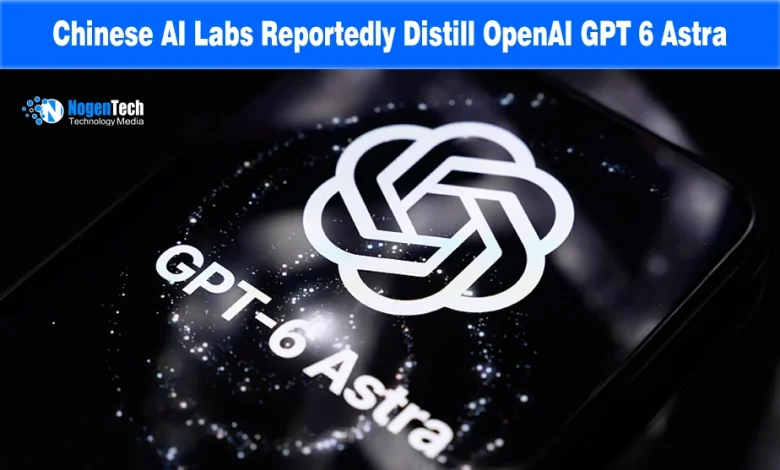
The Information reported on October 28 that Chinese AI firms DeepSeek and Moonshot AI relied heavily on outputs from OpenAI’s GPT-6 Astra to train their newest models.
The models reportedly named are DeepSeek’s V4.1-Flash 1017, launched October 17, and Moonshot’s Kimi K3.1 Pro, released last week.
The method is distillation, a shortcut AI companies say lets rivals reproduce advanced capabilities faster and more cheaply.
The sources are anonymous, and none of the three companies replied, a practice seems to be wider than any one lab or country.
Anthropic’s Claude Defenses Reportedly Pushed DeepSeek and Moonshot Toward GPT-6 Astra
Until recently Chinese labs mainly copied Anthropic’s Claude. Anthropic’s February accusation put numbers on it: more than 24,000 fraudulent accounts and over 16 million exchanges, with Moonshot reportedly behind more than 3.4 million.
Anthropic then tightened access, and said earlier this month, per Reuters that its new measures cut harvested data by about 90% to 99%. Moreover, it recently released Sonnet 5.5 also launched last month with distillation defenses to prevent such attacks.
Which such measures in place, its quite obvious to assume that the labs could’ve shifted to Astra, which they judged relatively easier to target.
OpenAI’s September 30 Moonshot Disclosure Concerned Hidden Reasoning, Not Outputs
OpenAI’s own account is narrower than the new report.
In its September 30 post, the company said it had tied a core part of a distillation campaign that began in July to individuals associated with Moonshot AI.
The activity started July 1, peaked at 16,000 requests from more than 4,000 users on July 24 and 25, and was shut down by July 28, with related activity across 15,000 users.
The target was hidden reasoning: operators copied encrypted reasoning from one conversation and asked a model in another to transcribe it, without breaking the encryption, OpenAI says.
It banned the accounts, tightened sign-up checks, added protections for hidden reasoning and shared its findings with other labs through the Frontier Model Forum.
As reported, that disclosure names Moonshot, not DeepSeek, and the claim that both labs trained on Astra’s outputs is The Information’s alone.
Elon Musk’s Court Testimony Puts xAI Among Those Distilling OpenAI Models
In April, Musk was asked in his lawsuit against OpenAI whether xAI used distillation on OpenAI’s models to train Grok.
He called it a general practice among AI companies and, asked if that meant yes, answered “Partly.”
OpenAI lawyer William Savitt reportedly did the questioning and that Musk said it is “standard practice to use other AIs to validate your AI.” Nobody treats it as clean.
OpenAI and Anthropic both ban it in their terms and do not offer their models in China, yet both use the technique themselves to build smaller models. Experts say it may breach terms of service, with no clear sign it is illegal.
Anthropic cut OpenAI’s Claude access in 2025 for breaching its terms. If The Information is right, the lab that locks down first watches the pressure move to the next one.
Source: OpenAI’s Astra Model Becomes Top Distillation Target for China’s AI Labs