
Meta’s Muse Spaces Build App-Like Hubs That Keep Updating While You’re Away
Meta's Spaces let users describe a tracker, planner or game and have Muse build it, but Meta hasn't explained what data connected apps feed into them.

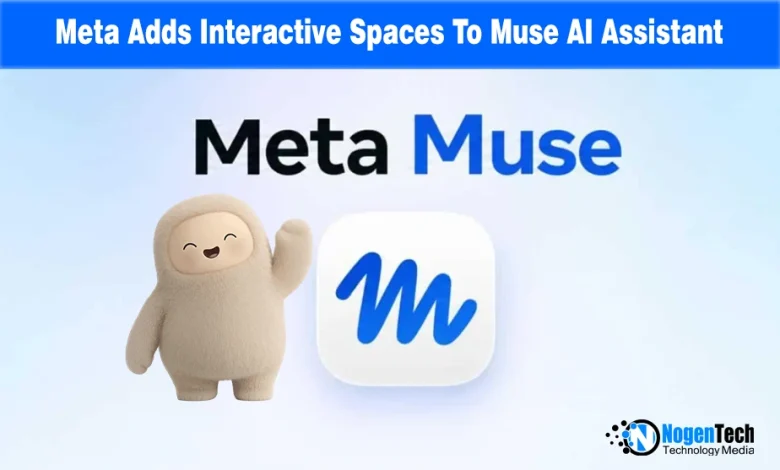
Meta has added Spaces to its Muse AI agent app. A user describes a tracker, planner, dashboard, or game in chat, and Muse builds a page that stays in the app, according to Meta’s announcement.
The page can sit in the sidebar or the main tab, take check-offs and notes, and, once apps like Gmail or Notion are connected, refresh itself in the background.
It arrives a day after Meta announced Muse voice conversations with an avatar for US users. What users get is more durable than a chat. What Meta says about the data behind it is thinner.
Muse Spaces Replace Disposable Chats With Pages You Come Back To
A chat answers a question and scrolls away. A space is meant to stay.
Meta says each one is built from a description, then adjusted by adding missing pieces, changing the look or changing how it works, and edits remain when you return.
Its examples run from a holiday gift tracker and a daily word game to a wedding planner for RSVPs, invoices, and to-dos, a freelance client hub, and a trip planner.
Placement is flexible: users can pin spaces to the sidebar or main tab, hide them, or schedule when they appear.
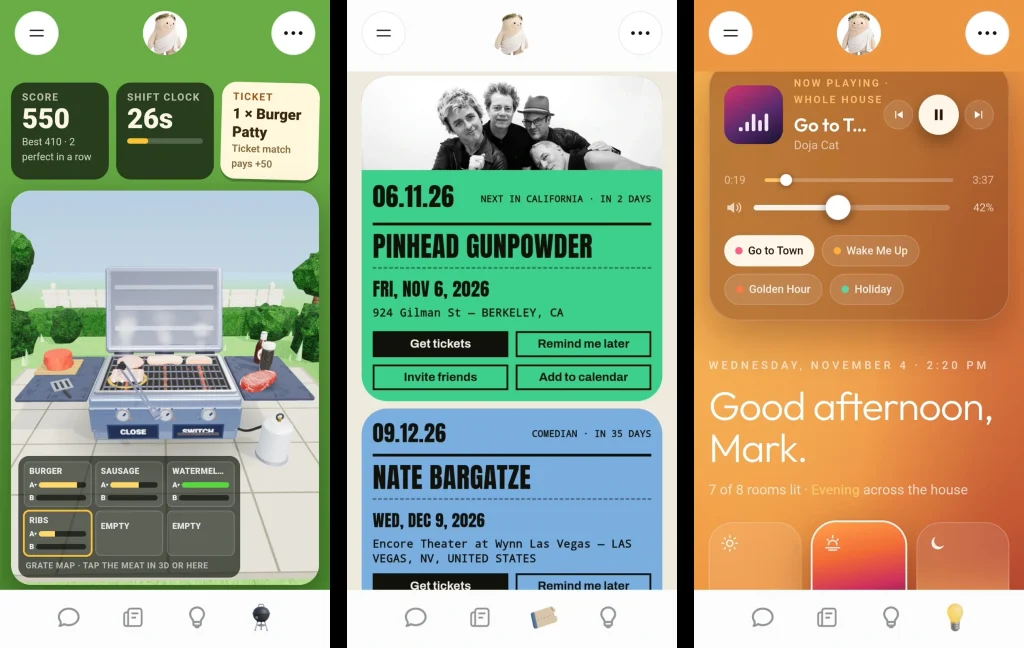
Meta’s own illustration is to “swap it for your weekend plans on Saturday.” Mark Zuckerberg, TechCrunch notes, posted on X that he built a BBQ game, an event tracker, and a home control dashboard this way.
Meta’s Shopping Hub Example Pulls From Instagram Saves and Marketplace Messages
The examples show where the data comes from.
According to Meta, a shopping hub can combine gift ideas, Instagram saves, and Marketplace listings and messages, and a school dashboard can add events from school emails to a calendar.
The Verge lists the outside apps Muse works with as Gmail, Google Calendar, OpenTable, and Notion.
Meta says spaces are “personal from the start,” yet its post does not explain what data Muse accesses or how it is used, and permissions are not covered.
Our reading is that the trust question lives there, since a space that refreshes itself implies standing access and echoes the privacy gaps Muse already faces.
Sharing Is Still Only Being Explored
Meta says it is exploring ways to let users share spaces with others, with no timeline.
For now, a space is a private workspace between one user and their own Muse. Meta says spaces are available everywhere Muse is, without listing countries or platforms.
Muse has reached 10 million users across the US and Canada, according to a figure Zuckerberg shared during Meta’s October earnings call.
The Verge adds that Active Memory and Active Focus features from the Muse Wonder model are coming to the Muse app and Meta AI chatbot, though Meta’s blog post doesn’t confirm this.
Instead, it confirms that specialised model versions trained using Muse Wonder’s learnings are rolling out to both products.
Taken together, a page that refreshes itself and a memory that resurfaces old details would hold more of a user’s information. How much, and under what controls, remains unstated.