
Meta Makes AI Chats Look Face-to-Face, but Video Remains One-Way
Muse's voice and animated avatar are live in the US on mobile, web, and Mac, featuring full adult age restrictions and one-way voice rendering.

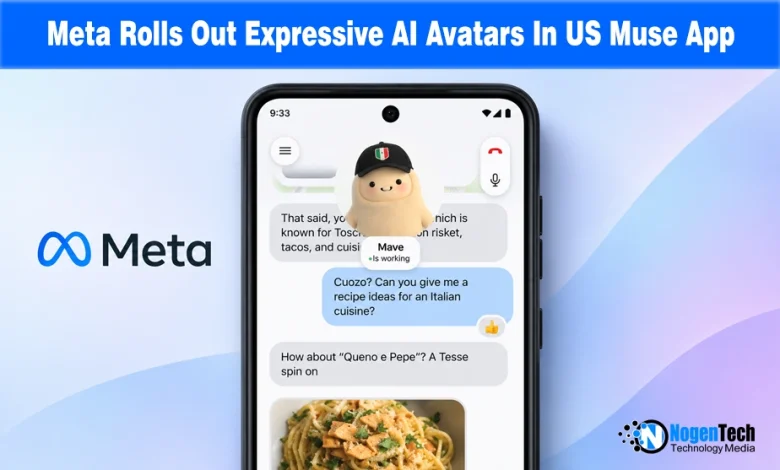
Meta has rolled out voice conversations with an animated avatar for its Muse AI agent in the US, announcing it on November 5.
Users open the Muse app on mobile, web, or Mac, tap a phone icon, and talk to Muse in real time while its avatar reacts.
The company first showed the idea at Meta Connect in September, when it said only that it was coming soon. While some reports describe the result as video chat, what users actually get is narrower than that label suggests.
Muse Gets a Phone Icon, an Avatar and Three Ways to Talk
Meta’s post says Muse replies in real time and can be interrupted mid-sentence. It can also keep working in the background while you talk, so you can hand it tasks while walking or when your hands are full.
Three display options are listed: voice only, the avatar next to the conversation, or full screen for when you want to “talk face to face.”
The avatar uses subtle expressions and gestures that match the tone of the conversation. Users pick from hundreds of voices, such as a New Yorker or a pirate, and can change them at any time.
TechCrunch adds that the avatar’s look can be changed to a person, an animal, or another character, and says Meta’s chief AI officer Alexandr Wang demoed his own, a white dog.
Meta’s One-Way Avatar: How Muse Voice Differs From Real Video Chat
TechCrunch does mention Meta’s new feature as a “video chat”; however, the system actually operates as a one-way animated digital avatar.
Rather than capturing a live camera feed from the user’s end, the software renders real-time facial expressions on screen based purely on the user’s incoming voice.
Meta’s own announcement reflects this, as it’s focused on voice conversations and expressive avatars, without using the term “video call.”
Beyond the video mechanics, Meta’s post omitted explicit references to languages, pricing, and data handling.
Because Muse executes real-world actions, such as sending messages, managing tasks, and handling transactions, the service is strictly gated to adult accounts and lacks child-oriented safety controls.
Muse Voice Arrives Six Weeks After Connect With Its Hardware Still Pending
By our arithmetic, the US rollout came about six weeks after Connect. The next stages have no dates.
Meta says voice conversations will expand to its AI Glasses and to Muse Charm, while TechCrunch reports a Tamagotchi-like wearable is planned before year-end to display the avatar on a small screen.
Meta believes giving the agent a face could make users feel more connected to it, TechCrunch adds.
That explains the reasoning behind the feature and why the omissions carry weight: a friendlier face encourages longer interactions with an AI agent that is already facing trust issues.
Source: Give Your Muse a Voice