Your products don’t have to be the problem; your Magento technical SEO might be.
Magento SEO goes beyond page titles and product descriptions. Many store owners improve content and expand their catalogs but still struggle to grow organic traffic because of hidden technical issues. A Magento SEO expert typically begins by evaluating the store’s technical foundation.
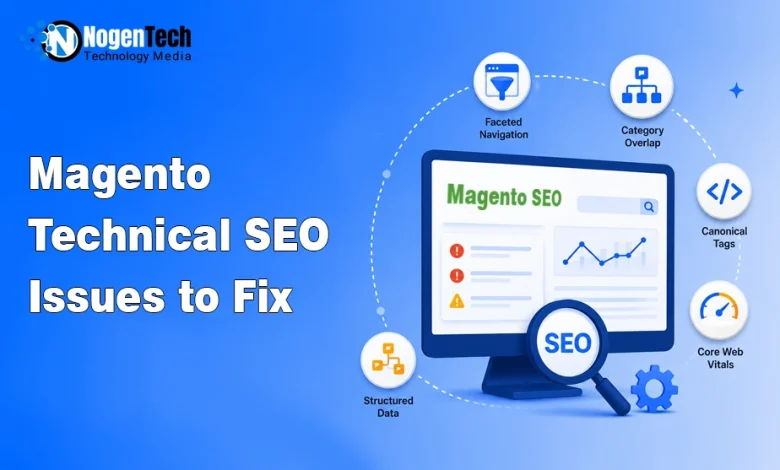
A strong Magento technical SEO strategy helps search engines efficiently crawl, index, and understand your store by addressing:
- Faceted navigation and duplicate URLs
- Canonical tags and category overlap
- Core Web Vitals and page speed
- Structured data for products and breadcrumbs
While Magento provides a solid foundation for eCommerce SEO, effective Magento SEO optimization requires ongoing technical improvements that support the next steps.
Now let’s explore five commonly overlooked factors and Magento SEO best practices to improve crawlability, indexing, visibility, and long-term organic growth.
Why Is Technical SEO Important for Magento Stores?
Magento technical SEO helps Googlebot crawl, index, and rank your Magento store by optimizing site structure, page speed, and technical signals for better organic visibility.
While Adobe Commerce (Magento) includes built-in SEO features, large catalogs, custom themes, third-party extensions, and layered navigation can create technical issues that impact search performance.
As your store grows, search engines evaluate more than products and content. They also assess your site’s crawlability, indexing, link building, Core Web Vitals, and structured data to determine which pages deserve visibility.
These issues rarely affect the shopping experience but can limit organic traffic by making it harder for Googlebot to discover, understand, and prioritize important pages.
What Are the Most Overlooked Magento Technical SEO Issues?
The most common Magento technical SEO issues include faceted navigation, category overlap, canonical tags, Core Web Vitals, and structured data.
As Magento stores grow, technical issues can prevent Googlebot from efficiently crawling and indexing important pages. These problems often result from catalog expansion, customizations, or incorrect SEO configurations.
| Technical SEO Factor | SEO Impact | What to Audit |
| Faceted navigation | Wastes crawl budget | URL parameters, indexation, canonical tags |
| Category overlap | Causes keyword cannibalization | Category structure, internal linking, keyword targeting |
| Canonical tags | Sends incorrect indexing signals | Variants, filtered pages, pagination |
| Core Web Vitals | Reduces page experience | LCP, INP, CLS, images, scripts, caching |
| Structured data | Limits search understanding | Product, Review, Breadcrumb, Organization, Merchant Listing schema |
How Can Faceted Navigation Affect Magento SEO?
Faceted navigation can hurt Magento SEO by creating duplicate filter URLs that waste crawl budget and reduce Googlebot’s indexing efficiency.
It helps shoppers filter products by size, color, brand, price, or availability. Each filter combination creates a new URL, which can quickly generate thousands of low-value pages.
For example:
- SEO-Friendly URL: /shoes/running/
- Filter URL: /shoes?color=red&size=11&price=100
If these filter URLs are crawlable, Googlebot may prioritize them over important category and product pages, reducing crawl efficiency and delaying indexation. Magento SEO best practices include:
- Index only filter pages with search demand.
- Use canonical tags to consolidate duplicate URLs.
- Apply noindex to low-value filtered pages.
- Block unnecessary crawl paths with robots.txt where appropriate.
- Audit URL parameters regularly.
Managing faceted navigation improves crawl budget, indexing, and organic visibility by directing Googlebot to your highest-value pages.
How Can Category Overlap Hurt Magento SEO?
Category overlap hurts Magento SEO by causing keyword cannibalization, duplicate content, and unclear search intent that reduce rankings.
As Magento stores expand, new collections and categories often target the same keywords. This makes it harder for Googlebot to identify the most relevant page.
For example:
- Women’s Running Shoes
- Women’s Running Footwear
- Running Shoes for Women
These categories compete for the same search intent, splitting ranking signals through keyword cannibalization. To prevent category overlap:
- Assign a unique primary keyword and search intent to each category.
- Maintain a clear category architecture.
- Consolidate or redirect duplicate categories.
- Strengthen priority pages with internal links.
- Review category performance regularly.
A well-structured category hierarchy improves indexing, helps Googlebot understand page relationships, and strengthens the visibility of priority category pages.
How Do Canonical Tags Improve Magento SEO?
Canonical tags improve Magento SEO by telling Googlebot which URL to index, preventing duplicate content and consolidating ranking signals.
Magento stores can generate multiple URLs for the same product through variants, filtered pages, pagination, and multiple category paths. Incorrect canonical tags may cause search engines to index duplicate pages instead of the preferred URL.
Common canonical issues include:
- Missing self-referencing canonical tags
- Canonicals pointing to the wrong URL
- Duplicate product URLs across categories
- Incorrect handling of filtered pages, variants, and pagination
In this regard, Magento SEO best practices include:
- Use self-referencing canonical tags on indexable pages.
- Point duplicate URLs to the preferred version.
- Apply consistent canonical rules for product variants and filtered pages.
- Audit canonical tags after major site changes.
A consistent canonical strategy improves indexing and helps Googlebot prioritize the correct pages.
How Do Core Web Vitals Affect Magento SEO?
Core Web Vitals affect Magento SEO by measuring page speed, responsiveness, and visual stability, influencing rankings and user experience.
Core Web Vitals measure how users experience your Magento store, particularly on mobile. Poor scores can reduce organic visibility and engagement.
The three Core Web Vitals are:
- Largest Contentful Paint (LCP): Measures loading speed.
- Interaction to Next Paint (INP): Measures responsiveness.
- Cumulative Layout Shift (CLS): Measures visual stability.
Common causes of poor scores include:
- Unoptimized images
- Heavy third-party scripts
- Poor caching
- Misconfigured Content Delivery Networks (CDNs)
- Slow Adobe Commerce themes
To improve Core Web Vitals:
- Optimize images.
- Remove unnecessary third-party scripts.
- Enable browser and server-side caching.
- Use a CDN.
- Optimize Adobe Commerce themes for mobile.
Improving Core Web Vitals strengthens page experience, Magento SEO, and organic visibility.
Why Does Structured Data Matter for Magento SEO?
Structured data improves Magento SEO by helping Google understand products and display rich results that increase search visibility.
Structured data provides search engines with details about your products, pricing, availability, reviews, and site structure. Incorrect or outdated markup can limit eligibility for rich results and create indexing issues.
Key schema markup types for Magento stores include:
- Product schema
- Review schema
- Breadcrumb schema
- Organization schema
- Merchant Listing schema
To maintain accurate structured data:
- Validate markup with Google Rich Results Test.
- Update schema after theme or extension changes.
- Keep product variants, pricing, and availability consistent.
- Monitor schema errors in Google Search Console.
Accurate structured data improves Google’s understanding of your store, strengthens Magento SEO, and increases eligibility for rich results.
What Tips Can Help Improve Magento Technical SEO?
Regular audits, clean site architecture, and continuous monitoring help maintain strong Magento SEO and long-term organic visibility.
Beyond fixing individual issues, these practical tips can help keep your Magento store technically optimized:
- Audit your store regularly to identify crawl errors, broken links, duplicate content, and indexing issues.
- Monitor Google Search Console for coverage errors, indexing reports, and Core Web Vitals.
- Review SEO after every update, including new themes, extensions, catalog changes, or migrations.
- Keep category structures simple to avoid duplicate pages and keyword cannibalization.
- Validate structured data using Google Rich Results Test after template or product updates.
- Optimize high-value pages first, including category and best-selling product pages.
- Track Core Web Vitals on desktop and mobile to identify performance issues before they affect rankings.
- Schedule a Magento technical SEO audit periodically to catch issues before they impact organic traffic.
Consistent optimization helps Googlebot crawl, index, and prioritize your most valuable pages while supporting long-term Magento SEO performance.
What Else Should You Know About Magento SEO?
Is Magento SEO friendly?
Yes. Magento is SEO-friendly because it supports URL rewrites, canonical tags, XML sitemaps, and structured data, but technical optimization is still essential.
What SEO features does Magento offer?
Magento offers SEO features such as URL rewrites, XML sitemaps, canonical tags, robots.txt, metadata, redirects, and structured data support.
When should you perform a Magento technical SEO audit?
Perform a Magento technical SEO audit after site migrations, redesigns, major catalog updates, ranking declines, or Core Web Vitals issues.
How often should a Magento store be audited for SEO?
Most Magento stores should complete a technical SEO audit every 3–6 months or after major website changes.
Can Magento extensions affect SEO?
Yes. Magento extensions can improve functionality but may also affect page speed, crawlability, structured data, and Core Web Vitals if poorly optimized.
Closing Thoughts: What Does Strong Magento Technical SEO Look Like?
Magento SEO requires ongoing optimization as your store grows. Small technical issues can reduce crawlability, indexing, Core Web Vitals, and organic visibility.
Adobe reported that U.S. shoppers spent a record $257.8 billion online during the 2025 holiday season, with more than half of purchases made on mobile devices.
In my view, regular Magento technical SEO audits and consistent Magento SEO best practices help Googlebot prioritize your most valuable pages, improve long-term search visibility, and support sustainable growth.