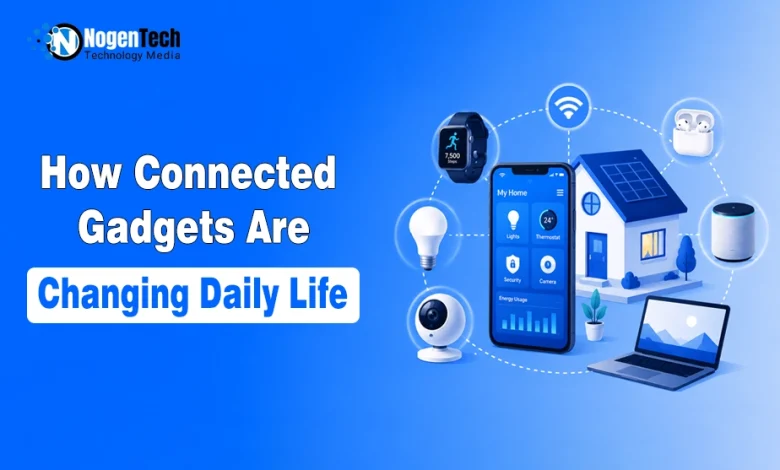
New technologies and connected gadgets continue to change how people work, communicate, entertain themselves, and manage everyday life. Today’s gadgets are designed to solve practical problems while fitting naturally into everyday routines.
They’re built for immersion, convenience, and connectivity. It’s not enough for a device to provide a helpful function; it has to provide one that fits seamlessly into the consumer’s life.
Here we’ll explore the new tech gadgets influencing daily life in 2026, and the newer technologies and infrastructure making it all possible.
Why Connectivity Drives Gadget Innovation
Modern devices rarely operate in isolation. They sync, stream, predict, and respond to users and other devices in real time. This interactivity requires a reliable internet provider capable of supporting fast internet, cloud integration, and AI processing.
Gadget designers now build products with connectivity as a first principle, rather than an afterthought.
For households with a growing stack of connected devices, a robust internet infrastructure is essential. Fiber internet, in particular, has moved from a premium upgrade to a genuine necessity for consumers who want new tech devices to perform as advertised.
As more devices rely on cloud services, AI features, real-time communication, and continuous syncing, internet performance has become just as important as the hardware itself.
Reliable high-speed connections help connected devices perform consistently across work, entertainment, and smart home environments.
Connected Gadgets Changing Daily Life
AI-powered wearable devices
Smart glasses, AI earbuds, and adaptive wearables have matured significantly since their sometimes-rocky beginnings. Early versions felt gimmicky, were often overpriced, and, in some cases, posed a potential privacy risk.
Today, the latest AI gadgets are genuinely useful. Smart glasses now offer contextual awareness – surfacing navigation, translation, and scheduling prompts – without requiring users to pull out their phones.
AI-powered camera glasses are an example of this shift, combining hands-free image capture with connected features that fit naturally into everyday routines. These wearables show how AI can make familiar accessories more practical and interactive.
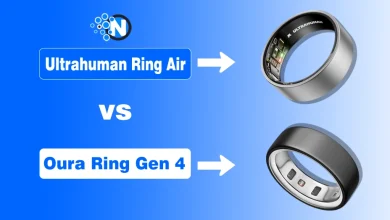
AI-powered earbuds go beyond noise cancellation, adapting audio profiles in real time based on environment and activity. Smart watches and rings help people track their health in actionable, meaningful ways, while specialized wearable tech for professionals
is increasingly helping remote workers stay organized and hands-free throughout the day.
For people with accessibility needs, these tools are more than just the latest gadgets for tech enthusiasts: they’re genuinely life-changing. Real-time transcription, language translation, and voice-command control are no longer niche features but default ones. The focus shifted from what’s technically possible to what’s practically useful, making wearables more attractive to a wide consumer audience.
Smarter entertainment and gaming devices
Streaming-focused devices and cloud-connected gaming systems continue to evolve rapidly. Handheld gaming consoles now run titles that once required a dedicated home setup, and new batteries allow long, uninterrupted gaming sessions. Cloud gaming has expanded its library and reduced latency to the point where the experience is nearly indistinguishable from local play.
Improving gaming performance relies not just on your device but also on your connection. Gaming performance, 4K streaming, and real-time multiplayer all depend on low-latency, high-bandwidth internet. Fiber internet delivers the consistent upload and download speeds needed to play games reliably. For households serious about entertainment, the internet connection is often the limiting factor, not the hardware.
Portable and travel-friendly connectivity tools
The work-from-anywhere trend has created genuine demand for portable, compact gear. Portable hotspots have become more sophisticated, supporting Wi-Fi 6E and capable of managing multiple device connections without significant speed loss. Compact smart displays and mobile productivity tools let professionals run full workflows from a hotel room, a coffee shop, or a second home.
These devices aren’t just convenient — they represent a structural shift in how people think about where work happens. The office is increasingly optional, and the gadgets supporting that lifestyle have matured to match.
Home tech that blends into everyday life
Today’s home tech operates behind the scenes, with minimal points of contact with consumers. Smart speakers are ambient fixtures rather than devices you have to constantly adjust. Automated lighting, thermostats, and displays operate on pre-selected, proactive routines rather than direct input.
The result is increased home automation, with fewer decisions, less friction, and more time for yourself.
The evolution of these new tech gadgets is particularly impressive compared to the early days of smart homes, which were often characterized by complex configurations and inconsistent connectivity. Modern hardware now integrates effortlessly, offering a user experience that is both intuitive and inherently straightforward.
Health and wellness technology
Connected fitness trackers, sleep monitors, and wellness devices are now mainstream rather than a niche category for tech-savvy fitness enthusiasts. These tools sync reliably: sending sleep data to a health app, sharing workout metrics with a coach, or alerting a user to irregular patterns.
Health and wellness tech is increasingly predictive. Rather than simply logging data, wellness devices provide a range of proactive insights, including:
● Flagging recovery deficits
● Suggesting schedule adjustments
● Integrating with other health-related devices
● Reporting results to healthcare professionals
Notable Gadget Trends to Watch
Several product categories are gaining momentum in 2026, including AI-powered smart glasses, health-focused wearables, cloud-enabled gaming devices, portable productivity tools, and intelligent home automation systems.
Rather than focusing on standalone functionality, these devices are increasingly designed to work together within connected ecosystems that support everyday activities.
AI’s Influence on Consumer Gadgets
Artificial intelligence quickly became an embedded feature in new tech gadgets and is now built directly into consumer hardware. AI shapes how devices learn preferences, anticipate needs, and personalize experiences.
Cameras recognize scenes and adjust settings automatically. Speakers learn which voices to prioritize. Displays adapt brightness and content layout based on time of day and usage patterns.
The result is hardware that gets better with use, not worse. Devices feel less like tools and more like systems — adaptive, contextual, and increasingly difficult to imagine living without.
The Role of Internet Infrastructure in Connected Tech
Reliable connectivity remains essential for gadget performance. Online devices depend on a stable, fast internet connection, which is often delivered by cable or fiber providers.
Consumers should examine their internet connections before investing in new tech gadgets. A powerful new gadget underperforms on a weak network. Upgrading to fiber internet is often the highest-leverage infrastructure change a connected household can make.
What Consumers Are Prioritizing in 2026?
What consumers want from their devices in 2026 looks less like a wish list and more like a lifestyle centered on intentional, integrated, and low-friction technology:
● Convenience over complexity. Consumers want devices that work immediately and intuitively, without lengthy setup processes, steep learning curves, or constant troubleshooting. The best new tech gadgets get out of your way and just work.
● Ecosystem integration and multi-device compatibility. Standalone devices are increasingly hard to justify. People want hardware that communicates with the devices they already own. Whether it’s a wearable that feeds data to a health app or a smart display that integrates with a home speaker, seamless interoperability is now a baseline expectation.
● Longevity and upgradeability. In a market where the next big thing is constantly on the horizon, consumers are increasingly wary of even a hint of planned obsolescence. Devices that receive meaningful software updates, support modular upgrades, and remain compatible with newer ecosystems over time earn strong consumer loyalty.
● Flexibility for evolving lifestyles. Rigid, single-purpose devices lose out to tools that adapt as needs change. Whether someone works from home one month and travels the next, or shifts from a focus on fitness to sleep tracking, they want hardware that adapts to their needs.
● Less digital clutter, not more. Perhaps the most telling shift is what consumers actively avoid: redundant devices, overlapping subscriptions, and tech that adds noise rather than removing it. Consumers evaluate the latest gadgets in terms of what they eliminate from a routine, not just what they add to it.
Potential Challenges and Considerations
Connected devices come with potential challenges. Privacy concerns are an ongoing issue: more devices mean correspondingly more data collection, increasing the risk of data breaches and the theft of personal information.
Subscription fatigue is also a problem; hardware that requires ongoing fees erodes its own value proposition. And there’s the broader question of intentionality:
Technology that simplifies life is genuinely useful, but technology that adds complexity in the name of convenience is not.
Looking Ahead
The gadgets gaining attention in 2026 are not necessarily the most complex or expensive. Instead, consumers are gravitating toward devices that simplify everyday tasks, integrate seamlessly with existing technology, and provide meaningful value.
As connectivity, AI, and smart ecosystems continue to evolve, the focus will increasingly shift from individual devices to how technology works together to improve daily life.