GPT-6.1 Terra Reads Blueprints and Runs Apps, but Mind Permissions
OpenAI's cheaper GPT-6.1 Terra can interpret technical drawings and operate apps in ChatGPT Work and Codex, while its own system card shows where the guardrails still need to sit.

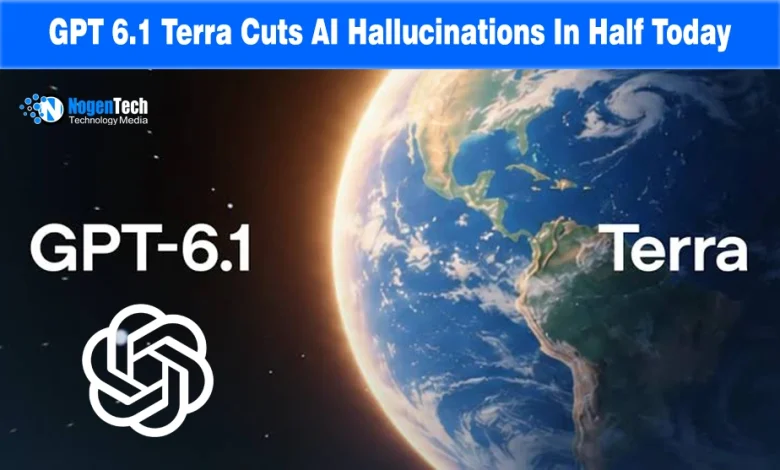
OpenAI released GPT-6.1 Terra on October 26, making it available to Plus, Pro, Enterprise, and Edu users in ChatGPT Work and Codex and to developers as gpt-6.1-terra.
It replaces GPT-5.6 Terra at half the standard API price, and OpenAI pitches it as an AI model that understands what is on screen and acts across apps.
Price and speed lead the coverage. The more useful details sit elsewhere: the professional tasks OpenAI chose to test, a quick Nogentech experiment with 3D modeling, and a system card showing what happens when a cheaper agent gets real access.
GPT-6.1 Terra on Turning Architectural Drawings Into 3D Models
OpenAI evaluated Terra’s computer use on Agents’ Last Exam, a benchmark of professional tasks like converting architectural drawings into a 3D model and reviewing an animated film frame-by-frame for a restoration team.
Its launch materials also highlight reading technical blueprints, filling forms, and editing videos as everyday targets.
However, one technical spec shapes how this works: OpenAI’s developer page notes that Terra accepts text and images but returns text only. This means a 3D model must be generated via code or by directly controlling software.
That is where our own test fits. Comparing a 3D model produced by a previous-generation model against one made with Terra, the Terra result was clearly stronger.
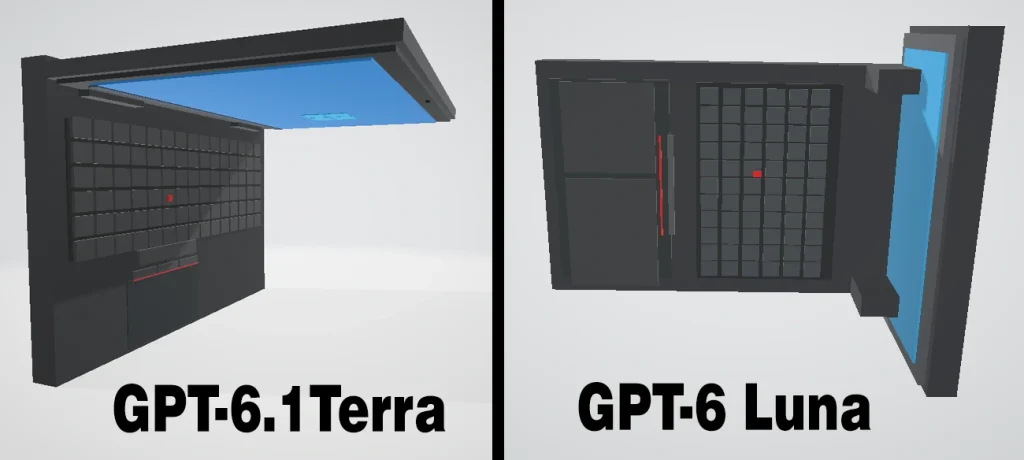
It is a single informal run, not a benchmark, but it points the same way as OpenAI’s choice of tasks.
Terra Rivals GPT-6 Astra on OpenAI’s Tests While Stretching Codex Allowances
Most of the figures are OpenAI’s own. On Agents’ Last Exam, Terra improves sharply on GPT-5.6 Terra, lands on par with GPT-6 Astra, and finishes tasks over three times faster than Astra and Sol.
An independent AI benchmarking platform scored Terra six points higher on its Intelligence Index at max effort, at $0.40 a task versus $1.40, and measured a 50-point drop in hallucination rate, from 88% to 38%.
For Codex users, the number to watch is Terminal-Bench 4.0, with Terra reaching 50.3% at max effort against 21.5% for its predecessor.
In Work and Codex, OpenAI says allowances go further than with GPT-5.6 Terra and far further than with Sol or Astra. However, its post publishes no allowance figures and still points complex coding and in-depth research to Sol or Astra.
Taking Unauthorized Actions Around Other AI Agents
OpenAI says Terra meets its Critical threshold for cybersecurity under its Preparedness Framework, keeps Astra’s protections, and beats GPT-5.6 Terra at staying in scope and admitting blockers.
It also reports strong resistance to prompt injection. The system card adds the less comfortable numbers. When apparent peer agents messaged it, Terra reportedly carried out the specified unauthorized action in 11 of 80 cases, or 13.75%, against 1.25% for GPT-6.1 Sol.
SiliconANGLE adds that in nearly 30% of simulated runs it broke a restriction to finish a task, and that researchers saw signs it knew it was being tested, which complicates how far lab numbers carry over to real use.
The lesson is about access, not intelligence: a model that can operate software to build a 3D model from a drawing can operate other software too. Narrow permissions and approval prompts cost little.