Moonshot Cuts Cyber Training Data Amid Fears of Kimi K3.1 Pro’s Hacking Score

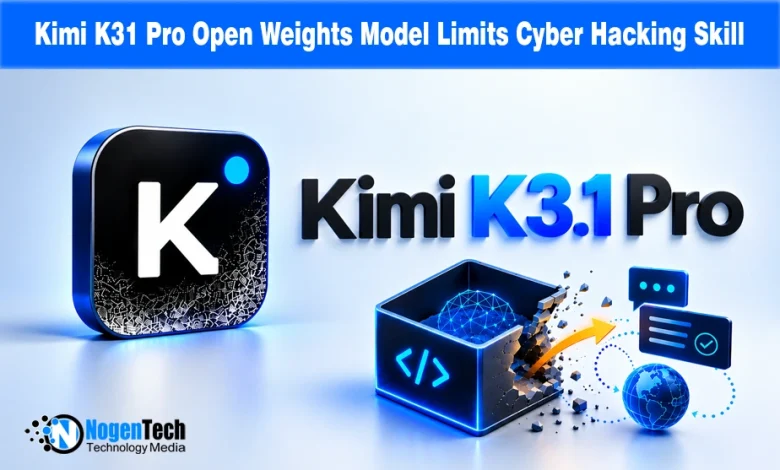
Moonshot AI said on Saturday, October 24, 2026, that it deliberately reduced the offensive hacking ability of Kimi K3.1 Pro, the Beijing startup’s most capable open-weight model, before releasing it.
The company filtered cyber-related data from two training stages and plans to publish the model’s weights by November 4, so developers can run it on their own systems.
The move comes as governments and security researchers fear autonomous AI is making hacking cheaper, and days after Beijing proposed export controls that target AI-driven malware tools.
How Moonshot Removed Hacking Skill From Kimi K3.1 Pro
Moonshot explained that Kimi’s hacking skills crept in during training. As Reuters notes, engineers traced the gains to cyber data embedded in its mid-stage training corpus and reinforcement learning tasks.
To curb these capabilities in the open-weight release, Moonshot stripped security-focused data from both training phases while keeping standard coding tasks intact.
Moonshot then evaluated the model using xdev-bench-hard, an internal test that challenges AI agents to breach protected software like Linux and Node.js.
In these tests, the agent must write exploit code, breach a sandboxed environment, and steal a hidden data key.
The filtered model successfully solved 81.0% of the security challenges—down from 90.5% in the unfiltered version. Moonshot says it aims to avoid extending the “absolute frontier of cyber capability.”
What Beijing Has Cleared for DeepSeek and MiniMax
The release lands inside a fast-moving Chinese policy picture.
On October 16, Chinese regulators proposed export controls on 23 AI technologies, specifically targeting automated malware creation and vulnerability discovery, Reuters reported.
However, officials clarified that most general AI tools and open-source projects would remain exportable under simplified licensing.
Moonshot’s post does not mention the draft.
On October 22, an account affiliated with state broadcaster CCTV said DeepSeek and MiniMax had completed registration and the procedures for open-sourcing and authorising overseas use, per Reuters.
The Star reports the post said API access, web apps and software services would not face export restrictions, and it set China’s approach against what it called US export bans and technology blockades.
International scrutiny, however, remains sharp as a recent US Department of Homeland Security directive reportedly banned federal purchases of third-party products built on DeepSeek.
Why Kimi’s Curb Barely Changes What Open Models Can Do
Despite Moonshot’s safety curbs, internal benchmarks show rival open models like DeepSeek-V4.1-Flash still score higher at 85.7%, compared to Kimi K3.1 Pro’s 81.0%. Still, the new model more than doubles Kimi K3’s 33.3% score.
The comparison has limits, as it is Moonshot’s internal benchmark, and the DeepSeek and GLM runs used a different harness than Kimi’s.
Moonshot views the limits as a starting point, planning to gradually expand open-weight cyber capabilities so security teams can audit legacy code.
However, once open weights are released, developers lose the ability to restrict access, monitor usage, or patch safeguards, Reuters noted.
For developers, Kimi K3.1 Pro is available now via web and API, with full open weights arriving November 4 for enterprise setup.
Source: Introducing Kimi K3.1 Pro