OpenAI’s New GPT-Live Lets ChatGPT Listen and Talk at the Same Time
OpenAI rolled out GPT-Live on Wednesday, a voice system built to listen and speak simultaneously rather than waiting for its turn, aiming to replace the stilted back-and-forth that has defined ChatGPT's voice mode since it first launched.

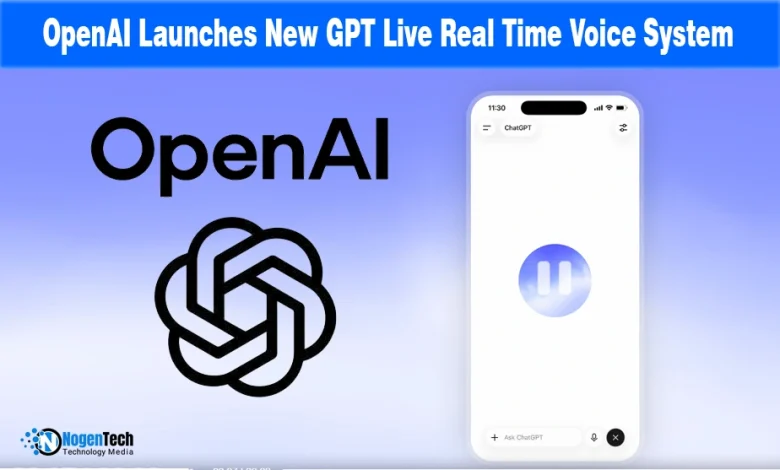
OpenAI introduced GPT-Live on Wednesday, describing it as a new generation of voice models designed to make talking with ChatGPT feel like a real conversation rather than a stiff exchange of questions and answers.
The rollout replaces the app’s existing voice experience entirely, according to OpenAI’s own announcement, and arrives as more than 150 million people already use ChatGPT’s Voice and Dictation features every week for everything from language practice to hands-free help during a commute.
Why the Old Voice Mode Felt Robotic
OpenAI outlined the limitations that GPT-Live is designed to solve. The original ChatGPT Voice used three separate models: for transcription, response generation, and speech synthesis, a pipeline OpenAI said lost information and produced slow, stilted replies.
Advanced Voice Mode combined those into a single model but still operated in rigid turns, waiting for silence before responding, making it prone to interruptions from brief pauses or background noise.
GPT-Live addresses both problems with what OpenAI calls continuous interaction, aiming to feel authentically human.
Rather than processing one message at a time, it continuously takes in audio while generating its own response, letting it decide whether to speak, keep listening, pause, or interrupt many times per second.
That same real-time responsiveness is also what makes live translation possible, since the model can track two people speaking without waiting for a clean handoff between them.
Smarter Answers Without Breaking the Flow
To keep GPT-Live fast without sacrificing intelligence, OpenAI separated its voice layer from more demanding reasoning tasks.
When a request requires web search, deep reasoning, or agentic work, GPT-Live quietly hands it off to OpenAI’s latest frontier model, currently GPT-5.5, while continuing the conversation until the answer is ready.
ChatGPT Voice product lead Atty Eleti told TechCrunch he’s had 30- to 40-minute conversations with the new mode and believes voice could become “a kind of primary interface to computing” for complex, long-running tasks.
The system can also display visual cards for weather, stock prices, and sports scores, though it doesn’t yet support voice with video or screen sharing.
GPT-Live-1 is now the default voice experience for ChatGPT Go, Plus, and Pro users, while GPT-Live-1 mini serves Free users, rolling out today on iOS, Android, and the web.
The launch reflects a broader shift toward more natural voice assistants, including Apple’s recent addition of adjustable Siri pace and expressiveness in the latest iOS 27 beta.
Guardrails Built Specifically for Real-Time Voice
Because voice conversations unfold live rather than message by message, OpenAI said it built safeguards that can act while GPT-Live is mid-sentence, steering it toward a safer response, surfacing support resources, or ending a conversation outright in higher-risk situations.
The company adapted its existing self-harm support flows for voice, including offering crisis helpline resources, and added teen-specific protections tied to Parental Controls, a defensive move by the company to prevent any future negligence claims over vulnerable users.
OpenAI said GPT-Live is designed for conversation, not voice impersonation, using a fixed set of predefined voices with safeguards against mimicking real people.
Even with those safeguards, the system isn’t flawless.
During a live Hindi translation demo, the assistant spoke with a noticeable American accent and an unnatural, “bookish” tone, highlighting that the technology remains a work in progress despite reaching hundreds of millions of users.
Source: Introducing GPT‑Live