Google DeepMind’s Demis Hassabis Calls for U.S.-Led Global AI Watchdog
The DeepMind CEO wants an industry-funded regulator modeled on Wall Street's FINRA, empowered to test frontier AI models and coordinate an industry-wide slowdown if risks escalate.

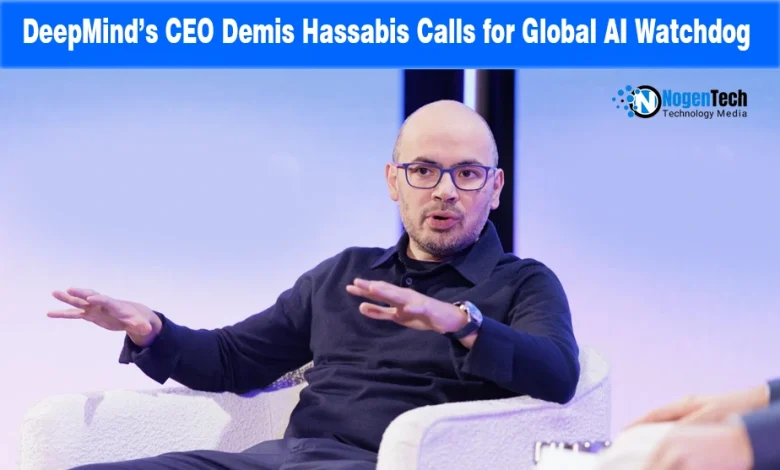
Google DeepMind co-founder and CEO Demis Hassabis is asking Washington to build the referee that his own industry currently lacks.
In his manifesto, “A Framework for Frontier AI and the Dawning of a New Age,” published Tuesday, he called for a US-led watchdog to evaluate advanced AI models.
That agency would also coordinate an industry-wide slowdown if risks grow, as noted by Axios, which interviewed Hassabis exclusively.
The Nobel laureate behind Gemini said AI-driven cyber risks already amount to warning signs, with graver biological and nuclear threats potentially emerging within 18 months.
A FINRA-Style Watchdog for Frontier Models
Hassabis is proposing an AI standards body modeled on FINRA, the Financial Industry Regulatory Authority, that oversees Wall Street under SEC supervision, Axios reported.
Under the proposal, frontier labs would voluntarily submit models up to 30 days before release for testing against potential risks, including cyber, biological, and deception risks.
Yahoo’s coverage of the same interview noted that once the system proves effective, Hassabis wants it formalized quickly, making approval mandatory before frontier models can enter the US market.
He envisions a majority independent board of Turing Award winners, other technical experts, and representatives from industry, government, and the open source community.
The rules would apply to all frontier models, regardless of country of origin or whether they are open or closed, addressing the concern raised by UN Secretary General António Guterres that AI is outpacing the world’s ability to govern it.
The Mythos Freeze as a Wake-Up Call
Hassabis’s proposal follows a rocky month for AI regulation. He told Axios the Trump administration’s abrupt export controls on Anthropic’s Mythos and Fable models were a wake-up call, showing Washington needs something more durable than improvised directives.
Anthropic’s most advanced models were frozen overnight, then spent two and a half weeks in negotiations before access was restored after the launch of its Sonnet 5 model, with no established rulebook.
To avoid a similar outcome, OpenAI agreed to limit GPT-5.6 to government-vetted partners at launch before releasing it publicly last week after talks with the Commerce Department.
Hassabis said other major AI lab leaders broadly share his vision. Anthropic CEO Dario Amodei has proposed an FAA-style agency with authority to block unsafe models, echoing Anthropic co-founder Chris Olah’s argument that big tech cannot safeguard AI on its own.
The lab chiefs largely agree that Washington should regulate them, differing mainly over who should hold that authority.
Motives, Timeline, and Who It Would Really Serve
Hassabis is moving quickly. He told Axios he wants the watchdog operating before year-end and has spent months briefing the Trump administration, rival AI lab leaders, and European officials before going public.
He also believes the frontier designation would become a mark of prestige for qualifying labs.
Crypto Briefing took a more skeptical view, arguing that a system requiring expensive pre- release testing and expert reviewers would naturally favor established companies like Google DeepMind over startups and open source developers with fewer resources.
Hassabis reportedly warned that competitive pressure is pushing labs to release models faster than they can verify safety, along with his prediction that AGI could arrive by 2029, a feat Jensen Huang says Nvidia has already achieved.
Hassabis believes AI is already moving toward the singularity. Reflecting on that progress, he wrote, “We’ve essentially found a way to make sand think. It’s miraculous.”
Source: A Framework for Frontier AI and the Dawning of a New Age