OpenAI Complied With the Government’s GPT-5.6 Restriction, Then Publicly Said It Shouldn’t Happen Again
OpenAI launched GPT-5.6, but only as a limited preview for around 20 government-approved partners after a White House request delayed its public release, marking the first known case of the U.S. government restricting a frontier AI model before a broader launch.

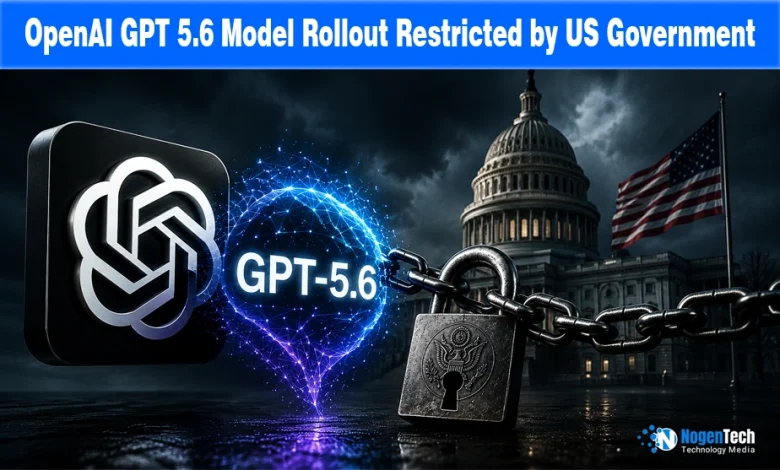
The White House asked OpenAI to limit GPT-5.6 to a small group of government-approved partners because of its advanced capabilities.
OpenAI agreed, arguing that a restricted release was the best path to a broader launch rather than risking the fate that befell Anthropic.
The move creates a new reality in frontier AI: OpenAI is launching its most capable model while warning that this process should not become the norm.
“We don’t believe this kind of government access process should become the long-term default. It keeps the best tools from users, developers, enterprises, cyber defenders, and global partners who need them,” the company said. OpenAI is complying with the very precedent it argues should not become permanent.
What GPT-5.6 Sol, Terra, and Luna Actually Are
The next generation GPT-5.6 lineup includes Sol, its flagship model; Terra, a more balanced AI model for everyday use; and Luna, a faster, lower-cost option.
Sol is the headline capability, OpenAI says GPT-5.6 Sol is its strongest model yet, with improved agentic capabilities in coding, biology, and cybersecurity.
Sol introduces a “max” reasoning effort mode and an “ultra” mode that uses coordinated subagents to solve highly complex tasks.
The architecture decision worth noting; OpenAI embeded safety guardrails directly into the model rather than relying on a separate filter.
That contrasts with Anthropic’s Fable 5, which used a classifier layer to silently route high-risk requests to an older model, triggering false positives and user backlash before the government shut it down.
How OpenAI Avoided Anthropic’s Fate
OpenAI began working with the administration on GPT-5.6 before Anthropic lost access to its Fable 5 and Mythos 5, under a Commerce Department directive.
Rather than being surprised by government action, OpenAI negotiated a limited release, securing a timeline for broader access and a formal partnership with the White House on a cybersecurity executive order framework for future model launches.
This cooperative approach also reflects OpenAI’s broader strategy of working closely with federal agencies, building on initiatives like its AWS partnership to expand federal AI access and modernize public sector infrastructure.
OpenAI says the government is aware of its plans to launch more broadly very soon and has expressed support for those plans, barring any concerns in the additional testing period.
CEO Sam Altman told employees the administration would approve customer access “customer by customer” during the preview period, and made clear that while cooperating, he does not see the current approach as either ideal or sustainable.
The New Regulatory Reality for Frontier AI
Government pre-release review of frontier models appears to be shifting from an exception to a recurring pattern, following a similar directive applied to Anthropic in June 2026.
A government-requested restriction on a frontier model release establishes a regulatory precedent that directly affects model availability, independent red teaming, and enterprise procurement timelines.
This is the first instance of the US government seeking to limit the rollout of a frontier AI model before its public release.
That marks a sharp contrast with earlier specialized rollouts like GPT-5.4-Cyber and expanded access to thousands of cyber defenders without pre-emptive federal delays.
Whether this sets up a clear, repeatable approval process or a model-by-model system with changing rules will depend on the executive order framework OpenAI is now helping draft.