Language is no longer the biggest barrier for businesses expanding into global markets. The real challenge is keeping multilingual content accurate, consistent, and up to date as websites, software, documentation, and customer communication continue growing across regions.
AI translation is changing how organizations approach that challenge. Instead of treating translation as a separate task, many businesses now use AI-powered platforms to streamline multilingual workflows and reduce the time required to manage content at scale.
Not every AI translation tool is built for the same purpose, though. Some focus on quick text conversion, while others support broader localization and collaboration.
Moving onward, you will explore trends in how AI translation is evolving and review some of the best AI translation tools available for modern business communication.
What Is an AI Translation Tool?
An AI translation tool uses Machine Learning (ML) and Natural Language Processing (NLP) to translate content from one language to another while preserving context, meaning, and tone.
Unlike traditional translation software, modern AI translation tools understand sentence structure, terminology, and intent to produce more natural translations. Many also support localization, helping businesses adapt content for different languages and regional markets.
Common capabilities include:
- Context-aware translation for improved accuracy.
- Multilingual content management across websites, documents, and applications.
- Workflow automation to streamline translation tasks.
- Terminology and glossary management for consistent language.
- Integrations with CMS, customer support platforms, and business applications.
Which AI Translation Trends Are Shaping the Future of Businesses?
The rapid evolution of AI translation is driven by several industry-wide shifts that are changing how businesses create, translate, and manage multilingual content. The following trends highlight where AI translation tools are delivering the greatest impact:
- Businesses are moving beyond traditional translation tools.
- Context-aware AI is improving translation quality.
- Localization workflows are becoming more automated.
- Managing brand consistency across multiple languages is a growing priority.
- AI translation platforms are becoming centralized business solutions.
Trend #1: Businesses Are Moving Beyond Traditional Translation Tools
For many years, translation software was designed around a simple purpose: converting one language into another.
While this solved short-term communication problems, modern businesses now require systems that support continuous content production, multilingual collaboration, and long-term workflow management.
As content production continues increasing across global markets, manual translation processes are becoming harder to manage efficiently.
Businesses are increasingly looking for AI-powered solutions that integrate directly into their daily operations rather than functioning as standalone translation tools.
Trend #2: Context-Aware AI Is Improving Translation Quality
One of the biggest improvements in modern AI translation systems is contextual understanding.
Traditional translation tools often focus on direct word conversion, but businesses frequently need translations that preserve meaning, tone, technical terminology, and brand messaging.
This becomes especially important when companies manage customer communication, product descriptions, documentation, and multilingual marketing content. Platforms capable of understanding broader context are becoming increasingly valuable as businesses scale international operations.
Trend #3: Localization Workflows Are Becoming More Automated
Businesses now publish and update content much faster than ever before. Product releases, software updates, knowledge base articles, support documentation, websites, and digital campaigns constantly evolve.
Traditional translation workflows often create delays when teams manually handle every language update separately. AI-powered automation is helping organizations reduce repetitive work while accelerating multilingual content delivery across multiple markets simultaneously.
This has become particularly evident for multimedia teams who are scaling multilingual video content using AI tools to reach global audiences on visual platforms.
Trend #4: Managing Brand Consistency Across Multiple Languages
Maintaining consistent messaging across different languages has become one of the biggest challenges for modern businesses operating internationally.
A small variation in terminology across product documentation, websites, marketing campaigns, or customer support materials can create inconsistencies that directly affect customer experience and overall brand identity.
This is why businesses increasingly prioritize platforms capable of maintaining consistent language standards across all multilingual communication workflows.
Trend #5: AI Platforms Are Becoming Centralized Business Solutions
The market is gradually shifting toward platforms that support multiple business functions instead of standalone translation tools.
Businesses increasingly prefer centralized AI solutions that can support multilingual communication, automation, workflow management, collaboration, and content operations within one ecosystem.
Rather than managing separate tools for every task, organizations are now focusing on building more efficient communication infrastructure powered by AI.
What Are the Best AI Translation Tools Businesses Must Consider in 2026?
The best AI translation tools combine machine translation, AI, and localization features to deliver fast, accurate, and scalable multilingual communication. Here are some of the most notable ones:
- Google Translate – Best for instant translations across hundreds of languages.
- OpenL – Best for AI-powered multilingual translation and language support.
- Lara Translate – Best for context-aware business translation and localization.
- ChatGPT – Best for contextual translation, rewriting, and multilingual content creation.
- Smartcat – Best for collaborative translation and localization workflows.
- Amazon Translate – Best for enterprise-grade machine translation and cloud-based automation.
Each tool serves different translation needs, from everyday communication to enterprise localization. The following sections compare their features, strengths, and ideal use cases.
1. Google Translate
Google Translate remains one of the most widely used translation tools globally. It supports a large number of languages and helps users quickly translate websites, documents, conversations, and text across different devices.
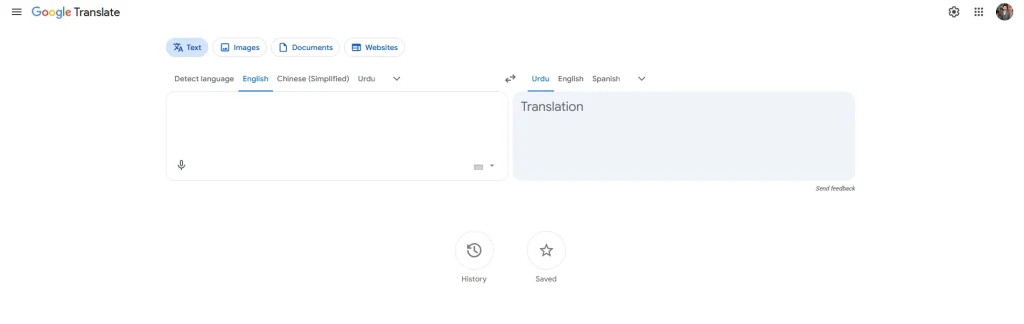
Best for: Fast multilingual communication and instant translations.
Where to use: Web browser, mobile app, browser integrations.
2. OpenL
OpenL is an AI-powered translation platform designed to help users manage multilingual communication across a variety of language pairs.
It offers flexible language support while making translation workflows easier for users working across multiple regions.
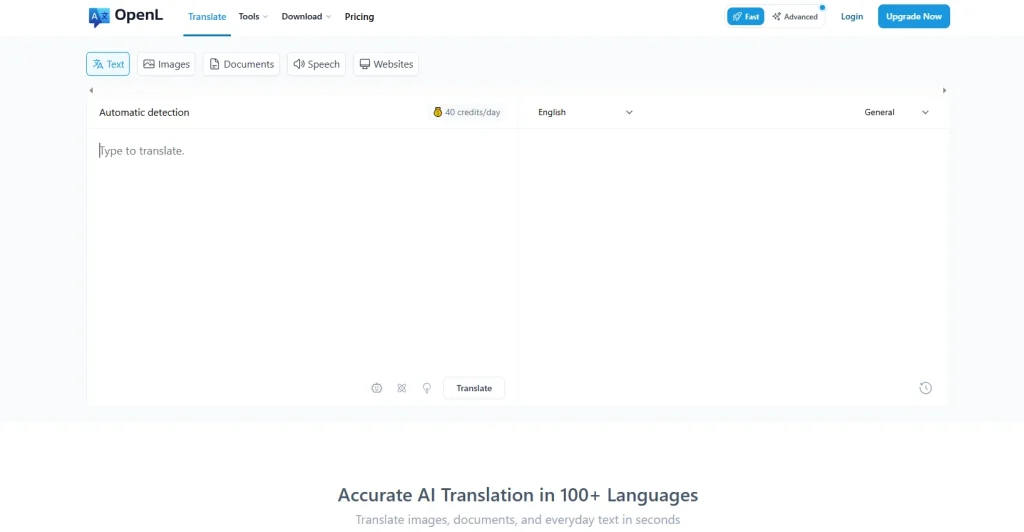
Best for: AI-based multilingual translation support.
Where to use: Online multilingual communication workflows.
3. Lara Translate
Lara Translate helps businesses manage multilingual communication while maintaining better consistency across different content and business workflows. The platform focuses on contextual translation rather than simple word conversion.
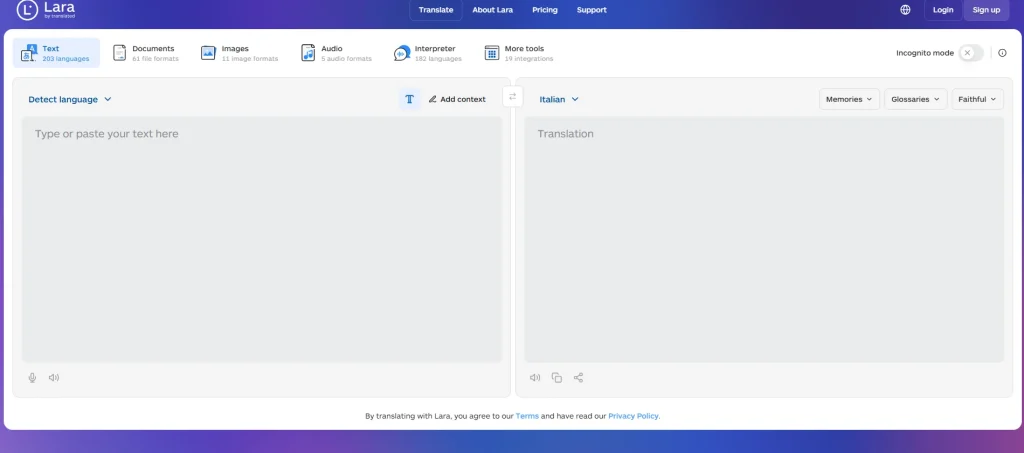
Best for: Context-aware multilingual business communication.
Where to use: Business content, multilingual workflows, customer communication.
4. ChatGPT
ChatGPT is increasingly being used for advanced translation tasks where sentence structure, tone, and contextual understanding matter more than direct language conversion.
Businesses often use it when rewriting translated content, improving readability, or adapting communication for different audiences.

Best for: Context-aware translation and multilingual writing support.
Where to use: Content writing, customer communication, document refinement.
5. Smartcat
Smartcat combines AI translation with project collaboration features, allowing businesses to manage multilingual content projects involving multiple contributors and distributed teams.
Instead of acting only as a translation engine, the platform helps coordinate larger localization workflows more efficiently.
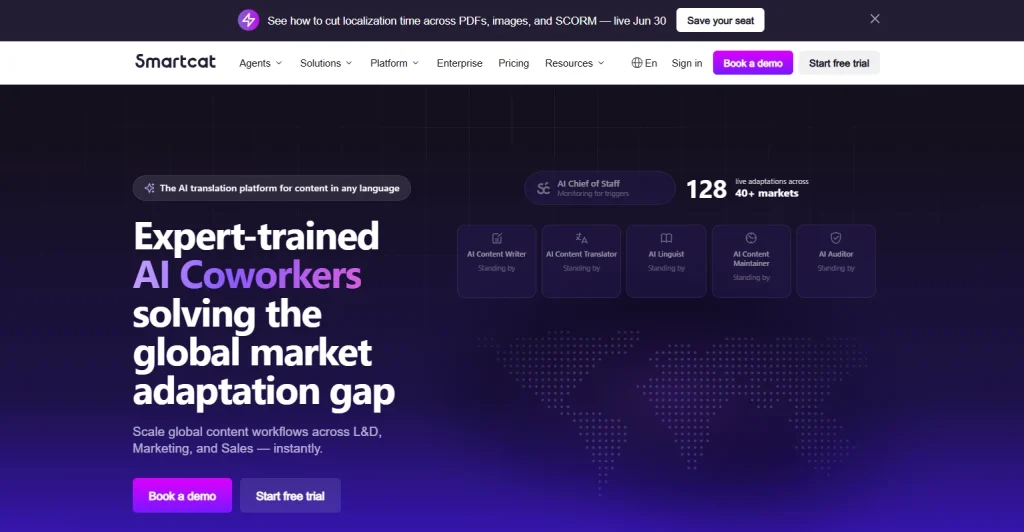
Best for: Team-based translation and localization projects.
Where to use: Collaborative multilingual content management.
6. Amazon Translate
Amazon Translate is a cloud-based machine translation service designed for businesses that require scalable multilingual communication directly integrated into enterprise applications and cloud infrastructure.
It is frequently used by organizations building automated systems that require continuous language processing across global operations.
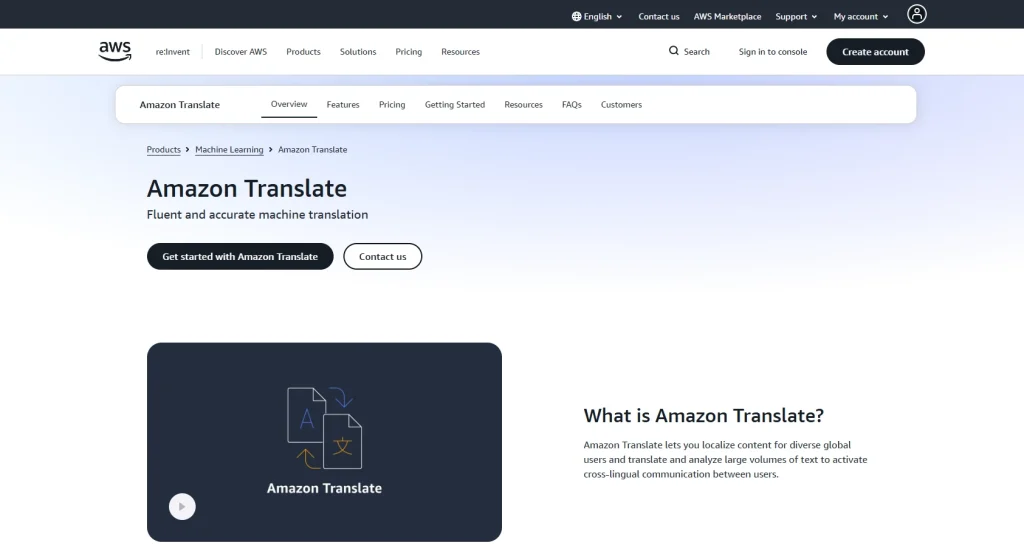
Best for: Enterprise cloud-based multilingual systems.
Where to use: Applications, cloud services, enterprise automation.
What You Should Also Know About the Importance of AI Translation Tools in Business
Why is AI translation becoming more important in 2026?
Businesses are managing larger volumes of multilingual content than ever before, making manual translation workflows increasingly difficult to maintain efficiently.
Is AI translation replacing human translators?
AI is improving efficiency significantly, but human review remains important for legal, technical, and brand-sensitive communication.
Why does context matter in translation?
Direct word translation often misses meaning, tone, and business terminology. Context-aware AI helps improve translation quality significantly.
Are businesses moving beyond standalone translation tools?
Yes. Organizations increasingly prefer AI platforms that support automation, collaboration, multilingual workflows, and broader communication infrastructure.
What is changing in multilingual business communication?
Businesses are shifting from simple translation processes toward complete multilingual content management systems powered by AI.
Final Thoughts on AI Translation Tools
The future of AI translation is no longer centered around simple language conversion. Businesses today require systems capable of supporting multilingual communication across multiple markets while maintaining speed, consistency, and operational efficiency.
As international business operations continue expanding, AI-powered translation platforms are becoming a critical part of modern communication infrastructure.
The companies adopting smarter multilingual workflows today will likely be better positioned for global growth in the years ahead.