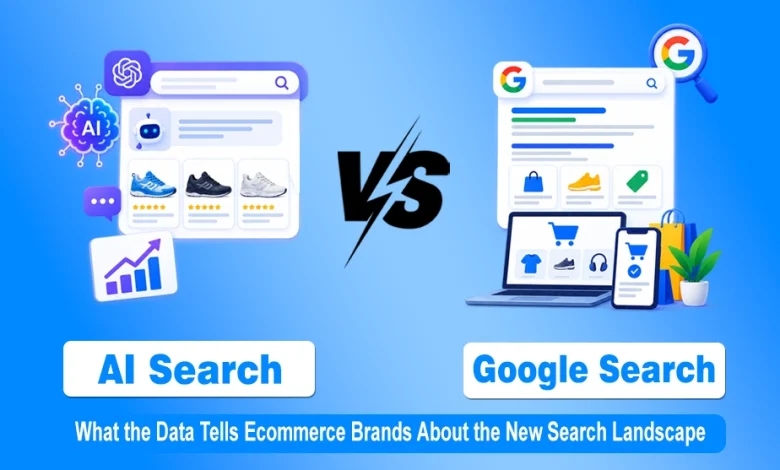
Every few years, a new technology arrives that gets framed as the end of Google search. Voice assistants were supposed to do it. Social commerce was supposed to do it.
Now it’s generative AI’s turn, with plenty of commentary suggesting that ChatGPT, Perplexity, and similar tools are about to make traditional search obsolete for ecommerce. The actual data tells a more nuanced story, and it’s worth looking at closely before drawing conclusions either way.
Adobe’s retail traffic data gives the clearest picture available. Between July 2024 and February 2025, traffic to U.S. retail websites from generative AI sources increased by 1,200%, a rapid rise by any measure.
Once those visitors arrived, Adobe found they behaved differently from traffic from other channels too, viewing 12% more pages, showing 12% higher engagement, and recording a 23% lower bounce rate than non-AI traffic.
This combination of numbers is exactly why the “AI is replacing Google” framing oversimplifies what’s actually happening in consumer behavior, says ecommerce search intelligence agency Searchflex.
The Missing Half Of The Story
Growth and engagement figures only tell part of the story. The same Adobe data found that AI-referred traffic was still 9% less likely to convert than traffic from other sources as of February 2025, even though that gap had narrowed sharply from 43% in July 2024.
Put together, the picture is of a channel that’s growing fast, engaging visitors deeply, and converting less often than search, at least for now. That’s not the signature of a channel replacing another one.
It’s the signature of a new layer being added to an existing system, one that consumers use differently and, so far, less transactionally.
Fragmentation, Not Replacement
What the data actually supports is fragmentation rather than substitution. Consumers haven’t abandoned Google; they’ve added new tools alongside it, and they’re using each one for a different part of the same overall journey.
Search continues to capture high-intent demand, the moment someone already knows roughly what they want and needs to find or compare it quickly.
Generative AI is being used earlier in that process, for research, comparison, and recommendation, helping a shopper narrow down options before they’ve committed to anything specific.
Social platforms continue to do the discovery and interruption work, surfacing products people weren’t actively looking for. Marketplaces sit at the product-led comparison and purchase end, where specifics like price and reviews matter most.
None of these channels are disappearing, and none of them are winning outright. They’re specializing.
Why This Matters More Than A Single Ranking Factor
Brands that treat this shift as simply another SEO variable, something to bolt onto an existing content strategy, are missing the scale of what’s changing.
If AI tools are increasingly sitting in the research and comparison phase of a purchase journey, then how a brand’s products are represented, described, and understood by those systems starts to matter just as much as how well a page ranks in Google.
A product that’s well optimized for search but poorly represented in the data AI systems draw on, structured specifications, reviews, third-party mentions, pricing clarity, risks being invisible at exactly the stage where a shopper is narrowing down their choice.
The Strategic Shift Brands Need To Make
The practical implication is that ecommerce brands now need to think about the entire discovery ecosystem rather than optimizing a single channel in isolation.
Ranking well in Google no longer guarantees visibility across the full journey a shopper takes before buying, particularly as more of that journey moves through AI-assisted research before a search engine is ever opened.
Brands that continue to measure success purely through search rankings risk missing where the real influence is shifting, even while their headline metrics look stable.
Where This Leaves Google
Google isn’t going anywhere in the near term, and the conversion data makes that clear enough on its own. But the idea of a single dominant discovery channel is becoming harder to defend.
The more accurate read of the data is that ecommerce search has fragmented into distinct layers, each doing a different job at a different stage of the decision, and brands that adapt their strategy to reflect that layered reality are better positioned than those still treating AI as a passing trend or a single ranking factor to bolt on.