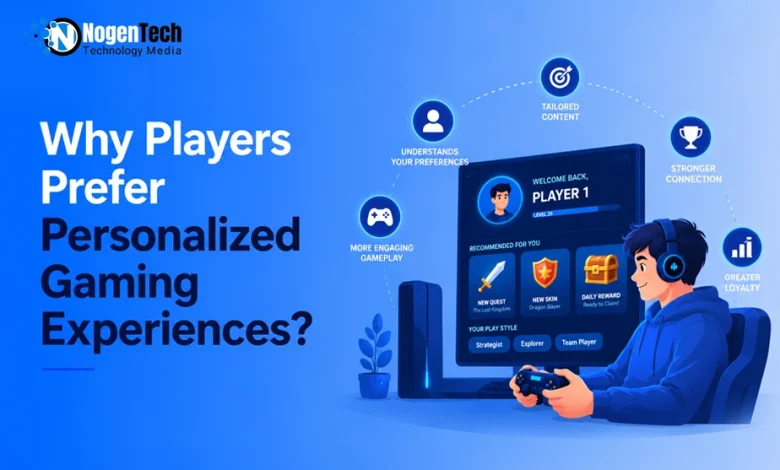
Personalized gaming experiences have become a core part of modern game design. Instead of delivering the same content to every player, games now use data analytics and AI to adapt gameplay, recommendations, rewards, and challenges based on individual behavior and preferences.
From personalized item suggestions like Fortnite’s tailored Item Shops and progression systems to adaptive AI opponents, these features help improve player engagement, retention, and lifetime value (LTV). As AI and machine learning continue to advance, personalization is becoming a major driver of player satisfaction and business growth.
In this guide, you’ll explore how personalized gaming works, why players value it, how AI drives customization, and what the future of gaming personalization looks like.
What is a Personalized Gaming Experience?
Personalized gaming experiences refer to gameplay features, content, and systems that adapt to individual player preferences, behaviors, and interests.
Rather than offering the same experience to every user, games use data, analytics, and Artificial Intelligence to customize various elements such as:
- Character customization
- Difficulty settings
- Story progression
- In-game rewards
- Content recommendations
- Multiplayer matchmaking
- Promotional offers
The objective is to create a gaming environment that feels unique and relevant to each player.
Why Personalization Matters in Gaming?
Personalization matters in gaming as it enhances the overall gaming experience by making gameplay more engaging and meaningful.
When players feel understood, they are more likely to:
- Spend more time playing
- Return regularly
- Invest in premium content
- Recommend games to friends
- Build stronger emotional connections
For developers, personalization leads to higher retention rates, increased revenue, and stronger player communities. Personalized gaming experiences also satisfy players’ desire for instant gratification by quickly offering relevant rewards, challenges, recommendations, and in-game content based on their preferences.
Key Reasons Players Prefer Personalized Gaming Experiences
Some of the key reasons players prefer personalized gaming include:
- Sense of Ownership
- Adaptive Difficulties to enjoy
- Better storytelling
- Customized matchmaking
1. Greater Sense of Ownership
Personalization features such as custom avatars, skins, equipment, and virtual assets allow players to create unique identities. This increases emotional investment and strengthens long-term engagement.
In major MMOs, for example, acquiring extra progression gear or WoW Midnight gold allows players to skip repetitive grinding and customize their character’s endgame experience on their own terms.
Personalization features such as custom avatars, skins, equipment, and virtual assets allow players to create unique identities.
As players look for faster and more flexible ways to unlock these digital items, many are turning to modern payment methods; in fact, there’s a clear trend in why gamers prefer cryptocurrency payments for seamless, low-friction in-game purchases.
This level of customization ultimately increases emotional investment and strengthens long-term engagement
2. Adaptive Difficulty Improves Player Retention
Dynamic Difficulty Adjustment (DDA) systems analyze player performance and modify challenges in real time. By balancing difficulty levels, games reduce frustration for beginners and maintain engagement for experienced players.
3. Personalized Storytelling Enhances Immersion
Branching narratives adapt to player choices, actions, and playstyles. Games with dynamic story systems, such as Cyberpunk 2077 or The Witcher 3, offer unique outcomes, improve replayability, and create more meaningful player experiences.
4. Data-Driven Matchmaking Creates Fair Competition
Modern matchmaking systems use player data, including skill level, gameplay behavior, and preferences, to create balanced matches.
Fair competition improves player satisfaction, reduces churn, and encourages long-term participation.
What is the Role of Artificial Intelligence in Gaming Personalization?
Artificial Intelligence personalizes gaming by analyzing player behavior, adapting gameplay, generating content, predicting preferences, and delivering tailored recommendations and rewards.
By processing large volumes of gameplay data, AI helps developers adapt content, challenges, and rewards to individual player preferences.
AI-Driven Content Generation
AI can create and customize content based on player behavior, including:
- Personalized side quests
- Dynamic map layouts
- Procedurally generated environments
- Customized gameplay scenarios
This helps keep gameplay fresh, relevant, and engaging.
Behavioral Analysis and Prediction
AI systems analyze player data such as:
- Session length
- Gameplay preferences
- Progression patterns
- In-game purchases
- Engagement levels
These insights help predict player needs and improve retention through personalized experiences.
Real-Time Gameplay Adaptation
AI can adjust game elements dynamically, including:
- Enemy behavior
- Difficulty levels
- Mission objectives
- NPC interactions
- In-game challenges
Real-time adaptation creates a more responsive gaming experience that evolves alongside the player.
How Do AI-Driven Game Recommendations Help Players Discover New Games?
AI-driven recommendations help players discover new games by analyzing behavior and preferences to suggest relevant titles, improving discovery, satisfaction, and engagement.
How AI Recommends Games?
AI recommends games using collaborative and content-based filtering to match player interests, behavior, preferences, and similar users’ gaming choices.
Most AI recommendation engines use a combination of:
- Collaborative Filtering: Identifies players with similar interests and recommends games they enjoy.
- Content-Based Filtering: Matches games based on factors such as genre, gameplay mechanics, difficulty, art style, and player preferences.
While backend AI models process player preferences, compelling visual game design plays an equally critical role in game discovery by catching the player’s eye the moment a tailored recommendation appears on their screen.
Benefits of AI-Powered Recommendations
- Faster Game Discovery: Reduces search friction by aligning suggestions with documented online game discovery habits.
- Personalized Suggestions: Recommends games aligned with individual interests and play habits.
- Better User Experience: Helps players find relevant content more easily.
- Higher Engagement: Encourages exploration of new games and genres.
- Smarter Purchasing Decisions: Improves the likelihood of finding games that match player expectations.
As gaming libraries continue to grow, AI-driven recommendations play an increasingly important role in helping players discover content they are likely to enjoy.
Customized Bonuses and Rewards Increase Player Loyalty
Another major reason players prefer personalized gaming experiences is the availability of customized bonuses and rewards.
Traditional reward systems often provide identical incentives to every player. Modern gaming platforms use data-driven personalization to offer rewards that align with individual preferences and behaviors.
This approach extends beyond traditional video games; sweepstakes casino gaming platforms, which use sweeps coins casinos as a virtual currency, rely on personalized rewards and targeted promotions to increase engagement.
How Customized Bonuses Work?
Developers analyze player activity to determine which rewards are most likely to increase engagement.
Examples include:
- Exclusive skins
- Bonus experience points (XP)
- Personalized quests
- In-game currency rewards
- Special event access
- Loyalty rewards
- Exclusive collectibles
A competitive player may receive tournament-related incentives, while a casual player may receive progression-focused rewards.
Why Personalized Rewards Are Effective?
Customized rewards feel effective because they feel more valuable as they match player interests.
Benefits include:
- Increased retention
- Higher daily engagement
- Better progression experiences
- Greater customer satisfaction
- Stronger emotional investment
When players feel rewarded for their unique playstyles, they are more likely to remain loyal to the game.
How Social Personalization Is Changing Online Gaming?
Social personalization improves online gaming by recommending friends, guilds, teams, and events based on player activity, interests, skill level, and behavior.
Community Recommendations
Players receive suggestions for:
- Friends
- Guilds
- Clans
- Teams
- Online communities
I’ve always found that community features hit harder when they feel tailored to you. It’s a big part of what sets social gaming apart from traditional games; it transforms gaming from a solo hobby into a shared, personalized space
Personalized Events
Many games now recommend events based on:
- Player activity
- Skill level
- Interests
- Previous participation
These features help players build stronger connections within gaming communities.
How Does Personalization Benefit Game Developers?
While players enjoy more engaging experiences, developers also benefit significantly from:
- Improved Retention Rates: Players stay longer when content feels relevant and rewarding.
- Increased Revenue: Personalized offers often generate:
- More in-game purchases
- Higher subscription renewals
- Increased premium content sales
- Better Product Development: Behavioral insights help developers understand player preferences and improve future updates.
For example, real money slots at Slots Paradise include different themes, visual styles, and game mechanics, giving players a range of formats to explore and have an experience as per their personalization rather than presenting every title as the same experience.
What are the Challenges of Personalized Gaming Experiences?
Personalized gaming faces challenges like privacy concerns, over-personalization, technical complexity, large data requirements, continuous optimization, and higher development costs.
Privacy Concerns
Players increasingly worry about:
- Data collection
- Tracking practices
- Information security
Developers must maintain transparency regarding data usage.
Risk of Over-Personalization
Too much personalization can limit content discovery and reduce variety. Players may become trapped in recommendation loops that prevent them from exploring new experiences.
Technical Complexity
Building effective personalization systems requires:
- Advanced AI models
- Large datasets
- Continuous optimization
- Significant development resources
This can increase production costs and technical challenges.
What is the Future of Personalized Gaming?
The future of gaming personalization is incredibly exciting. Emerging technologies such as:
- Artificial Intelligence
- Machine Learning
- Cloud Gaming
- Virtual Reality (VR)
- Augmented Reality (AR)
will make gaming experiences even more adaptive and immersive.
Future games may personalize entire worlds, narratives, characters, and progression systems in real time. Players can expect experiences that feel increasingly unique, responsive, and tailored to their individual preferences.
People Also Ask
How does AI improve personalized gaming?
AI analyzes player behavior and uses that data to customize gameplay, recommend games, adjust difficulty levels, and deliver personalized rewards.
What are AI-driven game recommendations?
AI-driven game recommendations use machine learning algorithms to suggest games based on a player’s interests, gaming history, and behavior patterns.
What are customized gaming bonuses?
Customized bonuses are personalized rewards such as exclusive items, bonus XP, special events, and loyalty incentives designed to match a player’s preferences and activity.
What is the future of gaming personalization?
The future includes AI-powered adaptive worlds, dynamic storytelling, personalized content generation, smarter recommendations, and immersive VR gaming experiences tailored to individual players.
Final Thoughts on Personalized Gaming Experience
Personalized gaming experiences have become one of the most influential trends in modern gaming.
From character customization and adaptive difficulty to AI-driven game recommendations and customized bonuses, personalization helps create deeper engagement and stronger player loyalty.
As Artificial Intelligence continues to evolve, gaming experiences will become even more responsive, delivering content, rewards, and challenges that feel uniquely designed for every player.
For both gamers and developers, personalization represents the future of interactive entertainment.