The US Named Six Chinese AI Companies It Says Are Stealing American AI
Chinese AI firms, including DeepSeek and Alibaba, are accused of running systematic campaigns to extract proprietary capabilities from American AI models, a warning arriving weeks before Presidents Trump and Xi Jinping are set to meet.

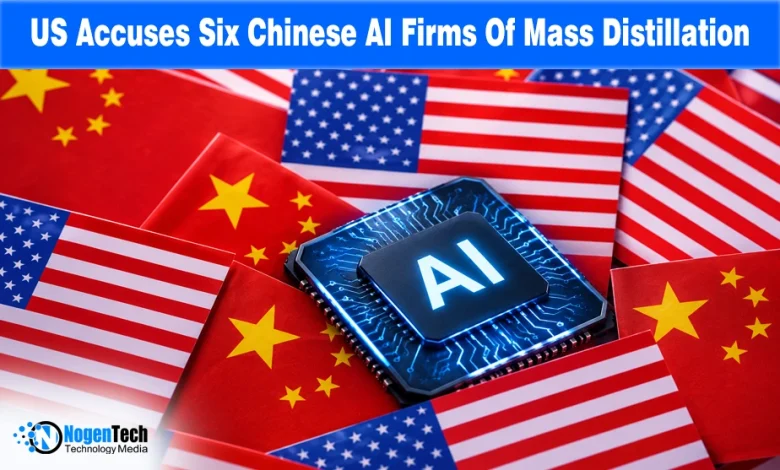
U.S. intelligence and cybersecurity agencies accused six China-based AI companies on Tuesday of running large-scale campaigns to extract capabilities from American AI models.
An 18-page advisory from the NSA, FBI, and CISA named DeepSeek, Moonshot AI, Alibaba, MiniMax, StepFun, and Z.AI. It alleges these firms are distilling to train their own models on outputs from more advanced U.S. models and reduce the research and computing costs.
The warning comes as the Trump administration prepares for Chinese President Xi Jinping’s planned visit later this month, heightening tensions ahead of separate U.S.-China talks on AI safety.
What “Distillation” Actually Means Here
Distillation is not inherently illicit. It is a common practice in the AI industry in which a smaller, cheaper model learns from the outputs of a larger, more expensive one, though it often violates the terms of service of the models being distilled.
What sets Tuesday’s accusation apart is the scale and method: officials say the six companies pulled billions of tokens across millions of interactions with U.S. frontier models, using “transfer stations,” or proxy accounts, to bypass geographic restrictions and usage safeguards.
The advisory states bluntly that this activity indicates distillation “is not a supplement to these companies’ AI model development,” but has become central to how they build competitive systems at all.
Moonshot AI was specifically accused of pulling data from Anthropic’s Claude Fable 5 to build Kimi K3 and from OpenAI’s GPT-4o to build Kimi K2.
Washington Frames This as a National Security Issue, Not Just a Business Dispute
What pushes the advisory beyond a standard corporate IP complaint is the language officials used.
The joint statement said the six companies acted “likely with Chinese government awareness” and warned that their capability gains could strengthen China’s “military and cyberattack capabilities” against the U.S. and its allies, as Reuters notes.
CISA Acting Director Nick Andersen urged U.S. AI companies to take immediate steps against knowledge distillation campaigns.
The advisory recommended monitoring unusual usage spikes, degrading responses when distillation is suspected, and sharing threat intelligence across companies and cloud providers.
This isn’t the first warning: U.S. officials made a similar accusation in April, and in July about distilling Anthropic’s Fable to develop K3, making Tuesday’s advisory a formalization of accusations building for months.
The Awkward Irony Baked Into This Story
The South China Morning Post (SCMP), which reported on these allegations, is owned by Alibaba, the developer of Qwen models and among the six companies named in the advisory, a disclosure SCMP makes plainly in its own coverage.
That does not prove reporting bias, but highlights how closely China’s major AI companies are tied to its media and commercial infrastructure, making Washington’s claim that state officials were well aware of the campaigns plausible in the first place.
China’s embassy in Washington did not respond to requests for comment, continuing a pattern of U.S. warnings met with silence rather than denial.
Naming these firms establishes Washington’s official stance ahead of high-level U.S.-China talks later this month, though whether it leads to policy actions or economic sanctions remains to be seen.
Source: China-Based Artificial Intelligence Companies Conducting Industrial-Scale Distillation