TSMC Expects “Strong, Multi-Year” Demand for AI Chips as It Ramps Up Arizona Investment

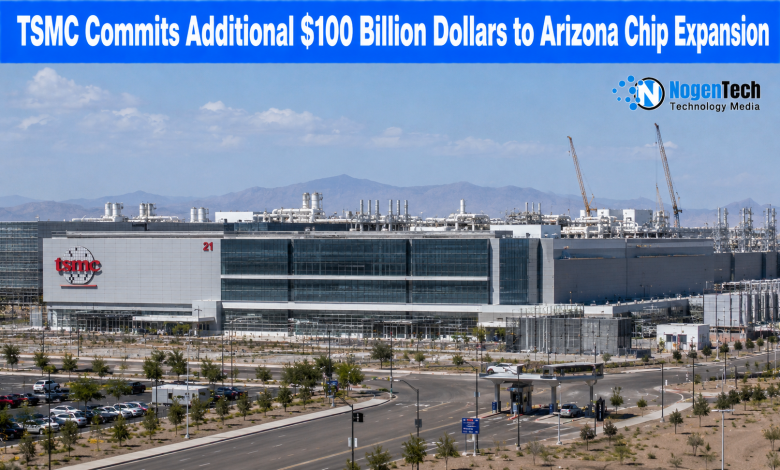
TSMC isn’t slowing down its US expansion. Taiwan Semiconductor Manufacturing Co. is seeing strong, multi-year demand for its AI chips and is investing a further $100 billion to expand its Arizona facilities, Reuters reported Monday.
Chief Financial Officer Wendell Huang described the trend behind that investment as a multi-year demand mega-trend among customers, with the company racing to accelerate capacity even as it works through real logistical hurdles.
The fresh commitment brings TSMC’s total Arizona investment to $265 billion.
A Bigger Bet on Arizona
Speaking after blockbuster second-quarter results, Huang said TSMC is expanding its Arizona investment because of strong long-term customer demand, while also thanking US government for supporting the project, per Reuters.
The outlet reports the first Arizona fab is already operating with yields comparable to TSMC’s flagship Taiwan facility.
A second fab is preparing for equipment installation, a third is under construction, and work has begun on a fourth fab and the site’s first advanced packaging facility.
Once completed, the Arizona campus will include 12 fabrication and advanced packaging facilities plus a research and development center.
CNBC reports the first phase is producing 4-nanometer chips, while TSMC is accelerating a shift from 5-nanometer to more advanced 3-nanometer production.
Huang said 2-nanometer chips, just as Musk aims for its Terafab chips, are expected to become a major revenue driver in the coming quarters, telling CNBC, “It’s going to be bigger and bigger in the next few quarters.”
Costs, Constraints, and Why Taiwan Still Comes First
Despite the expansion, Huang declined to provide a timeline for the new $100 billion Arizona investment, telling Reuters that several factors, including construction workers and infrastructure, remain key constraints.
TSMC is also expanding in Taiwan, where it plans to build 13 leading-edge and advanced packaging fabs, reflecting its strategy of keeping its most advanced manufacturing at home, a region so critical to the chip industry that even the US-based Micron is expanding there.
Reuters reports Huang said the most advanced process technologies require close coordination between TSMC’s research and operations teams, so new technology nodes are stabilized in Taiwan before expanding overseas.
CNBC adds that building fabs in the US costs four to five times more than in Taiwan, continuing to pressure margins even as the Arizona expansion grows.
Geopolitical Headwinds and Financing Options
TSMC’s role as the world’s leading producer of advanced AI chips and a key Nvidia supplier makes its investment and margins a closely watched indicator for the semiconductor industry, Reuters reports.
The company also faces geopolitical pressure as Washington continues to tighten advanced chip export restrictions on China.
Reuters notes it reported last year that TSMC could face a penalty of $1 billion or more to settle a US export control investigation involving a chip that ended up inside an AI processor by Huawei, a company advancing its Tau scaling architecture despite US sanctions.
Huang referred specific questions about the case to US authorities and said TSMC’s internal export control systems are under constant review.
The expansion lands as President Trump continues criticizing Taiwan’s dominance in semiconductor manufacturing and predicts the US will control half of global chip production before he leaves office, a strategy visible in his recently announced Apple Intel chip push.
Huang told Reuters TSMC may issue new bonds if market conditions are favorable, while CNBC reports the company considers its exposure to Middle East conflicts manageable because of its diversified supply chain and safety stock reserves.
Source: TSMC expects ‘strong, multi-year’ demand for AI chips as it ramps up Arizona investment