
Sixth Circuit Rules Ohio Can Force Parental Consent for Under-16 Social Media Use
A divided Sixth Circuit Court of Appeals panel that Ohio's Social Media Parental Notification Act does not violate the First Amendment, restoring a law requiring social platforms to obtain parental consent before children under 16 can create accounts.

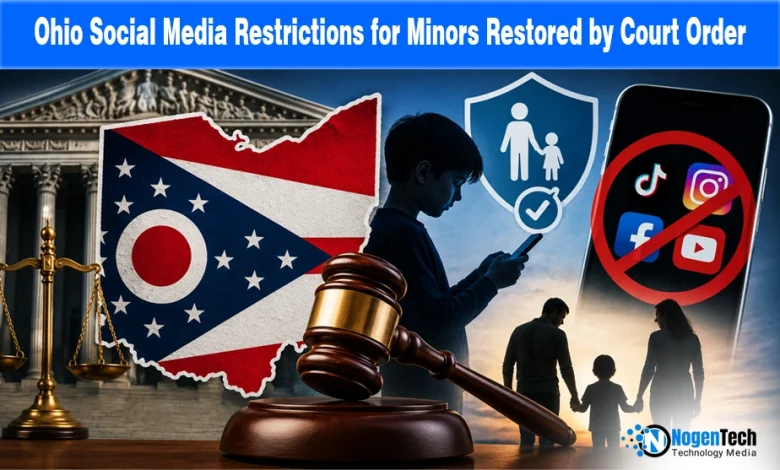
A federal appeals court ruled Thursday that Ohio can enforce a law requiring parental consent before children under 16 use social media, handing a victory to state officials who argue the platforms pose risks to young users.
Known as the Social Media Parental Notification Act, the law was passed in 2023 and took effect in January 2024 before being blocked by U.S. District Judge Algenon Marbley following a challenge from NetChoice.
Thursday’s ruling reverses that block. The ruling also comes the same week the UK announced its own social media restrictions for under-16s, underscoring growing regulatory pressure on platforms serving minors on both sides of the Atlantic.
What the Court Actually Decided
The Ohio Parental Act law was included in an $86.1 billion state budget bill signed by Republican Governor Jon Husted in July 2023 as a child mental-health measure.
Writing for the majority, U.S. Circuit Judge Eric Clay said the law places only a limited burden on speech while advancing Ohio’s interest in protecting children online. Clay wrote, “At bottom, the Act imposes a parental consent requirement.”
Clay also noted that the requirement imposes a marginal burden while addressing children’s unsupervised acceptance of platform terms.
Judge Alice Batchelder concurred separately, writing that “a statute is not vague just because it has a wide berth.”
The dissent argued the law likely unconstitutionally limits minors’ access to protected speech, while supporters say it encourages healthier habits, avoiding the endless social media scroll.
NetChoice’s Losing Streak Continues, But Not Everywhere
NetChoice, whose members include TikTok, YouTube, Facebook, and Instagram, argued the law was vague and improperly restricted minors’ access to First Amendment-protected content as social platforms expand monetization.
The trade group said the Ohio ruling runs counter to a “clear national consensus” and pledged to continue challenging similar laws.
“An unconstitutional law protects no one, and we remain focused on ensuring the First Amendment rights of Ohioans are protected,” said Paul Taske, director of the NetChoice Litigation Center.
That characterization is increasingly difficult to sustain. While NetChoice has secured victories against similar age-verification laws in Arkansas, Louisiana, and Georgia, Ohio is now the most significant exception.
A circuit-court defeat also carries greater precedential weight than the district-court wins NetChoice has accumulated elsewhere.
What This Means for the Broader Children’s Online Safety Fight
This ruling is part of a broader push across the US and internationally to regulate how children interact with social media platforms, a trend also visible in gaming platforms like Roblox, which has introduced its own safety measures for minors.
Florida’s attorney general has separately sued TikTok under the state’s child social media law, alleging the platform endangered minors.
With Ohio’s law restored pending the lower court’s removal of the enforcement block, states considering similar legislation, and the platforms challenging it, will be watching closely.
The key question is whether the Sixth Circuit’s First Amendment reasoning becomes a model for other courts or remains an outlier subject to further appeal.
Source: US court rules Ohio can restrict children’s use of social media




![Top Tech Stories of 28th Week [2026]](https://www.nogentech.org/wp-content/uploads/2026/07/Top-Tech-Stories-of-28th-Week-2026-390x220.webp)