Most enterprises don’t realize how much they’re overpaying until they audit their telecom invoices.
Managing telecom invoices across multiple carriers, locations, and services is challenging for enterprise IT and finance teams. While optimizing outbound billing through invoice-to-cash automation helps companies get paid faster on the accounts receivable side, managing inbound telecom expenses is equally crucial to prevent cash leaks.
Manual processing, billing discrepancies, invoice reconciliation, and cost allocation can increase telecom spend and delay payments. Telecom invoice management software helps organizations:
- Automate invoice processing and validation
- Match charges against contracts and telecom inventory
- Simplify dispute management
- Improve visibility into telecom expenses
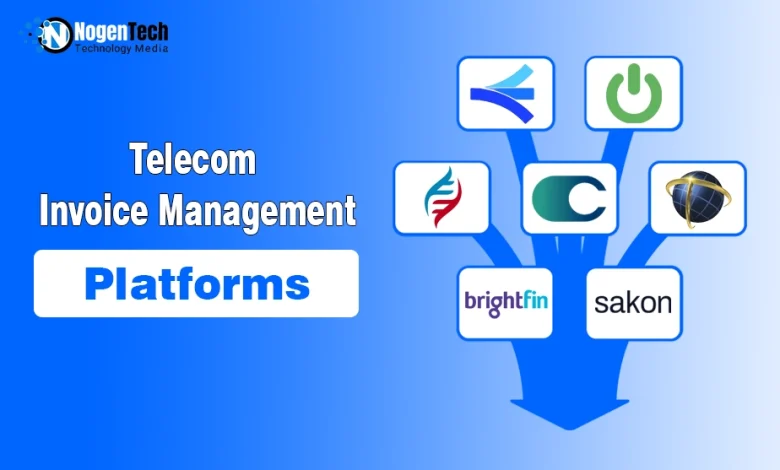
In this guide, I will compare seven leading telecom invoice management solutions, evaluating their features, strengths, and limitations to help you choose the right telecom invoice management system or telecom invoice management services for your business.
What Is a Telecom Invoice Management Platform?
A telecom invoice management platform automates telecom invoice processing, validates carrier charges, and helps businesses manage telecom expenses, billing accuracy, and cost control.
A telecom invoice management platform centralizes telecom invoices from multiple carriers, locations, and services into a single system.
It replaces manual billing workflows by automating invoice processing, invoice reconciliation, and billing validation against carrier contracts and telecom inventory.
What Does a Telecom Invoice Management Platform Do?
It helps IT, finance, and procurement teams streamline telecom billing while reducing billing errors and improving visibility into telecom spending.
Key capabilities include:
- Automating invoice processing across PDF, EDI, CSV, API, and paper invoices
- Validating charges against carrier contracts and telecom inventory
- Detecting billing discrepancies, duplicate charges, and inactive services
- Simplifying invoice reconciliation and cost allocation
- Managing billing disputes with telecom providers
- Tracking telecom expenses through reports and dashboards
- Integrating with ERP, AP automation, and Telecom Expense Management (TEM) platforms
Unlike manual processes, a telecom invoice management system improves billing accuracy, reduces administrative effort, and helps enterprises optimize telecom costs as their carrier ecosystem grows.
7 Telecom Invoice Management Software Platforms Worth Trying for Enterprises
The best telecom invoice management software depends on your business size, carrier complexity, automation needs, integration requirements, and budget. Below are seven leading platforms for enterprise telecom invoice management.
- Lightyear: Focus on AI-powered automation
- Tangoe: Focus on global expense management
- Asignet: Focus on RPA and workflow automation
- Calero: Focus on expense visibility and contract reconciliation
- Tellennium: Focus on invoice auditing and managed dispute resolution
- Brightfin: Focus on ServiceNow integration
- Sakon: Focus on enterprise workflow automation and telecom asset management
1. Lightyear
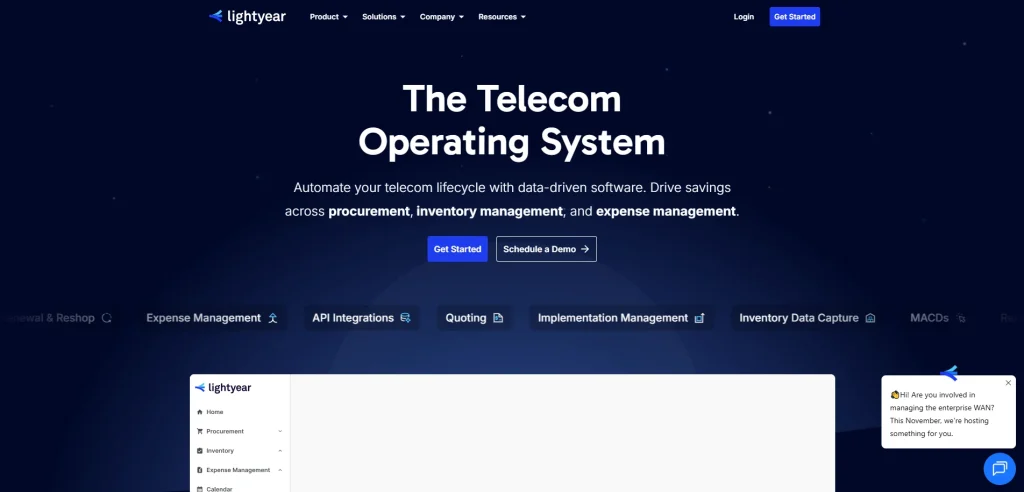
Lightyear automates telecom invoice management with AI-powered processing, contract validation, and bill consolidation for enterprise Telecom Expense Management (TEM).
It unifies telecom invoice management, procurement, and network inventory in a single platform. Beyond organizing your bills, pairing these operational tools with modern, AI-driven cash flow strategies helps enterprises improve billing accuracy, forecast monthly liabilities, and protect their working capital.
Best for: Mid-sized and enterprise businesses needing AI-powered telecom invoice management.
Key Features
- AI-powered invoice processing for PDF, EDI, CSV, API, and paper invoices
- Automated invoice auditing to detect billing discrepancies, unauthorized charges, and contract violations
- Contract and inventory validation against active telecom services
- Flexible bill payment with invoice delivery or consolidated billing
- Telecom procurement across 1,200+ vendors
- Network inventory management with contract renewal alerts
- Custom reporting and API access
| Pros | Things to Consider |
| Combines invoice management, procurement, and network inventory | Voice and wireless usage monitoring require third-party integrations |
| Automates manual invoice processing | Advanced features may exceed the needs of smaller businesses |
| Supports multiple invoice formats and global carriers | Pricing is available on request |
2. Tangoe
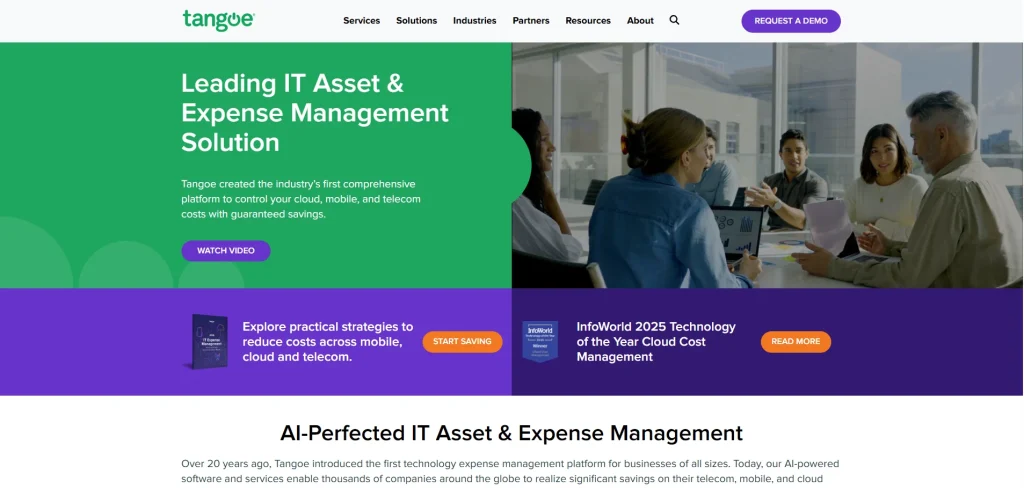
Tangoe automates telecom invoice management with multi-currency billing, invoice validation, and expense analytics for global Telecom Expense Management (TEM).
It is a Telecom Expense Management (TEM) platform designed for enterprises managing telecom, mobile, and cloud expenses. It helps organizations automate invoice workflows, improve billing accuracy, and gain better visibility into technology spending.
Best for: Large enterprises managing global telecom expenses.
Key Features
- Automated invoice intake, validation, and processing
- Multi-currency reconciliation for global carrier billing
- Invoice auditing and dispute management
- Bill consolidation across telecom services
- Spending analytics and contract benchmarking
- Expense tracking for telecom, mobile, and cloud services
| Pros | Things to Consider |
| Strong support for global and multi-currency billing | Implementation can be time-consuming |
| Integrated telecom, mobile, and cloud expense management | Portal navigation may feel complex |
| Advanced spending analytics and contract benchmarking | Premium pricing may not suit every budget |
3. Asignet
Asignet simplifies telecom invoice management with RPA, automated charge validation, and customizable workflows for enterprise billing operations.
It uses robotic process automation (RPA) to streamline telecom invoice management across global carriers. It reduces manual work, improves billing accuracy, and automates enterprise telecom expense workflows.

Best for: Enterprises seeking RPA-powered telecom invoice automation.
Key Features
- RPA-powered invoice processing for multiple formats and languages
- Automated charge validation against contracts and historical spending
- Bill consolidation across telecom services
- Low-code workflow customization
- Multi-language invoice support
- Telecom expense analytics and optimization
| Pros | Things to Consider |
| Automates invoice processing with RPA | No automated procurement or contract rebidding |
| Supports multilingual invoice processing | ROI may be harder to quantify |
| Flexible low-code workflow customization | Pricing is available on request |
4. Calero MDSL
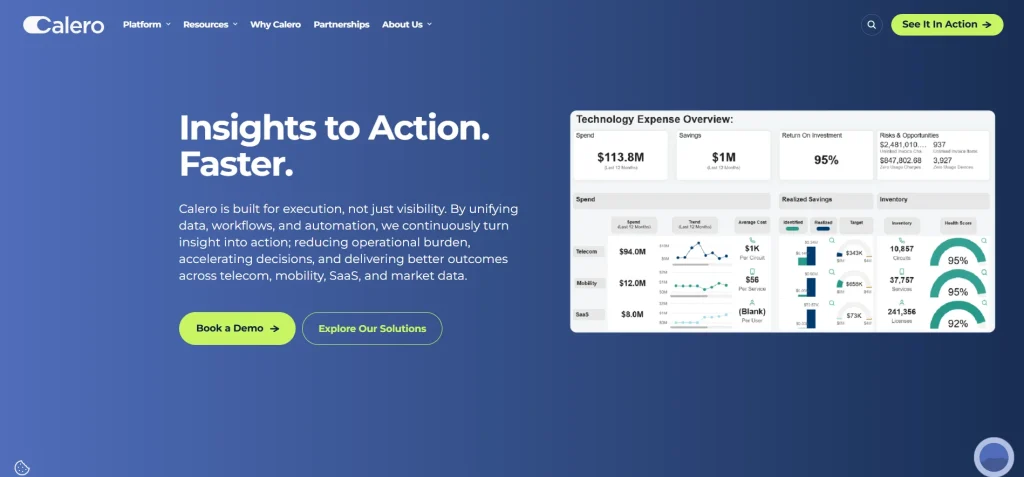
Calero centralizes telecom invoice management by reconciling carrier invoices, tracking expenses, and improving cost visibility across enterprise telecom services.
This platform manages telecom, mobile, UCaaS, and software expenses from a single dashboard. It helps organizations reconcile invoices, allocate costs, and maintain contract compliance across multiple vendors.
Best for: Enterprises managing telecom and technology expenses in one platform.
Key Features
- Automated invoice reconciliation against contract terms
- Built-in billing dispute management
- Cost allocation by department, vendor, or business unit
- Expense management for telecom, mobile, UCaaS, and software
- Detailed spending analytics and compliance reporting
- Centralized expense visibility across multiple services
| Pros | Things to Consider |
| Manages multiple technology expenses in one platform | Reporting interface can be difficult to navigate |
| Strong cost allocation and reporting capabilities | Ongoing data validation is required |
| Built-in dispute resolution workflow | Pricing is available on request |
5. Tellennium
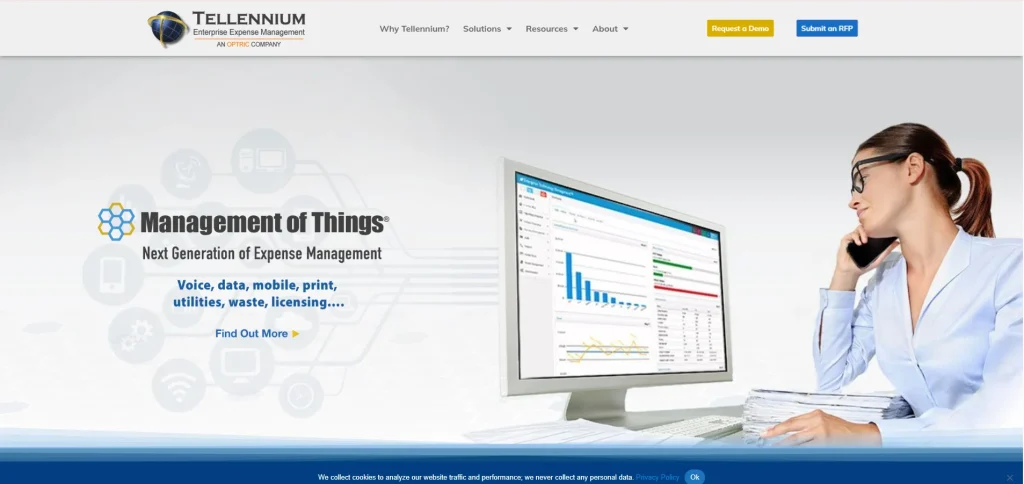
Tellennium helps enterprises control telecom costs through invoice auditing, contract validation, and managed dispute resolution across multi-carrier environments.
It combines telecom invoice management with detailed telecom inventory to identify billing errors before they impact costs. It also manages disputes with carriers, reducing the administrative burden on internal teams.
Best for: Enterprises seeking managed telecom invoice auditing.
Key Features
- Automated invoice auditing against contracts and inventory
- Billing discrepancy detection for inactive or overcharged services
- Managed carrier dispute resolution
- Bill consolidation across telecom services
- Dedicated account management
- Telecom inventory tracking for invoice validation
| Pros | Things to Consider |
| Proactive invoice auditing and validation | Reporting customization is limited |
| Dedicated account management | Public API is unavailable |
| Handles carrier dispute resolution on your behalf | Some billing discrepancies may still require manual review |
6. Brightfin
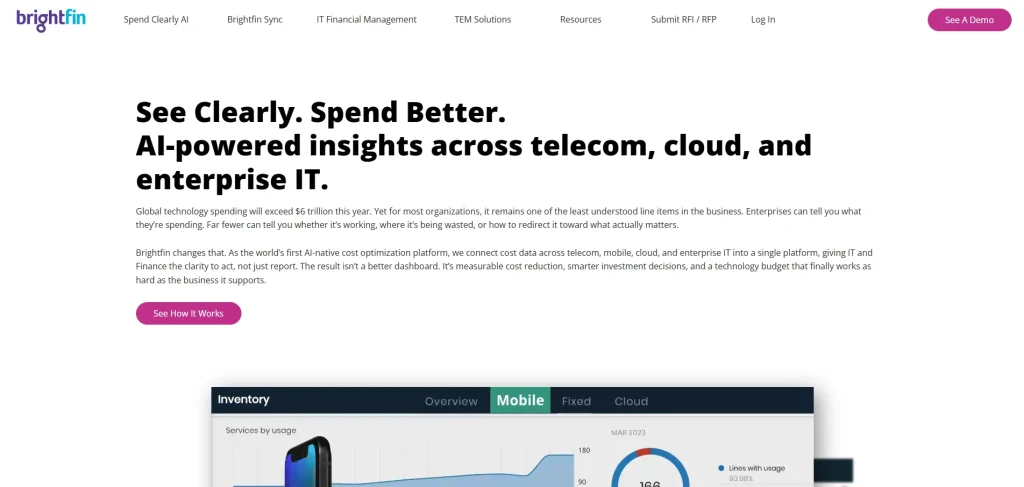
Brightfin simplifies telecom invoice management within ServiceNow, combining invoice processing, expense tracking, and carrier billing in a unified IT workflow.
This one is built on ServiceNow, allowing organizations to manage telecom invoices, mobile devices, and technology expenses without switching platforms. It connects carrier billing with IT operations to improve visibility and streamline expense management.
Best for: Organizations already using ServiceNow.
Key Features
- Native ServiceNow integration
- Automated telecom invoice processing and reconciliation
- Bill consolidation across telecom services
- Mobile device and carrier billing synchronization
- Automated usage and spending alerts
- Telecom expense reporting and analytics
| Pros | Things to Consider |
| Native ServiceNow integration | Best suited for existing ServiceNow users |
| Combines IT workflows with telecom expense management | Billing updates may take multiple cycles to appear |
| Automated spending alerts and reporting | Manual data validation is still required |
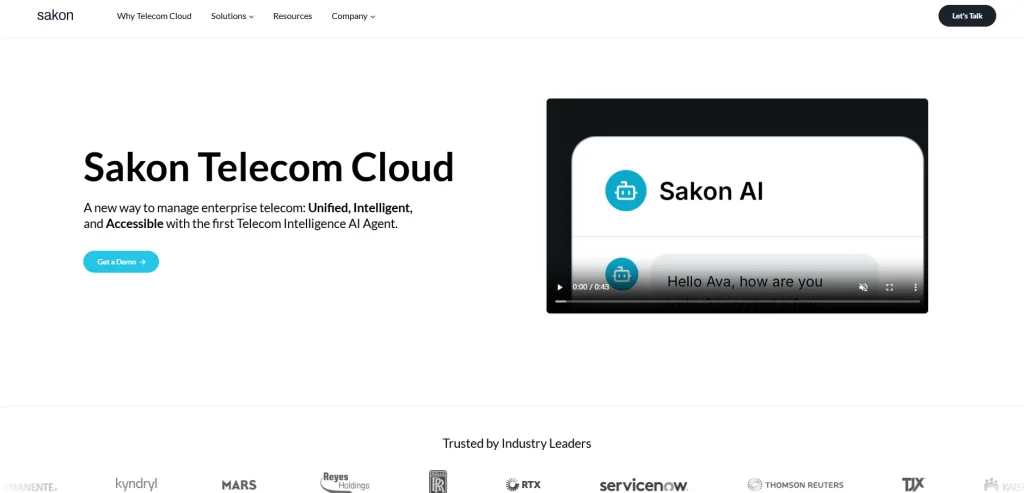
7. Sakon
Sakon streamlines telecom invoice management with automated workflows, asset tracking, and invoice validation for large, multi-location enterprises.
It is a Telecom Expense Management (TEM) platform that combines telecom invoice management, asset management, and workflow automation.
It helps enterprises validate carrier invoices, track telecom assets, and manage billing across global operations.
Best for: Large enterprises with complex telecom operations.
Key Features
- Automated telecom invoice processing and validation
- Telecom asset and inventory management
- Customizable dashboards and reporting
- Native ServiceNow integration
- Workflow automation for ordering, provisioning, and change management
- Regional and departmental expense tracking
| Pros | Things to Consider |
| Combines invoice, asset, and workflow management | No built-in procurement or competitive rebidding |
| Customizable dashboards and reporting | Requires ongoing data validation |
| Integrates with ServiceNow | Pricing is available on request |
How Do You Choose the Right Telecom Invoice Management Software?
Choose telecom invoice management software based on your business size, carrier complexity, automation needs, integrations, reporting, and total cost of ownership.
The right telecom invoice management software should align with your organization’s operational requirements, not just its feature list.
Evaluate how well each platform supports your existing workflows, scales with your telecom environment, and simplifies expense management.
What Should You Look for?
- Invoice automation to reduce manual processing
- Contract validation and billing discrepancy detection
- Support for multiple carriers and invoice formats
- ERP, AP automation, and ServiceNow integrations
- Real-time reporting and telecom expense analytics
- Telecom inventory and asset management
- Transparent pricing and responsive customer support
- Scalability for multi-location or global operations
Questions to Ask Before Choosing a Platform
- Does it support all of your telecom carriers?
- Can it automate invoice reconciliation and dispute management?
- Does it integrate with your existing ERP or IT systems?
- How does it handle contract compliance and billing audits?
- Can it scale as your telecom infrastructure grows?
Common Questions About Telecom Invoice Management Software
How does telecom invoice management software reduce telecom costs?
Telecom invoice management software reduces costs by identifying billing errors, validating contract rates, and automating invoice audits before payments are processed.
It also detects duplicate charges, inactive services, and pricing discrepancies that often increase telecom spending.
Can small and mid-sized businesses use telecom invoice management software?
Yes. Many telecom invoice management platforms offer scalable solutions for small, mid-sized, and enterprise businesses with different billing requirements.
Businesses can choose solutions based on the number of carriers, locations, and telecom services they manage.
What invoice formats do telecom invoice management platforms support?
Most telecom invoice management platforms support PDF, EDI, CSV, API, and paper invoices from multiple telecom carriers.
This allows businesses to automate invoice processing without changing existing carrier billing methods.
Can telecom invoice management software detect billing errors automatically?
Yes. Most platforms automatically identify billing discrepancies, duplicate charges, inactive services, and contract pricing violations before invoices are approved.
Automated validation helps improve billing accuracy while reducing manual reviews
What industries benefit most from telecom invoice management software?
Telecom invoice management software benefits industries managing large telecom environments, including healthcare, retail, finance, manufacturing, and government.
Organizations with multiple locations and carriers gain the most from automated invoice processing and expense management.
How long does it take to implement telecom invoice management software?
Implementation timelines vary by platform, business size, and integration requirements, ranging from a few weeks to several months.
Deployment often depends on the number of telecom services, carrier accounts, and existing business systems.
Is telecom invoice management software secure?
Most enterprise telecom invoice management platforms include role-based access, encryption, audit logs, and compliance controls to protect billing data.
Security capabilities vary by vendor, so organizations should evaluate them during the selection process.
Final Thoughts: Which Telecom Invoice Management Solution Fits Your Organization?
Choosing the right telecom invoice management software depends on your organization’s telecom environment, carrier complexity, integration needs, and automation goals.
The right platform should simplify invoice processing, improve billing accuracy, strengthen contract compliance, and provide greater visibility into telecom expenses while scaling with your business.
If your organization manages multiple carriers or locations, investing in a modern telecom invoice management platform can reduce manual work, minimize billing errors, and improve cost control over time.
From my perspective, the best solution isn’t necessarily the one with the most features; it’s the one that fits your existing workflows, integrates with your business systems, and delivers measurable value for your IT, finance, and procurement teams.