Enterprises don’t lose money because customers refuse to pay. They lose it because they lack the right resources and systems. Systems to generate timely invoices, send payment reminders, handle multiple currencies, collect money, and more.
At an enterprise scale, you have a huge customer base, global billing cycles, complex credit policies, and thousands of payments; all of this requires attention every single day. And when it fails, payments slow down, and your cash gets stuck.
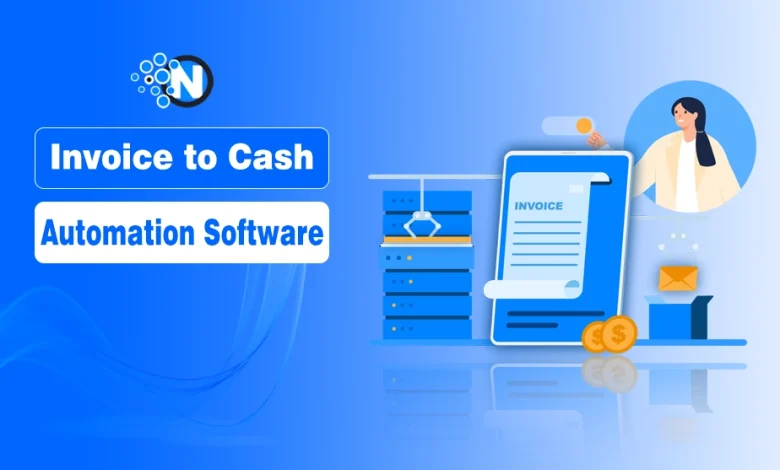
This is where invoice-to-cash automation becomes a strategic advantage for enterprises. It replaces manual steps with smart, connected, AI workflows that accelerate the time it takes for money to move from “invoice sent” to cash in the bank.
In this guide, you will learn how invoice-to-cash automation can help you get paid faster by streamlining every step involved.
- Invoice-to-cash automation helps businesses reduce payment delays and improve cash flow management.
- Automated invoicing systems eliminate repetitive manual finance tasks and reduce human errors.
- AI-powered accounts receivable tools can predict payment risks and improve collections efficiency.
- Digital payment integrations make it easier for customers to pay invoices quickly.
- Automated payment reminders help businesses reduce overdue invoices and late payments.
What is Invoice-to-Cash Automation?
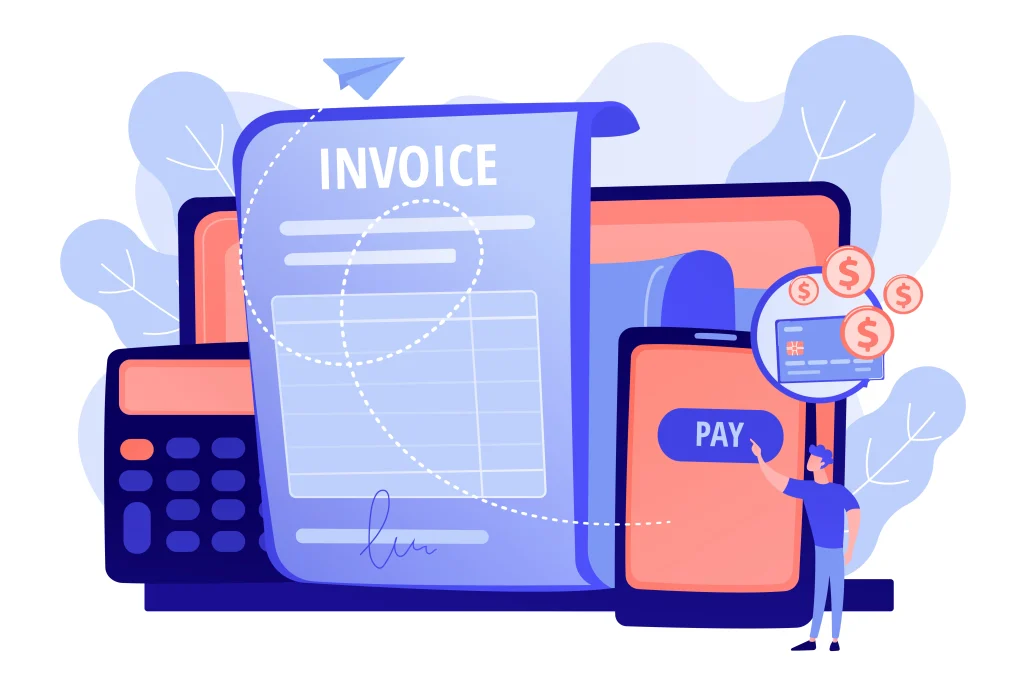
Invoice-to-cash (often referred to as I2C or order-to-cash in broader terms) automation is the process of using software and AI-driven workflows to manage everything that happens after an invoice is created until the payment reaches the company’s account.
It usually includes:
- Invoice generation
- Digital invoice delivery
- Payment reminders
- Customer payment portals
- Payment tracking
- Cash application
- Payment reconciliation
- Dispute management
- Collections workflows
- Reporting and forecasting
It starts with invoice generation- pulling data directly from your ERP system to generate error-free invoices instantly after a sale or delivery. Then comes multi-channel delivery. Here, you send invoices via email, customer portals, EDI, or whatever format your buyers prefer.
In the end, the invoice-to-cash automation software reconciles payments using Artificial Intelligence to match incoming payments to open invoices and handle complex remittances from banks or portals.
Why Enterprises Face The Delays In The I2C Cycle?
1. Manual Steps Multiply When the Organization is Big
One person creates the invoice, sends it, and is done. But in an enterprise, that same invoice triggers a chain reaction across departments.
- The sales team closes the deal and hands it to billing.
- Billing pulls up the contract to verify terms – discounts, payment schedules, special conditions.
- Then, finance steps in to validate tax calculations across jurisdictions.
- ERP generates the invoice and sends it via portal/ email/ EDI.
- Once it’s finally sent, the collections team starts tracking batch payments.
Now, one mistake anywhere in this chain, a wrong tax code, a missed email, a portal login issue, and the whole system will come to a halt. And nobody can pinpoint exactly where it broke down.
2. Slow Cash Inflow Directly Hits DSO
Most enterprises deal with 30–90 day cycles. A small hiccup can push a payment out by 15 to 45 extra days, increasing DSO, slowing cash flow, and creating pressure on working capital.
3. Collections Teams Simply Can’t Handle the Volume
Even with a big team, manual follow-ups can’t scale. Think about what a collector actually does all day. They’re not on the phone negotiating with customers.
They’re searching through email threads, logging into five different customer portals to upload supporting documents, tracking verbal promises to pay, and re-sending invoices that somehow never made it the first time.
Why Companies Are Prioritizing Invoice Automation in 2026
Finance teams are under pressure to improve cash flow while reducing operational costs. At the same time, customers expect faster digital payment experiences and transparent billing systems.
Modern invoice automation platforms now combine:
- AI-powered invoice processing
- Real-time payment visibility
- Automated reminders
- Predictive collections
- Smart reconciliation
- Embedded payment systems
Platforms such as Zintego are helping small businesses and digital teams automate invoice generation while improving payment consistency and billing professionalism.
According to recent industry reports, businesses adopting invoice automation are reducing processing costs, improving payment accuracy, and shortening Days Sales Outstanding (DSO).
How Invoice-to-Cash Automation Speeds Up Payments
In large organizations, payments get delayed because there are too many steps where work can slow down. Invoice-to-cash automation removes these delays and helps payments move faster.
1. It Eliminates Slow Manual Invoicing
In many enterprises, invoice creation still depends on manual checks across sales, finance, and operations. Even one small delay can push the entire payment timeline forward. Today, the average cost to process a single invoice manually sits between $15 and $40.
That’s outright millions of losses for large-scale companies. To prevent such hefty losses, you need invoice automation. It generates invoices directly from ERP events, validates pricing and purchase order details automatically, and sends invoices without waiting for manual handoffs.
When invoices are accurate and delivered on time, customers can approve them sooner. That alone shortens the time to payment.
2. It Accelerates Collections With Intelligent Reminders
Most of the time, teams send the same “gentle reminder” email to everyone. That might work for small companies, but for enterprises, it’s a big NO. Enterprise receivables need structured, sequenced communication.
Here’s how an invoice-to-cash automation tool changes this by making your communication smarter and more targeted:
- Sends tailored reminders based on customer behaviour – Instead of generic reminders, it sends tailored reminders triggered by due dates and past payment behaviour. For instance, a customer who consistently pays within terms gets minimal follow-up. But the one with a history of delays gets earlier, more frequent reminders.
- Handles multi-channel communication – It sends email reminders, posts notifications to customer portals, triggers EDI messages, and even sends SMS alerts for urgent items. That too, without any human intervention.
- Follow-up only for high-risk accounts – Only focused High-risk accounts get priority attention from your collections team, while low-risk accounts move through the process on autopilot.
3. It Improves Dispute Resolution Speed
Disputes are expensive, especially when they drag on. Every day a dispute stays open is another day payment sits frozen. Enterprises lose millions every year to unresolved or late-resolved disputes. Invoice to cash automation streamlines this by keeping the entire dispute process in one place.
When a customer raises a dispute, the system pulls together all relevant documents right from the original invoice, purchase order, delivery confirmation, and contract terms. It automatically assigns the dispute to the right team based on dispute type and routes it through the approval workflow.
4. It Turns Payment Posting Into a Same-Day Activity
One of the biggest slowdowns for businesses is the process of payment matching.
Large organisations receive payments via multiple ways, like Wire, cheques, portals, crop-border transfers, NEFTs, and so on. Without automation, teams spend hours reconciling bank statements with remittances.
In such cases, automation helps finance teams by matching the payments accurately. As payments hit your bank account, the system immediately captures the data and begins matching. It uses multiple data points (like invoice date, amount, etc) to find the right invoice.
Key Benefits of Invoice-to-Cash Automation
Businesses implementing I2C automation commonly experience:
- Faster payment cycles
- Lower DSO
- Reduced manual work
- Fewer billing errors
- Better customer payment experiences
- Improved cash flow visibility
- Lower operational costs
- Faster month-end closing
Recent industry research also shows that businesses using AI-powered AR automation achieve significantly lower processing costs and faster approval cycles.
Why Scale Makes Automation Non-Negotiable
Think about what happens when your business expands. More customers, more invoices, longer payment terms, and more processes. If your order-to-cash cycle slows as your business grows, it becomes a structural barrier to expansion.
This is especially true in highly complex industries like telecommunications, where utilizing dedicated telecom invoice management platforms is critical to keeping billing accurate and cash flowing.
Automation lets you scale from 1,000 invoices per month to 100,000 without adding headcount. More importantly, it changes how finance teams spend their time. Instead of chasing payments and fixing errors, teams can focus on working capital optimisation, customer risk analysis, global credit policies, and revenue protection.
At the leadership level, automation delivers end-to-end visibility. People work smarter because machines handle repetitive work. From outstanding receivables & payments to handling high-risk accounts and disputes, every process is transparent. This leads to better decisions and faster payments.
Get Paid on Time with Invoice-to-Cash Automation
Getting paid on time shouldn’t feel like a battle, but for most enterprises, it is. Manual steps, scattered communication, and slow reconciliations create unnecessary delays that directly affect revenue, cash flow, and forecasting.
Invoice to cash automation fixes that by tightening every part of the process: invoicing, collections, disputes, and cash application. It makes payments predictable, improves customer experience, and gives finance teams room to breathe.
Invoice-to-cash automation is not just an accounting upgrade. It has become a critical part of business cash flow management.
People Also Ask
How does invoice-to-cash automation help companies get paid faster?
It speeds up invoice delivery, automates payment reminders, simplifies payment processing, and reduces delays caused by manual workflows.
What are the main benefits of invoice automation?
The biggest benefits include faster payments, lower operational costs, reduced manual errors, improved cash flow visibility, and better customer payment experiences.
How does AI improve invoice-to-cash processes?
AI helps businesses automate invoice processing, predict late payments, prioritize collections, detect duplicate invoices, and improve financial forecasting.
Can small businesses benefit from invoice automation?
Yes. Small businesses can use invoice automation tools to reduce administrative workload, improve billing efficiency, and maintain healthier cash flow.
What industries use invoice-to-cash automation the most?
SaaS companies, e-commerce businesses, healthcare providers, manufacturers, logistics companies, and B2B service providers commonly use invoice automation systems.
How do automated payment reminders reduce late payments?
Automated reminders notify customers before and after due dates, helping businesses maintain consistent follow-ups without manual effort.