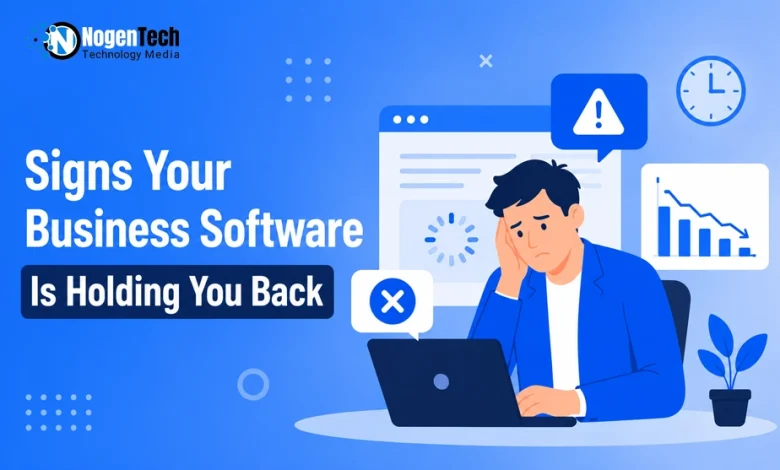
Software rarely fails all at once. It degrades. A workaround here, an extra spreadsheet there, and before long, your team spends more energy managing the tool than doing the work it was supposed to support.
What makes it hard to act on is that outdated business software still technically works. Reports run. Invoices go out. Nothing breaks badly enough to force a decision, so the decision keeps sliding, sometimes for years, and that’s usually the expensive version.
If you’re trying to work out whether your systems are actually slowing you down, a technology assessment, the kind Atlantic BT runs, can show what’s actually worth replacing before you commit to anything.
Your Team Is Spending Too Much Time on Manual Work
Watch what people actually do, not what the software claims to do. If someone exports data from one system every Monday morning just to paste it into another, that isn’t a process. It’s a patch. Manual workarounds are the clearest early warning you get, and they start small before quietly becoming permanent.
Give it long enough, and an entire role exists mostly to shuttle information between systems that should have been talking to each other from day one. Add those hours up across a quarter. The number tends to surprise finance.

Your Software Makes it Difficult for Different Tools to Work Together
Modern platforms are built to connect. Older ones were built to stand alone. Forbes has written about what that costs. Connect a legacy system to a newer tool, and you are usually paying for custom software development or for middleware purely to translate between data formats that were never designed to match. You end up building bridges that newer platforms include as standard.
Then come the data silos. Finance has one version of the numbers. Operations has another. Nobody is quite sure whom to trust, so decisions get made slowly or on instinct.
Your Software Struggling to Keep Up as Your Business Grows
Growth exposes everything. A system that handled 20 users comfortably starts buckling at 200. Reports that took seconds now take minutes. And pages time out at month-end, when everyone opens the same thing at once.
Signs the ceiling is close:
- Performance drops at peak hours
- Adding a user or a location means a workaround rather than a setting
- Your team schedules work around the system’s slow periods
- The platform can’t do that” has become a standard answer
- Vendor support has quietly shifted from improvement to maintenance
One is worth noting. Three or more, and the system has stopped supporting the business and started constraining it.
Employees Avoiding or Working Around Your Business Software
Nobody files a ticket saying they’ve stopped using the system. They just stop. A personal spreadsheet appears. Updates get messaged instead of logged, and shadow processes spring up that work beautifully for the person who built them and badly for everyone who needs visibility into the work.
When staff routes around a tool, they’re handing you honest feedback about it, and the damage isn’t only lost time. Outdated software with a clunky interface pushes people toward habits that fragment your data and create real compliance exposure.

Your Software Costs More Than It Delivers
The license fee is the easy number. Forbes flags knowledge dependency, which is the risk almost nobody budgets for. Only a handful of people really understand an aging system. When they leave, what they know leaves with them.
The same piece flags legacy platforms as prime targets for cyberattacks, where recovering from one breach can run past whatever modernization would have cost in the first place.
Then there’s the money you aren’t spending elsewhere. Budget that goes into keeping outdated business software alive is budget that doesn’t go into anything moving the organization forward.
In Conclusion
None of these signs mean rebuilding everything next quarter. Most organizations do better going in phases, finding whatever creates the most friction and fixing that before working outward.
Naming the problem honestly is the harder part. Outdated software rarely announces itself. It shows up as a quarter that ran slower than it should have, or a team that has quietly stopped trusting the numbers.
Atlantic BT works with enterprises and startups, along with government and university teams, to evaluate existing systems and plan modernization against real budgets.
Which of these five sounds most like your organization right now? Share what you’re dealing with in the comments. Chances are, someone else is working through the same thing.