Launching a digital product is only the beginning of a business’s growth journey. As customer demand increases, many organizations discover that standard software can no longer support expanding operations. Common challenges include:
- Slow performance
- Disconnected systems
- Repetitive manual tasks
Custom software development addresses these issues by creating solutions tailored to a company’s unique workflows, business objectives, and future growth.
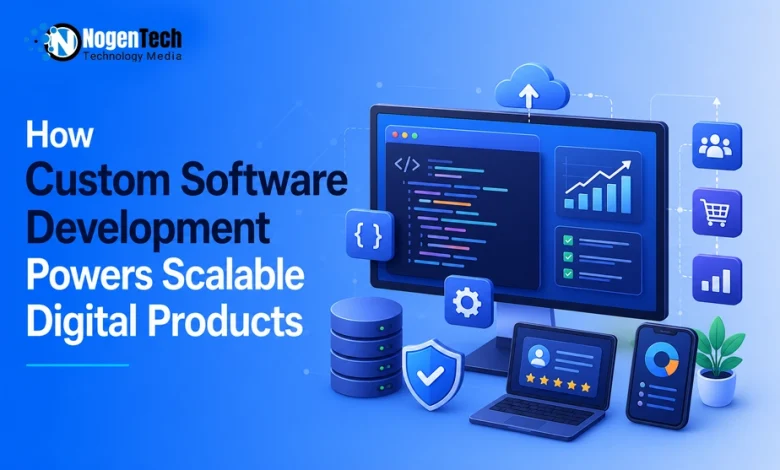
Instead of adapting processes to fit generic applications, partnering with a specialized custom software development agency helps businesses build technology that evolves with their operations, enabling long-term scalability and security
What Is Custom Software Development?
Custom software development is the process of building applications specifically for one organization rather than creating products intended for mass-market use.
Think of it like tailoring a suit. Ready-made clothing fits many people reasonably well, while tailored clothing is designed around one individual’s exact measurements. Software works the same way.
Custom-built applications provide:
- Features tailored to business needs
- Greater operational flexibility
- Easier future expansion
- Improved efficiency
- Better long-term return on investment
Rather than paying for unnecessary functionality, businesses receive solutions built around their actual workflows.
Why Do Businesses Choose Custom Development?
Businesses choose custom software development to build scalable, secure solutions tailored to unique workflows, system integration, and long-term growth.
Every business has unique workflows, operational needs, and business goals that off-the-shelf software cannot fully support.
Custom software development is done around these specific needs, helping businesses:
- Automate repetitive tasks
- Reduce manual data entry
- Improve team collaboration
- Increase operational efficiency
- Minimize workflow disruptions
Digital Silk’s developers build custom software solutions designed around each client’s requirements, helping organizations streamline operations, integrate existing systems, improve efficiency, and scale without repeatedly rebuilding their technology infrastructure.
This tailored approach provides the flexibility to adapt as business needs evolve while supporting sustainable growth.
How Does Scalable Custom Software Support Business Growth?
Scalable custom software supports business growth by handling more users, data, workflows, and features without rebuilding existing systems.
As businesses grow, off-the-shelf software often struggles to support expanding workloads, business processes, and customer demands.
Demand for custom software development continues to grow, with the global software industry projected to increase from $0.64 trillion in 2026 to over $1.11 trillion by 2031, reflecting the need for scalable, business-specific solutions.
For example, an eCommerce platform may launch with:
- Product pages
- Secure payments
- Contact forms
As the business grows, it can gradually add:
- Customer accounts
- Loyalty programs
- Inventory management
- Personalized recommendations
- Mobile applications
Custom software enables these capabilities to be added without replacing the existing platform, reducing redevelopment costs, minimizing disruption, and supporting long-term scalability.
What are the Key Benefits of Custom Software Development?
Custom software development improves operational efficiency, customer experience, system integration, security, and long-term business scalability.
Unlike off-the-shelf applications, custom software is built around specific business processes, enabling organizations to streamline operations, connect existing systems, protect sensitive data, and scale as business needs evolve.
How Custom Software Solves Unique Business Challenges
Custom software solves business challenges by automating workflows, reducing manual work, and supporting business-specific processes.
Every business has unique workflows and operational requirements that generic software cannot fully support. By building bespoke solutions, companies can eliminate manual bottlenecks, bridge operational gaps, and allow internal teams to focus on higher-value strategic work.
For highly regulated industries, software must strictly meet data protection standards. Reviewing current custom healthcare software development costs and trends shows how specialized compliance features like HIPAA and data encryption drive investment strategies.
How Custom Software Improves Customer Experience
Custom software improves customer experience with faster performance, intuitive navigation, personalized content, and reliable digital interactions.
Customers expect fast and seamless digital experiences. Understanding the role of UX design in custom software development ensures that applications prioritize intuitive navigation, responsive interfaces, and overall user satisfaction. Custom software delivers:
- Faster website performance
- Intuitive navigation
- Personalized recommendations
- Reliable checkout processes
- Responsive user interfaces
These improvements increase customer satisfaction, retention, and brand loyalty.
How Custom Software Enables Seamless System Integration
Custom software integrates CRM, accounting, inventory, payment, and marketing systems into a unified business workflow.
Businesses often rely on multiple platforms, including:
- CRM systems
- Accounting software
- Inventory management
- Email marketing platforms
- Payment gateways
Custom software connects these systems through API integrations, automating data flow, reducing manual transfers, and improving operational accuracy.
How Custom Software Strengthens Security and Compliance
Custom software strengthens security with data encryption, role-based access, secure APIs, monitoring, and compliance controls.
Organizations handle sensitive customer data, financial records, and business information that require robust protection. Custom software supports:
- Multi-factor authentication (MFA)
- Role-based access control (RBAC)
- Data encryption
- Secure API integrations
- Activity monitoring
- Compliance reporting
Building these controls into the software architecture helps reduce security risks and supports regulatory compliance.
Organizations handling sensitive patient data or financial records often collaborate with top custom healthcare software development companies to implement multi-factor authentication, role-based access, and robust audit trails
Frequently Asked Questions About Custom Software Development
Why is custom software better than off-the-shelf software?
Custom software offers greater flexibility, scalability, integration, and business-specific functionality than off-the-shelf software.
Can custom software integrate with existing business systems?
Yes. Custom software integrates CRM, ERP, accounting, inventory, payment, and marketing platforms through secure APIs.
How long does custom software development take?
Development timelines vary by project scope, features, integrations, and complexity, typically ranging from weeks to months.
Is custom software suitable for small businesses?
Yes. Small businesses benefit from custom software when standard applications limit growth, efficiency, or automation.
How does custom software support digital transformation?
Custom software accelerates digital transformation by automating workflows, integrating systems, improving data visibility, and enabling scalability.
What should businesses consider before developing custom software?
Define business goals, user needs, core features, scalability, budget, and success metrics before starting custom software development.
Final Thoughts: Build Software That Grows With Your Business
Custom software is more than a technology investment; it’s a long-term strategy for building scalable, efficient, and resilient digital products.
By aligning software with your business goals, workflows, and customer needs, organizations can improve operational efficiency, system integration, security, and user experience while supporting sustainable growth.
In my view, businesses that plan for scalability from the beginning are far better positioned to adapt to changing markets than those relying on short-term software fixes.