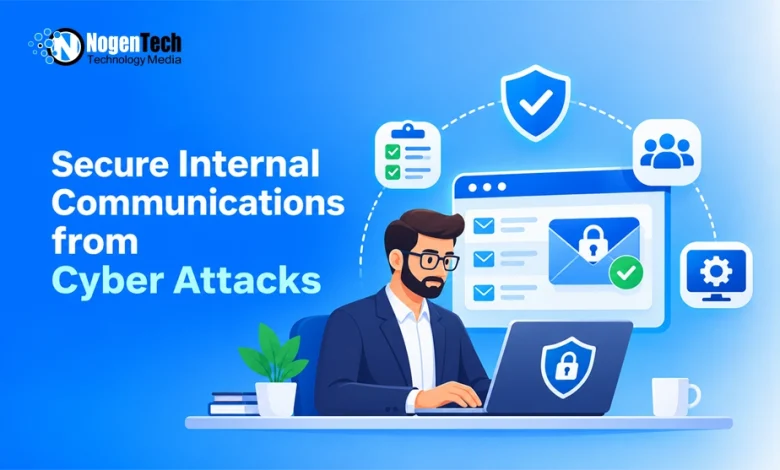
Technology companies share source code, financial records, customer information, and confidential project details through email and workplace messaging platforms. A compromised account can expose these conversations and potentially give attackers access to connected business systems.
CTOs and IT directors need security measures that protect both the messages and the people accessing them. Here are four practices that help reduce communication-related cyber risks.
1. Encrypt Sensitive Emails and Internal Messages
Executive emails and internal discussions often contain confidential business decisions, financial information, and technical documents. Attackers may target these channels to steal data, impersonate employees, or initiate fraudulent payments.
A privacy-focused secure email provider can help protect sensitive correspondence. Proton Mail supports end-to-end encryption between Proton accounts and offers encrypted messaging options for external recipients. However, encryption does not prevent attackers from accessing messages through a compromised account or device.
Security measures to prioritize:
- Use encrypted channels for confidential information.
- Require strong authentication for executive accounts.
- Limit access to sensitive conversations and files.
- Verify unusual requests involving payments or credentials.
2. Follow Recognized Cybersecurity Standards
Security policies should follow established cybersecurity guidance rather than depend entirely on software vendors’ claims.
The Cybersecurity and Infrastructure Security Agency (CISA) provides official CISA guidance on core cybersecurity essentials for businesses. Technology leaders can also use the NIST Cybersecurity Framework to assess their organization’s security practices.
These resources help businesses establish consistent controls for:
- Asset management: Identify devices, applications, and communication platforms.
- Patch management: Update systems to address known vulnerabilities.
- Access reviews: Remove unnecessary employee and administrator permissions.
- Data recovery: Maintain backups and test restoration procedures.
- Incident response: Define responsibilities for investigating and containing security incidents.
Recognized frameworks provide a structured way to identify security gaps, although following them does not eliminate cyber risks.
3. Monitor Threats and Secure Communication Software
Phishing, stolen credentials, and vulnerable applications can expose internal communications even when businesses use established software platforms.
IT teams should monitor unusual sign-ins, investigate security alerts, and review third-party integrations connected to email and messaging tools. This detailed guide on protecting startups from cybersecurity threats covers additional risks that smaller technology businesses should consider.
Important security controls include:
| Security Control | Purpose |
|---|---|
| Identity and access management | Control employee access to communication platforms |
| Endpoint detection and response | Detect suspicious activity on company devices |
| Security monitoring | Identify unusual sign-ins and potential account compromises |
| Patch management | Address known software vulnerabilities |
| Data loss prevention | Restrict unauthorized sharing of sensitive information |
Businesses should prioritize tools that work with their existing systems and provide actionable security alerts.
4. Train Employees and Restrict Administrative Access
Phishing and social engineering attacks often exploit employee trust rather than technical vulnerabilities. A convincing message can persuade someone to share credentials, open a malicious attachment, or approve an unauthorized login.
Security training should teach employees to recognize impersonation attempts, verify unexpected requests, and report suspicious activity. IT leaders should also enforce the principle of least privilege, giving employees access only to the systems and information required for their roles.
Key practices include:
- Phishing-resistant MFA: Use passkeys or security keys for sensitive accounts.
- Role-based permissions: Restrict access according to job responsibilities.
- Regular access reviews: Remove permissions that are no longer needed.
- Account offboarding: Disable access promptly when employees leave.
- Incident reporting: Provide a clear process for reporting suspicious messages.
These measures reduce the likelihood that one compromised account will expose wider business systems.
Frequently Asked Questions
1. What Is the Biggest Security Risk in Workplace Messaging?
Compromised employee accounts are a major risk because attackers may access confidential conversations, shared files, and connected applications.
2. How Often Should Companies Review Employee Communication Access?
Access should be reviewed regularly and whenever employees change roles or leave the organization. Sensitive and administrative accounts need closer oversight.
3. Which Cybersecurity Frameworks Help Protect Internal Communications?
The NIST Cybersecurity Framework and CISA guidance help organizations establish security controls, identify risks, and prepare incident response procedures.