OpenAI Cuts Prices on Smaller Models as Enterprise Customers Push Back on AI Bills
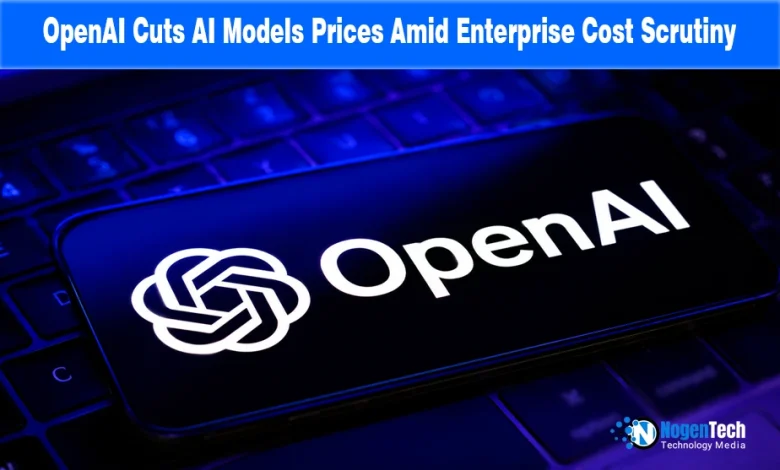
OpenAI slashed prices on two of its GPT-5.6 models Thursday, a move CEO Sam Altman framed as a "major" step toward better value, as businesses increasingly question whether their AI spending is actually paying off.

OpenAI has spent the past year facing the same question from corporate customers over and over: is AI really worth the cost? That pressure has grown as usage-based pricing replaces flat subscriptions, making AI spending less predictable as adoption increases.
Thursday’s price cuts arrive as an answer from the ChatGPT maker, aiming to show its smaller, more accessible models can deliver value without the high costs that have made some businesses hesitant to expand AI use.
Luna and Terra Get Cheaper, Sol Stays Put
Reuters reported that sending text to smaller models from the GPT-5.6 family, namely Luna, now costs 20 cents per million tokens, down from $1, while Terra’s input price falls to $2 from $2.50; on the output side, generating responses drops to $1.20 and $12 from $6 and $15, respectively.
Reuters reported that GPT 5.6’s smaller models, Luna and Terra, are getting price cuts. Luna’s input cost drops from $1 to 20 cents per million tokens, while Terra falls from $2.50 to $2. Output pricing also drops, from $6 to $1.20 for Luna and from $15 to $12 for Terra.
Reuters also noted that Terra’s new pricing now undercuts Anthropic’s mid-tier Claude Sonnet 4.6, the predecessor of Sonnet 5, which runs $3 per million input tokens and $15 per million output tokens, directly narrowing the price gap between the two labs’ comparable offerings.
Altman Frames the Cuts Around Efficiency, Not Desperation
CNBC reported that the price reductions came roughly three weeks after Luna and Terra’s initial public release, a notably quick turnaround for pricing adjustments on models that recently launched.
Altman said on X that OpenAI aims to offer the best price-to-intelligence tradeoff at every level as Anthropic gains traction. The company added that the lower pricing also applies to usage under paid Codex and ChatGPT Work subscriptions.
OpenAI attributed the savings to several improvements rather than a single breakthrough.
The company cited advances in its models, inference systems, and the agentic harness that connects models to external tools, along with smarter routing and better context management to reduce redundant work.
Analysts See a Turning Point in AI Pricing Power
Coverage from Yahoo Finance highlighted stronger reactions from industry analysts.
EMarketer’s Jacob Bourne said the era of “tokenmaxxing” is ending as enterprises push back against rising AI costs that do not deliver proportional value, making the providers offer the models at lower prices.
Gartner analyst Arun Chandrasekaran said the cuts mark a turning point for buyers, as frontier AI labs move from rigid pricing toward more flexible models after years of difficult negotiations.
That flexibility carries added weight given OpenAI’s confidential IPO filing, with Chandrasekaran noting the price competition could serve as an early test of frontier labs’ business models ahead of anticipated public listings.
Source: OpenAI cuts prices on smaller models as businesses scrutinize AI spend